

NURS 5335 Questions with 100% Correct Answers | Verified | Latest Update
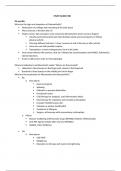
STUDY GUIDE MSK OA and RA What are the signs and symptoms of Osteoarthritis? Destruction of cartilage and narrowing of the joint space Most common in females after 55 Fingers, knees, hips and spine most commonly affected joints (most common fingers) Usually asymmetrical joint pain that develops slowly and accompanies or follows physical activity Morning stiffness that lasts 1 hour, resumes at end of the day or after activity Joints are cool with possible crepitus Osteophytes, or bony enlargements, form in the joints treat conservatively with exercise, heat etc. followed by acetaminophen and NSAIDS, followed by steroid injections. If pain is still present refer to rheumatologist What are Heberden’s and Bouchard’s nodes? Where are they located? Heberden’s: Bony bumps on the finger joint closest to the fingernail Burchard’s: Bony bumps on the middle joint of the finger What are the treatments for Rheumatoid and Osteoarthritis? RA o Non-pharm Exercise program Splinting Orthotics to prevent deformities Functional insoles Cold therapy for analgesic, anti-inflammatory effect Heat therapy for relaxation and circulatory stimulation Consider Mediterranean diet Maintain or achieve healthy BMI Avoidance of allergens Surgery: arthroscopy with synovectomy, arthroplasty o Pharm Disease-modifying antirheumatic drugs (DMARDs) (Enbrel, Methotrexate) Anti-TNF Agents (initiate after trial of 2 DMARDs) NSAIDS, COX-2 Inhibitors OA o Non-pharm USE FIRST Weight loss Education on therapy and muscle strengthening Supervised exercise Rest Knee or elbow brace Orthotic shoes, cane Heat/cold to affected joints Surgery (osteotomy, arthroplasty) Acupuncture Local creams o Pharm Acetaminophen (1st line) Add NSAID (see risks associated with long term NSAID use) Short-acting NSAID has fewer side effects Consider another med for GI protection Topical NSAID great alternative for elderly Narcotics indicated briefly for severe exacerbation Steroid injections 4x/year for large joints How do you differentiate RA and OA? RA: autoimmune, symmetrical joint pain, warm joints, symptoms wax and wane, can have systemic symptoms (malaise, wt. loss, low grade temp), small joints affected before large joints, lab tests to diagnose OA: ‘wear and tear,’ asymmetrical joint pain, cool joints, crepitus, affects large joints (knees, back) before small, x-ray to diagnose, osteophytes, Heberden and Burchard nodes found When do you refer? RA: always refer to rheumatologist OA: refer if pain continues to be present after non-pharm and pharm tx **Know that a patient taking NSAIDS needs to have CBC, BUN/Cr and Liver functions monitored. If you do a stool for occult blood, they need to be off NSAIDS 2-3 days. What is Rheumatoid Arthritis? an autoimmune disease and leads to joint deformity and destruction Do initial lab work (because it may take several weeks to get into rheumatologist) and refer patient ASAP What diagnostic tests are done? OA: No diagnostic laboratory tests o Diagnosed based on hx, physical and x-ray findings o X-rays: osteophytes, joint space narrowing RA: 5 of the 7 must be present and the first 4 must be present for at least 6 weeks o Morning stiffness 1 hr o Soft tissue swelling of 3 or more joints (wrist, elbow, knee, ankle, hands, feet) o Swelling of at least 1 joint in hand or wrist o Symmetrical joint swelling o Rheumatoid nodules
Información del documento
- Subido en
- 17 de mayo de 2023
- Número de páginas
- 19
- Escrito en
- 2022/2023
- Tipo
- Otro
- Personaje
- Desconocido

