

NURS 5333 Questions with 100% Correct Answers | Verified | Latest Update
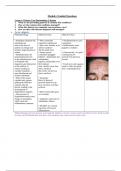
Module 4 Guided Questions Lesson 1: Primary Care Dermatology: Lifespan 1. What are the presenting patterns of common skin conditions? 2. How are the common skin conditions managed? 3. What skin diseases are commonly seen in primary care? 4. How are these skin diseases diagnosed and managed? Acne vulgaris Pathophysiology Subjective Data Objective Data • Androgens stimulate the pilosebaceous units at the time of puberty to enlarge and produce large amounts of sebum. • Simultaneously, the keratinization process in the pilosebaceous canal is disrupted with impaction and obstruction of the outflow of sebum resulting in comedo formation— open blackheads and closed whiteheads. • Wall of the closed comedo may rupture, spilling the follicular contents into the dermis, leading to the development of inflammatory papules. • The presence of Propionibacterium acnes brings in neutrophils, which cause the inflammatory response. • Most commonly reported by adolescent • May occur initially as an adult or continue into the adult years • Patient reports comedones (plugged follicles—blackheads and whiteheads), papules, and pustules over the forehead, nose, cheeks, lower face, chest, and back that evolve on the face, chest, and back • Treatment: Retin A, Benzoyl peroxide (start low, go slow on dose), Acid type products • Birth control pills good tx for female • Antibiotics when lots of whiteheads, redness • NSAIDS, ice, steroid injections with severe inflammation • Noninflammatory acne: comedones • Inflammatory acne: papules or nodules • Characteristic “ice pick” scarring may be present from previous lesions • Teach pt to only squeeze what is white, be gentle, don’t continually pick! Differentiating acne from rosacea: acne typically initiates in T-zone, rosacea can be anywhere on face. Rosacea does not have any blackheads like acne does. Acne products may cause rosacea to get worse. Rosacea Pathophysiology Subjective Data Objective Data • Inflammatory skin disease • Combo- hereditary and environmental causes • Not caused by ETOH consumption, although flushing can occur with alcohol use • Often mistaken for acne • Treatment: moisturize, sunscreen, topical antibiotics, may need laser treatment if skin gets very thick • Prevent flare-ups: antibiotics prior to moisturizer, wear sunscreen, avoid alcohol and spicy foods, no touching or rubbing face • Redness, bumps or pustules; no blackheads • Small visible blood vessels on
Información del documento
- Subido en
- 17 de mayo de 2023
- Número de páginas
- 19
- Escrito en
- 2022/2023
- Tipo
- Examen
- Contiene
- Preguntas y respuestas

