MATH108
101
, ↑ AF(z) 1 % % with wasne.D
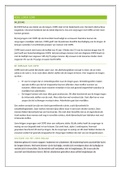
TUESDAY JC 10 Introduction
-
to limits
-> pre-cpic review:
1. Given that x=2 is of
proot x3-x-2x+12. factor the polynomial completely and findall i ts roots
of
-
>Che(R: 23 22
- -
8(2) 12 +
X-2 is a f (( +0r
8
= -
4 -
16 12
+ -
x3 -
x" -
8X 12 +
(X
= -
2)(X +x -
6)
(x -
2) (x + 3) (X -
2) The roots are x 1
=
andX = -
3
2.x z
-
x2 +1 -
- rte1)
4(x- ( -
1)- xe
(X
- -
-
2
x -
1
>12 -
2x 1+
-
y2 -
1
=
-
2X
xz - 1 xz -
1
3. Find the equation of
t he line that
p asses through the points (2,5) and 1-1, 2) in the plane
xx
5-1
Findslope
=
->
2 -
1 -
1)
following:y-Y' m(X X')
↓
= -
-> y 3/2X 6
=
+
y
- -
3 3/2(X 2)
= -
3/2X
=
-
3 5 +
1 3/2x 2
=
= +
4. Findthe exact value of COS(-π /6)
7 L
68
2
v 45
=1880:300 using special triangle
=
2452
1
v/2 38
13 1
THURSDAY, JAN 12:PRECALL & INTROTO CALC
1
1: X X 8
=
REFRESHON BASIC GRAPHS
shifted sin (X) graph
M
L
Shifted COS(X) grOPM Y:COS(X) Domain:x0 or
1.Sin (X)
(0,0)u(0,p)
EcosixOY ↳ <
1 >
*
-
2
iπ
-
- 1
1:109eX:10n 1
y: 109 - XM Y:109 X
> 7
[0,0 1 -
1 Exponential fxn: y.e*
1 ⑲
Xx,0 ④
↓
&
i
U:104b(V)
V =bu
·finan
piecewise fXn
>
9
Y :(X/,0 ·
(x) X,X>,0
D:( -8,0) Range:1R -
X, ifX <0
↳(0,0
Y: arc an(X)
+
#
I tan(x) 20 (X)
= +
,-> calculus:single variable -> differential (aboutr ates change) the
of main concept is the derivative
·unifiying theme:limits
Limits:Chapter 2 Introducing limits
~If itisitwill
-> -> cause the answer
·consider y f(x) xx 1 x 1 = what is f164)?
:=I 3 i s the
what domain t he
of flx)? x, andx*I
- = -
=
=
x5 -
5x 3 -
1
<(0,1) UC2, 0) - know how to write/readinterval notation
o The graph of this fan seems to keep going
through x 1
=
(where its under), o f(x) near
lets 100k x 1
=
+ (0.9):80.9-1=1.48698.... -> a bit bigger f(1.1) 1.51203=
or even closer to 1 f(0.99):1.490743/f (1.01):1.501245 (f(0.9999):1.499988
29-1
f(1.00001):1.50003// As x gets closer to 1 the fan gets closer to 1.5
· s eems that f(x) is
It getting closer to 1.5 as s ets
x closer to 1:this is the behavior f (x) nedr
of 1
x=
mathematically) we can make f(x) as close
This turns out to be true (can be proved
->
to 1.5 as we want close) if we use
carbitrarily any X value "close
enough"to 1 limit notation
We say the
*
o f f(x):x-1
limit is 1.5 as x approaches 1 im f(x):1.5
x 1
"3-1
->
x
or we can write it out as f(x)-1.5
CS X -
1
7/3 25
-> Now consider f(x) for near
x x 64 f(64)
we know that is or so what
doesMyfex) mean
-
=
of (63.9):2.33287 1 + (63.99999):2.3333287 (f(64.00001):2.333379
25 =
tyMyf(x):
It looks like f(x) is getting
arbitrarily
close to as x is getting close to 64 2
5 253 same
(imf(x) f(64): question
answer, different
so 2
= =
TUESDAY JAN #3
17:LECTURE
LIMITS:CIP1.2 -> Instantaneous velocity
-> If I travel 8 0km/h
at for 1 hr, then I have gone 80km. or i travel 160km in 2 hours, or in one minitravel 800 8/6km
=
over time period:distance travelled
>velocity
time taken
0 What does m ean
it to be going 80
at km/h at one point in time (an instant)?
I
travel a distance in time so v =
Ca "
-> We lookata time interval around instant:
that >t
we can define aus velocity:a travelled on thatinterval = change in position
length of time change in time
As
* interval
that gets shorter & shorter, the due velocity
a pproaches a limit
value -> t he
That limiti s the instantaneous velocity
-
CLP-1:1.3 - EXPLORING LIMITS
taking enough"to the (x+a)
0ximf(x)=L:means we can make f(x) as close to (as we like ("arbitrarily
close"), by X "close a
value of
-.
-
AMPLE:
Dimsincx), since is defined
not at 10bc is
sincxl
-> x X sin(0.1) 0.998334.....
=
3 i n trig fans is in radians
in calculus, we assume x
0.10.448334 8.2
Whatifwe use -0.1: same:0.998334
0.01:0.999983 -
8.82:0.99999....
I It180ks like
MMsincx)
y
X
= 1 This turns out to be true!
2(1m(x+2): in
we plug
cant x 2 Yes we could (and is the rightanswer), but limit
w hat
t hats not
-
=
means
↳ 1.999:(1.999) +2 5.996001:It100ks like =
imz (x+ 2) is the same as 22 +
2 6 =
-mes Dlim doesnt
exist
EG#3) Le f(x) +
sin),
=
for x is
=O- what
limo sin(i)? H(t)
I
SAS x =
0, gets larger (+ or -- so sink) oscillates faster faster btwn-1 and 1
so
him sin(i) DNE:sin(A) does not "settle down"close to one value justkeeps
it jumping again
away
1
4) "Differentvalues on the sizes
left andright -> H(t):
Let
Goit 1 if
+ co
t >I
-
t
8
H:heavyside txn
101
, ↑ AF(z) 1 % % with wasne.D
TUESDAY JC 10 Introduction
-
to limits
-> pre-cpic review:
1. Given that x=2 is of
proot x3-x-2x+12. factor the polynomial completely and findall i ts roots
of
-
>Che(R: 23 22
- -
8(2) 12 +
X-2 is a f (( +0r
8
= -
4 -
16 12
+ -
x3 -
x" -
8X 12 +
(X
= -
2)(X +x -
6)
(x -
2) (x + 3) (X -
2) The roots are x 1
=
andX = -
3
2.x z
-
x2 +1 -
- rte1)
4(x- ( -
1)- xe
(X
- -
-
2
x -
1
>12 -
2x 1+
-
y2 -
1
=
-
2X
xz - 1 xz -
1
3. Find the equation of
t he line that
p asses through the points (2,5) and 1-1, 2) in the plane
xx
5-1
Findslope
=
->
2 -
1 -
1)
following:y-Y' m(X X')
↓
= -
-> y 3/2X 6
=
+
y
- -
3 3/2(X 2)
= -
3/2X
=
-
3 5 +
1 3/2x 2
=
= +
4. Findthe exact value of COS(-π /6)
7 L
68
2
v 45
=1880:300 using special triangle
=
2452
1
v/2 38
13 1
THURSDAY, JAN 12:PRECALL & INTROTO CALC
1
1: X X 8
=
REFRESHON BASIC GRAPHS
shifted sin (X) graph
M
L
Shifted COS(X) grOPM Y:COS(X) Domain:x0 or
1.Sin (X)
(0,0)u(0,p)
EcosixOY ↳ <
1 >
*
-
2
iπ
-
- 1
1:109eX:10n 1
y: 109 - XM Y:109 X
> 7
[0,0 1 -
1 Exponential fxn: y.e*
1 ⑲
Xx,0 ④
↓
&
i
U:104b(V)
V =bu
·finan
piecewise fXn
>
9
Y :(X/,0 ·
(x) X,X>,0
D:( -8,0) Range:1R -
X, ifX <0
↳(0,0
Y: arc an(X)
+
#
I tan(x) 20 (X)
= +
,-> calculus:single variable -> differential (aboutr ates change) the
of main concept is the derivative
·unifiying theme:limits
Limits:Chapter 2 Introducing limits
~If itisitwill
-> -> cause the answer
·consider y f(x) xx 1 x 1 = what is f164)?
:=I 3 i s the
what domain t he
of flx)? x, andx*I
- = -
=
=
x5 -
5x 3 -
1
<(0,1) UC2, 0) - know how to write/readinterval notation
o The graph of this fan seems to keep going
through x 1
=
(where its under), o f(x) near
lets 100k x 1
=
+ (0.9):80.9-1=1.48698.... -> a bit bigger f(1.1) 1.51203=
or even closer to 1 f(0.99):1.490743/f (1.01):1.501245 (f(0.9999):1.499988
29-1
f(1.00001):1.50003// As x gets closer to 1 the fan gets closer to 1.5
· s eems that f(x) is
It getting closer to 1.5 as s ets
x closer to 1:this is the behavior f (x) nedr
of 1
x=
mathematically) we can make f(x) as close
This turns out to be true (can be proved
->
to 1.5 as we want close) if we use
carbitrarily any X value "close
enough"to 1 limit notation
We say the
*
o f f(x):x-1
limit is 1.5 as x approaches 1 im f(x):1.5
x 1
"3-1
->
x
or we can write it out as f(x)-1.5
CS X -
1
7/3 25
-> Now consider f(x) for near
x x 64 f(64)
we know that is or so what
doesMyfex) mean
-
=
of (63.9):2.33287 1 + (63.99999):2.3333287 (f(64.00001):2.333379
25 =
tyMyf(x):
It looks like f(x) is getting
arbitrarily
close to as x is getting close to 64 2
5 253 same
(imf(x) f(64): question
answer, different
so 2
= =
TUESDAY JAN #3
17:LECTURE
LIMITS:CIP1.2 -> Instantaneous velocity
-> If I travel 8 0km/h
at for 1 hr, then I have gone 80km. or i travel 160km in 2 hours, or in one minitravel 800 8/6km
=
over time period:distance travelled
>velocity
time taken
0 What does m ean
it to be going 80
at km/h at one point in time (an instant)?
I
travel a distance in time so v =
Ca "
-> We lookata time interval around instant:
that >t
we can define aus velocity:a travelled on thatinterval = change in position
length of time change in time
As
* interval
that gets shorter & shorter, the due velocity
a pproaches a limit
value -> t he
That limiti s the instantaneous velocity
-
CLP-1:1.3 - EXPLORING LIMITS
taking enough"to the (x+a)
0ximf(x)=L:means we can make f(x) as close to (as we like ("arbitrarily
close"), by X "close a
value of
-.
-
AMPLE:
Dimsincx), since is defined
not at 10bc is
sincxl
-> x X sin(0.1) 0.998334.....
=
3 i n trig fans is in radians
in calculus, we assume x
0.10.448334 8.2
Whatifwe use -0.1: same:0.998334
0.01:0.999983 -
8.82:0.99999....
I It180ks like
MMsincx)
y
X
= 1 This turns out to be true!
2(1m(x+2): in
we plug
cant x 2 Yes we could (and is the rightanswer), but limit
w hat
t hats not
-
=
means
↳ 1.999:(1.999) +2 5.996001:It100ks like =
imz (x+ 2) is the same as 22 +
2 6 =
-mes Dlim doesnt
exist
EG#3) Le f(x) +
sin),
=
for x is
=O- what
limo sin(i)? H(t)
I
SAS x =
0, gets larger (+ or -- so sink) oscillates faster faster btwn-1 and 1
so
him sin(i) DNE:sin(A) does not "settle down"close to one value justkeeps
it jumping again
away
1
4) "Differentvalues on the sizes
left andright -> H(t):
Let
Goit 1 if
+ co
t >I
-
t
8
H:heavyside txn