Easements
Tuesday, 16 November 2021 21:18
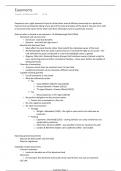
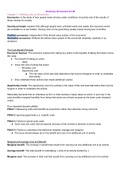
Easements are a right annexed to land to utilize other land of different ownership in a particular
manner (not involving the taking of any part of the natural produce of the land or any part of its soil)
or to prevent the owner of the other land from utilizing his land in a particular manner.
Rules of what is classed as an easement - Re Ellenborough Park (1956)
- Dominant and servient land
○ Dominant - land that benefits
○ Servient - land with the right over it
- Benefits the dominant land
○ Must affect the land directly rather than benefit the individual owner of the land
○ Re Ellenborough Park was quite controversial as it involved the right to use a park - the
CoA held that the park constituted in a real and intelligible sense, a garden
○ Regency Villas Ltd v Diamond Resorts (Europe) Ltd timeshare owners claimed a right to
use a swimming pool and other recreational facilities - these were held to be capable of
being easements
- Diversity of ownership
○ A person cannot have an easement over his own land
○ Landlord and tenant can be classed as different ownership
- Capable of being granted
○ List of easements is not closed
○ Must be sufficiently certain
▪ No
□ View (William Aldred's Case (1610))
□ Privacy (Browne v Flower (1911))
□ TV signal (Hunter v Canary Wharf (1997))
▪ Yes
□ Noise (Lawrence v Fen Tigers (2014))
○ No positive obligation on the servient owner
▪ Fences are an exception to the rule
○ No new negative easements
○ No claim to possession
▪ Storage
□ Wright v Macadam (1949) - the right to store coal in the shed was an
easement
▪ Parking
□ Copeland v Greenhalf (1952) - storing vehicles on a strip of land was not
supported by authority
□ Moncrief v Jameson (2007) - was possible to have an easement to park
□ London & Blenheim Estates Ltd v Ladbroke (1992) - exercisable
Expressly granted easements
- Must be by deed under s52 LPA 1925
- Must be registered
Impliedly created easements
- Common intention
○ Looks at intended use of the dominant land
- Necessity
○ For example, the dominant land could not be used if there was not an easement
- S62 LPA
- The rule in Wheeldon v Burrows
Land Law Page 1
Tuesday, 16 November 2021 21:18
Easements are a right annexed to land to utilize other land of different ownership in a particular
manner (not involving the taking of any part of the natural produce of the land or any part of its soil)
or to prevent the owner of the other land from utilizing his land in a particular manner.
Rules of what is classed as an easement - Re Ellenborough Park (1956)
- Dominant and servient land
○ Dominant - land that benefits
○ Servient - land with the right over it
- Benefits the dominant land
○ Must affect the land directly rather than benefit the individual owner of the land
○ Re Ellenborough Park was quite controversial as it involved the right to use a park - the
CoA held that the park constituted in a real and intelligible sense, a garden
○ Regency Villas Ltd v Diamond Resorts (Europe) Ltd timeshare owners claimed a right to
use a swimming pool and other recreational facilities - these were held to be capable of
being easements
- Diversity of ownership
○ A person cannot have an easement over his own land
○ Landlord and tenant can be classed as different ownership
- Capable of being granted
○ List of easements is not closed
○ Must be sufficiently certain
▪ No
□ View (William Aldred's Case (1610))
□ Privacy (Browne v Flower (1911))
□ TV signal (Hunter v Canary Wharf (1997))
▪ Yes
□ Noise (Lawrence v Fen Tigers (2014))
○ No positive obligation on the servient owner
▪ Fences are an exception to the rule
○ No new negative easements
○ No claim to possession
▪ Storage
□ Wright v Macadam (1949) - the right to store coal in the shed was an
easement
▪ Parking
□ Copeland v Greenhalf (1952) - storing vehicles on a strip of land was not
supported by authority
□ Moncrief v Jameson (2007) - was possible to have an easement to park
□ London & Blenheim Estates Ltd v Ladbroke (1992) - exercisable
Expressly granted easements
- Must be by deed under s52 LPA 1925
- Must be registered
Impliedly created easements
- Common intention
○ Looks at intended use of the dominant land
- Necessity
○ For example, the dominant land could not be used if there was not an easement
- S62 LPA
- The rule in Wheeldon v Burrows
Land Law Page 1