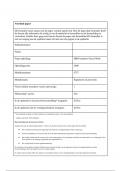
Problem 5 – Where is my Mind – April 2023
Learning goals
1. What is Panic Disorder (PD)? What triggers it? Treatment? Models?
2. What is Hyperventilation? What triggers it? Treatment? Models?
In Depth questions:
A) Theories:
- Fava, L., & Morton, J. (2009). Causal modelling of PD theories. Clinical Psychology Review, 29, pp. 623-637. Note: Only read and
discuss 3.2. Cognitive and 3.3. Biological hypotheses
- Pilecki, B., Arentoft, A., & McKay, D. (2011). An evidence-based causal model of PD. Journal of Anxiety Disorders, 25, 381-388.
Panic Disorder (PD) is a serious and debilitating condition marked by sudden onset and intense
anxiety with accompanying physiological arousal (sweating, dizziness) and fear-relevant cognitive
features (fear of impending death, fear of loss of mental control).
- Sudden, intense
- At least one month of apprehension/anxiety about the panic attack happening again
- Need at least 4 out of 13 symptoms to be diagnosed
- PD is often accompanied by agoraphobia (fearing and avoiding places or situations that
might cause panic and feelings of being trapped, helpless or embarrassed).
- Recurrent panic attacks
Key event is the panic attack, intense feeling of apprehension or impending doom, sudden onset,
associated with wide range of distressing
physical sensations (e.g., chest pain,
breathlessness, dizziness, trembling and
feelings of unreality).
, Cognitive theories
Clark’s model of PD = a wide range of external (supermarket
where previous attack happened) or internal (bodily
sensations) stimuli provoke attacks.
If stimuli perceived as threat → state of mild apprehension
(fear something bad will happen) accompanied by wide range
of bodily sensations → if these anxiety produced sensations
are catastrophically misinterpreted → further increase in
apprehension occurs → producing a further increase in body
sensations and so on → vicious circle culminating in a panic
attack (PA).
Clark’s focused on importance of repetitive nature of PAs,
made distinction between PAs normal populations vs ↔ disorder. Bodily sensations are normal in daily
life → in PD the individual cognitively misinterprets these bodily sensations as evidence of impending
danger e.g., palpitations = signal of heart attack. After initial trigger, these bodily sensations become
part of the vicious cycle.
In Clark’s theory the only antecedent
(pre-existing) cause is the learned
threat caused by some previously
occurring critical event. In the figure,
the vicious circle is indicated by
heavy dotted lines. There must be a
threshold of level of bodily sensations
above which the panic attack will be
triggered.
Criticism: explain the start and
maintenance of PA but not the
termination.
It’s too simple and there’s no further
explanation of what makes the cycle
work/happen
Bandura
Self-efficacy (ability to cope and have control of their own sense of panic) plays a central role, PD seen
as a result of low self-efficacy → sense of threat is caused by individual’s appraisal of their own coping
skills + judgement of perceived dangers of the environment (similar to Clark model, only low self-
efficacy replaces learned threat). Those with a firm belief in their own efficacy figure out ways of
exercising some measure of control in environments containing more limited opportunities and many
Learning goals
1. What is Panic Disorder (PD)? What triggers it? Treatment? Models?
2. What is Hyperventilation? What triggers it? Treatment? Models?
In Depth questions:
A) Theories:
- Fava, L., & Morton, J. (2009). Causal modelling of PD theories. Clinical Psychology Review, 29, pp. 623-637. Note: Only read and
discuss 3.2. Cognitive and 3.3. Biological hypotheses
- Pilecki, B., Arentoft, A., & McKay, D. (2011). An evidence-based causal model of PD. Journal of Anxiety Disorders, 25, 381-388.
Panic Disorder (PD) is a serious and debilitating condition marked by sudden onset and intense
anxiety with accompanying physiological arousal (sweating, dizziness) and fear-relevant cognitive
features (fear of impending death, fear of loss of mental control).
- Sudden, intense
- At least one month of apprehension/anxiety about the panic attack happening again
- Need at least 4 out of 13 symptoms to be diagnosed
- PD is often accompanied by agoraphobia (fearing and avoiding places or situations that
might cause panic and feelings of being trapped, helpless or embarrassed).
- Recurrent panic attacks
Key event is the panic attack, intense feeling of apprehension or impending doom, sudden onset,
associated with wide range of distressing
physical sensations (e.g., chest pain,
breathlessness, dizziness, trembling and
feelings of unreality).
, Cognitive theories
Clark’s model of PD = a wide range of external (supermarket
where previous attack happened) or internal (bodily
sensations) stimuli provoke attacks.
If stimuli perceived as threat → state of mild apprehension
(fear something bad will happen) accompanied by wide range
of bodily sensations → if these anxiety produced sensations
are catastrophically misinterpreted → further increase in
apprehension occurs → producing a further increase in body
sensations and so on → vicious circle culminating in a panic
attack (PA).
Clark’s focused on importance of repetitive nature of PAs,
made distinction between PAs normal populations vs ↔ disorder. Bodily sensations are normal in daily
life → in PD the individual cognitively misinterprets these bodily sensations as evidence of impending
danger e.g., palpitations = signal of heart attack. After initial trigger, these bodily sensations become
part of the vicious cycle.
In Clark’s theory the only antecedent
(pre-existing) cause is the learned
threat caused by some previously
occurring critical event. In the figure,
the vicious circle is indicated by
heavy dotted lines. There must be a
threshold of level of bodily sensations
above which the panic attack will be
triggered.
Criticism: explain the start and
maintenance of PA but not the
termination.
It’s too simple and there’s no further
explanation of what makes the cycle
work/happen
Bandura
Self-efficacy (ability to cope and have control of their own sense of panic) plays a central role, PD seen
as a result of low self-efficacy → sense of threat is caused by individual’s appraisal of their own coping
skills + judgement of perceived dangers of the environment (similar to Clark model, only low self-
efficacy replaces learned threat). Those with a firm belief in their own efficacy figure out ways of
exercising some measure of control in environments containing more limited opportunities and many