KIM & CARRINGTON: INTEGRATING USE-CASE ANALYSIS AND TASK ANALYSIS FOR INTERACTIVE SYSTEMS
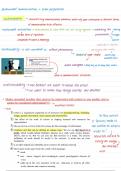
Capturing user-interface requirements using task analysis: abstract models of a task, with goals and subgoals.
Use cases in UML describe interactions between the system and human users, and between the system and other
entities (eg. subsystems) difficult to focus on just the interactions that require user-interfaces.
Possible solutions to this problem of enhancing UML to support the development of interactive systems:
Wisdom architecture: interaction model (user interface) and domain model (internal) are developed
separately from use cases, but the user interface architecture is integrated in the internal architecture via the
shared wisdom architecture (information dimension) useful for large and complex systems, but not for
small systems, as you don’t need to develop two different models.
Essential use cases: use cases written to be especially abstract to support user interface design. However, it is
unclear how the task analysis relates to other analysis in the entire development process.
UMLi: interface design with UML for interactive systems.
A process model for the use of UML to analyze and model user-interfaces, which merges the task analysis into a use-
case driven analysis model support user-interface modelling and design. Different from the ones mentioned above:
the use case model captures several views of the system (eg. functional and user-interface view) able to derive
different models from the use case model by projecting it from different views. Once we identify all tasks and dialogs,
they are used to identify user-interface components (user interface classes). The classes are used to design user-
interfaces.
The existing UML-notation is sufficient to model interactive systems no new UML-notations needed for this model.
During use case modelling: defining common functionalities or tasks task decomposition: separate use cases that
are linked to the base use case with an include relationship.
At this stage, the use case model combines the system-centric view and the user-centric view.
Once use cases are identified, they are documented in terms of use case specifications using a format that uses
keywords such as:
If: indicate a branch in the flow of events.
For: repeat an action several times.
While: model a sequence of actions.
Each use case has a pre-condition (the system state that should be satisfied before the use case begins) and a post-
condition (state when the use case finishes).
All steps of each use case in terms of the flow of events order the steps using numbers (see example below).
A use case model is a combined view of the user-centric and system-centric views. During task analysis, we are only
interested in users and their tasks from a user-centric view task model defining users and their tasks (human
actors).
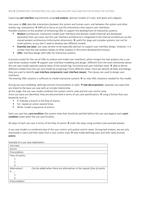
Example of a use case explanation:
Use case:
Actors:
Precondition:
Flow of events:
1.
2.
3.
Alternative1: Can be added when there are alternatives to the regular flow of events
If …..
1.
2.
Postcondition:
Capturing user-interface requirements using task analysis: abstract models of a task, with goals and subgoals.
Use cases in UML describe interactions between the system and human users, and between the system and other
entities (eg. subsystems) difficult to focus on just the interactions that require user-interfaces.
Possible solutions to this problem of enhancing UML to support the development of interactive systems:
Wisdom architecture: interaction model (user interface) and domain model (internal) are developed
separately from use cases, but the user interface architecture is integrated in the internal architecture via the
shared wisdom architecture (information dimension) useful for large and complex systems, but not for
small systems, as you don’t need to develop two different models.
Essential use cases: use cases written to be especially abstract to support user interface design. However, it is
unclear how the task analysis relates to other analysis in the entire development process.
UMLi: interface design with UML for interactive systems.
A process model for the use of UML to analyze and model user-interfaces, which merges the task analysis into a use-
case driven analysis model support user-interface modelling and design. Different from the ones mentioned above:
the use case model captures several views of the system (eg. functional and user-interface view) able to derive
different models from the use case model by projecting it from different views. Once we identify all tasks and dialogs,
they are used to identify user-interface components (user interface classes). The classes are used to design user-
interfaces.
The existing UML-notation is sufficient to model interactive systems no new UML-notations needed for this model.
During use case modelling: defining common functionalities or tasks task decomposition: separate use cases that
are linked to the base use case with an include relationship.
At this stage, the use case model combines the system-centric view and the user-centric view.
Once use cases are identified, they are documented in terms of use case specifications using a format that uses
keywords such as:
If: indicate a branch in the flow of events.
For: repeat an action several times.
While: model a sequence of actions.
Each use case has a pre-condition (the system state that should be satisfied before the use case begins) and a post-
condition (state when the use case finishes).
All steps of each use case in terms of the flow of events order the steps using numbers (see example below).
A use case model is a combined view of the user-centric and system-centric views. During task analysis, we are only
interested in users and their tasks from a user-centric view task model defining users and their tasks (human
actors).
Example of a use case explanation:
Use case:
Actors:
Precondition:
Flow of events:
1.
2.
3.
Alternative1: Can be added when there are alternatives to the regular flow of events
If …..
1.
2.
Postcondition: