PHIL-347 Week 2 Checkpoint Quiz - 100 % Correct
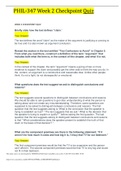
WEEK 2 CHECKPOINT QUIZ Briefly state how the text defines “claim.” Your Answer: The text defines the word "claim" as the maker of the argument is justifying or proving to be true and it is also known as argument conclusion. Reread the section in the text entitled “Two Confusions to Avoid” in Chapter 5. From what you read there, construct a definition of the term “argument” that includes both what the term is, in the context of this chapter, and what it is not. Your Answer: In the context of the chapter, the term "argument" means a giving of two or more evidence to support the claim and possibly get the other side to think the way you do. In the. context, an argument is a constructive and reasonable idea. Unlike other people think, it's not a fight, its not disrespectful or emotional. What questions does the text suggest we ask to distinguish conclusions and reasons? Your Answer: The text suggests several questions to distinguish between conclusions and reasons. We should be able to ask questions to get clear understanding of what the person is talking about and not create any misunderstanding. Therefore, some questions are supposed to be asked to distinguish between conclusions and reasons. The first question that the text suggests asking is "What is the conclusion that the speaker is trying to establish as true? " The text suggests that we ask " What is the decision that the speaker is trying to explain or justify? " before asking the first question. The last question that the text suggests asking to distinguish between conclusions and reasons is that " What considerations does the speaker present to establish the truth of that claim or the basis of that decision? ". What are the component premises are there in the following statement: "If it weren’t for how much it costs and how big it is, I’d buy that TV for our bedroom." Your Answer: The first component premises would be that the TV is too expensive and the person can't afford it. The second component premises would be that TV is very big and would not fit in their bedroom.
Escuela, estudio y materia
- Institución
- Chamberlain College Nursing
- Grado
- PHIL 347
Información del documento
- Subido en
- 17 de abril de 2023
- Número de páginas
- 2
- Escrito en
- 2022/2023
- Tipo
- Otro
- Personaje
- Desconocido
Temas
-
briefly state how the text defines “claim
-
reread the section in the text entitled “two confusions to avoid” in chapter 5 from what you read there
-
construct a definition of the term “argument” that
Documento también disponible en un lote