Family Systems Theory
Definition of family
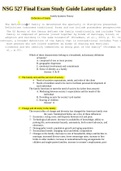
The definition of family is determined the specialty or discipline presented. Definitions transcend traditional forms and now include postmodern perspectives. The US Bureau of the Census defines the family traditionally and includes “the family is composed of persons joined together by bonds of marriage, blood, or adoption and residing in the same household” (Friedman, et al., 2003, p. 9). In contrast, a broader definition of the family that is nontraditional includes “two or more persons who are joined together by bonds of sharing and emotional closeness and who identify themselves as being part of the family” (Friedman et al., p.10).
Which of these characteristics belong in a broadened, inclusionary definition of family?
A. composed of one or more persons
B. geographic dispersion
C. emotional involvement and commitment
D. Sense of identity as a family
Answer: C & D
The family unit and the survival of society
Need of societies expectations, needs, and roles of the client
Needs of members need to be met to facilitate personal development of each individual
The family functions to meet the need of society by (select best answer):
A. Mediating between society’s expectations and the needs of the individual.
B. Providing recruits for society’s job market
C. Rearing of children
Answer: A
Change and diversity in the family
The recent influx of change and diversity has changed the American family over the years. Summarized below are a few of these influences:
Economics: rising costs; and disparity between rich and poor;
Technological advances: increase in availability of knowledge; ability to prolong life; environmental hazards, automation, birth control advances, and electronics
Demographic trends: population growth and aging population
Sociocultural trends: changing racial and ethnic composition
Changes in the family: decrease in size of households; delays and decline in marriage; increased divorce rates; lower remarriage rates; increase in first births to older mothers; increase in nontraditional living arrangements for children and single-parent families; increase in women’s employment; post- NSG 527 Final Exam Study Guide Latest update 3 modern family forms representing all types of lifestyles; and change in gender
roles in families.
Which of these is (are) the main reasons for nurses to work with the family? A. The entire family is affected by the health problem of a family member.
B. promotion of healthy functioning of the whole family will positively affect each member and his or her health status
C. By working with the whole family, the nurse may be able to discover health problems that other family members are having. Answer: A, B,C
Gay and lesbian families have much in common with cohabiting heterosexual couples, but also have major differences. These differences are:
A. Among gay and lesbian families there is no uniform or normative family structure.
B. Greater stigmatization of family among gay and lesbian families.
C. The family developmental stages differ considerably between these two types of families
Answer: A, B, C
Family nursing specialty and its areas of focus
Family nursing is a new specialty area for nursing and transcends education, practice, and research of other areas in nursing. Friedman, Bowden and Jones (2003) define family nursing as “the provision of care to families and family members in health and illness situations” (p. 54). Nurses conceptualize each family in the context of their interactions. Five models are presented for conceptualizing the family, guiding the ongoing definition of family nursing and diagrams for review are on page 37, figure2-1:
1.Family as Context: The patient is an individual with family members who are usually the primary resource for them. The individual is the primary receiver and the family is secondary for assessment and intervention of care.
2.Family as Sum of its Members: The family is a sum of all family members. Family healthcare is operational when all members of the family receive care.
3.Family Subsystems as Client: The subsystem of a family can be defined as
a dyad or triad and be comprised of a married couple, parent-child, and sibling-sibling, for example. They are the recipients of care.
4.Family as Client: The entire family is in the foreground. Dynamics of the family, subsystems, and relationships with external sources are the focus.
5.Family as a Component of Society: The family is a subsystem of society. Families are considered an institution of society equating to religion and educational institutions for example.
Family nurses place priority on the needs of families, which defines the role of the
specialty. Goals of family health evolve from the needs of families. Family nurses are cognizant and accepting of diversity in the family unit. They work with each family unit as defined by the patient.
One major difference between the five types of family nursing practice is:
a. the setting in which family nurse is practiced
b. The conceptualization of the family
c. The specialty area of the nurse
d. None of the above
Answer: B
The family as client is an integral part of the ANA standards of practice in two specialty areas in nursing, which are these?
a. rehabilitation nursing
b. medical-surgical nursing
c. psychiatric-mental health nursing
d. community health nursing
e. pediatric clinical nursing practice
f. family nurse practitioners
Answer: D&E
Levels of prevention
Primary- Prevent illness from occurring; Role of family nurse= health promotion and disease prevention , teach families to take responsibility for health and attain health goals by enjoying a healthy life style; Role of the family nurse challenges= monetary/lack of financial resources, attitudes of health care providers, health care professional as poor role models, environmental hazards, lack of health knowledge in patients, access to health care, education, and employment.
Secondary prevention- After the disease occurrence/ early detection, diagnosis,
treatment of signs and symptoms ; role f family nurse= conduct screening assessments, make referrals, determine patterns of dysfunction, health teaching;
role of family nurse challenges= denial of health issues, maladaptation of family members-lack of coping skills, and dysfunction of commutations. Tertiary prevention- recovery and rehabilitation, convalescence stage , maximize the level of functioning; provide support to families in the rehabilitation process, disability and chronic illness.
Which of the following statements is/are true about the levels of prevention? The levels: a. Specifically identify the nurse’s role only in the prevention of disease
b. Cover the entire spectrum of health and disease
c. Identify goals for each of the three levels of prevention
d. Are generally synonymous with prevention, curative, and rehabilitative phases of health care
Answers: B, C, D Nursing models/theories: key concepts
Nightingale’s Environmental Model- Did not present a theory of nursing or family nursing. Emphasized the presence of environmental factors in health and wellness. Nurses care for the whole family unit in the home environment. Clean air
King’s theory of goal attainment- included family-as-context. Collaboratively the nurse and family members identify complete assessment to determine goals and a plan of care. The family unit provides socialization and establishes norms of behavior across the life cycle. Roy’s adaptation model- family is a unit of analysis, the same context as the individual. The family unit is adaptive and interacts with the external environment
and internal and external stimuli.
Neumann’s health system’s model- the client is an open system where family is defined. Family is comprised of subsystems with relationships among the family members. The ability to maintain wellness when exposed to stressors occur through a series of exchanges in the open system of the model. Appropriate model
for community-based health care.
Orem’s self-care model- The family unit needs to sustain self-care. Nursing works with individuals to achieve self-care in the family unit; the family unit is not the direct receiver of the health care services. Self-care of the family can incorporate health beliefs of the family. Describes family as a basic conditioning unite as the context of the individual client. Rogers’s science of unitary human beings- a family has energy fields that response to the environment similar to individuals. Families have stages of development and progress in one direction. Permeability of boundaries determines
the degree of responsiveness required from environmental input.
Newman’s expanding consciousness model- expansion of consciousness defines health. Individuals move unidirectionally to expand consciousness and allow this inside and outside of the family unit; can incorporate the family with community energy fields. As individual of a family move towards consciousness, he/she can explain the internal dynamics of the family. Family social science theories: key concepts
Structural-functional- family as a social system. Identifies how the family interacts with other institutions of society. Identifies how family members interact with each other in family relationships and support each other effectively to perform their functions. Family is viewed as a social system with emphasis on purpose the family achieves, its internal organization, and its relationship to the wider society. Comprehensive, holistic.
Systems theory- the family as a set of interacting elements distinguishable from
the environment it interacts.
Family developmental theory- explains the developmental changes of family members through the years
Family interactional theory-family members assign meaning to events in their world, this is impacted by the relevancy of the situation.
Definition of family
The definition of family is determined the specialty or discipline presented. Definitions transcend traditional forms and now include postmodern perspectives. The US Bureau of the Census defines the family traditionally and includes “the family is composed of persons joined together by bonds of marriage, blood, or adoption and residing in the same household” (Friedman, et al., 2003, p. 9). In contrast, a broader definition of the family that is nontraditional includes “two or more persons who are joined together by bonds of sharing and emotional closeness and who identify themselves as being part of the family” (Friedman et al., p.10).
Which of these characteristics belong in a broadened, inclusionary definition of family?
A. composed of one or more persons
B. geographic dispersion
C. emotional involvement and commitment
D. Sense of identity as a family
Answer: C & D
The family unit and the survival of society
Need of societies expectations, needs, and roles of the client
Needs of members need to be met to facilitate personal development of each individual
The family functions to meet the need of society by (select best answer):
A. Mediating between society’s expectations and the needs of the individual.
B. Providing recruits for society’s job market
C. Rearing of children
Answer: A
Change and diversity in the family
The recent influx of change and diversity has changed the American family over the years. Summarized below are a few of these influences:
Economics: rising costs; and disparity between rich and poor;
Technological advances: increase in availability of knowledge; ability to prolong life; environmental hazards, automation, birth control advances, and electronics
Demographic trends: population growth and aging population
Sociocultural trends: changing racial and ethnic composition
Changes in the family: decrease in size of households; delays and decline in marriage; increased divorce rates; lower remarriage rates; increase in first births to older mothers; increase in nontraditional living arrangements for children and single-parent families; increase in women’s employment; post- NSG 527 Final Exam Study Guide Latest update 3 modern family forms representing all types of lifestyles; and change in gender
roles in families.
Which of these is (are) the main reasons for nurses to work with the family? A. The entire family is affected by the health problem of a family member.
B. promotion of healthy functioning of the whole family will positively affect each member and his or her health status
C. By working with the whole family, the nurse may be able to discover health problems that other family members are having. Answer: A, B,C
Gay and lesbian families have much in common with cohabiting heterosexual couples, but also have major differences. These differences are:
A. Among gay and lesbian families there is no uniform or normative family structure.
B. Greater stigmatization of family among gay and lesbian families.
C. The family developmental stages differ considerably between these two types of families
Answer: A, B, C
Family nursing specialty and its areas of focus
Family nursing is a new specialty area for nursing and transcends education, practice, and research of other areas in nursing. Friedman, Bowden and Jones (2003) define family nursing as “the provision of care to families and family members in health and illness situations” (p. 54). Nurses conceptualize each family in the context of their interactions. Five models are presented for conceptualizing the family, guiding the ongoing definition of family nursing and diagrams for review are on page 37, figure2-1:
1.Family as Context: The patient is an individual with family members who are usually the primary resource for them. The individual is the primary receiver and the family is secondary for assessment and intervention of care.
2.Family as Sum of its Members: The family is a sum of all family members. Family healthcare is operational when all members of the family receive care.
3.Family Subsystems as Client: The subsystem of a family can be defined as
a dyad or triad and be comprised of a married couple, parent-child, and sibling-sibling, for example. They are the recipients of care.
4.Family as Client: The entire family is in the foreground. Dynamics of the family, subsystems, and relationships with external sources are the focus.
5.Family as a Component of Society: The family is a subsystem of society. Families are considered an institution of society equating to religion and educational institutions for example.
Family nurses place priority on the needs of families, which defines the role of the
specialty. Goals of family health evolve from the needs of families. Family nurses are cognizant and accepting of diversity in the family unit. They work with each family unit as defined by the patient.
One major difference between the five types of family nursing practice is:
a. the setting in which family nurse is practiced
b. The conceptualization of the family
c. The specialty area of the nurse
d. None of the above
Answer: B
The family as client is an integral part of the ANA standards of practice in two specialty areas in nursing, which are these?
a. rehabilitation nursing
b. medical-surgical nursing
c. psychiatric-mental health nursing
d. community health nursing
e. pediatric clinical nursing practice
f. family nurse practitioners
Answer: D&E
Levels of prevention
Primary- Prevent illness from occurring; Role of family nurse= health promotion and disease prevention , teach families to take responsibility for health and attain health goals by enjoying a healthy life style; Role of the family nurse challenges= monetary/lack of financial resources, attitudes of health care providers, health care professional as poor role models, environmental hazards, lack of health knowledge in patients, access to health care, education, and employment.
Secondary prevention- After the disease occurrence/ early detection, diagnosis,
treatment of signs and symptoms ; role f family nurse= conduct screening assessments, make referrals, determine patterns of dysfunction, health teaching;
role of family nurse challenges= denial of health issues, maladaptation of family members-lack of coping skills, and dysfunction of commutations. Tertiary prevention- recovery and rehabilitation, convalescence stage , maximize the level of functioning; provide support to families in the rehabilitation process, disability and chronic illness.
Which of the following statements is/are true about the levels of prevention? The levels: a. Specifically identify the nurse’s role only in the prevention of disease
b. Cover the entire spectrum of health and disease
c. Identify goals for each of the three levels of prevention
d. Are generally synonymous with prevention, curative, and rehabilitative phases of health care
Answers: B, C, D Nursing models/theories: key concepts
Nightingale’s Environmental Model- Did not present a theory of nursing or family nursing. Emphasized the presence of environmental factors in health and wellness. Nurses care for the whole family unit in the home environment. Clean air
King’s theory of goal attainment- included family-as-context. Collaboratively the nurse and family members identify complete assessment to determine goals and a plan of care. The family unit provides socialization and establishes norms of behavior across the life cycle. Roy’s adaptation model- family is a unit of analysis, the same context as the individual. The family unit is adaptive and interacts with the external environment
and internal and external stimuli.
Neumann’s health system’s model- the client is an open system where family is defined. Family is comprised of subsystems with relationships among the family members. The ability to maintain wellness when exposed to stressors occur through a series of exchanges in the open system of the model. Appropriate model
for community-based health care.
Orem’s self-care model- The family unit needs to sustain self-care. Nursing works with individuals to achieve self-care in the family unit; the family unit is not the direct receiver of the health care services. Self-care of the family can incorporate health beliefs of the family. Describes family as a basic conditioning unite as the context of the individual client. Rogers’s science of unitary human beings- a family has energy fields that response to the environment similar to individuals. Families have stages of development and progress in one direction. Permeability of boundaries determines
the degree of responsiveness required from environmental input.
Newman’s expanding consciousness model- expansion of consciousness defines health. Individuals move unidirectionally to expand consciousness and allow this inside and outside of the family unit; can incorporate the family with community energy fields. As individual of a family move towards consciousness, he/she can explain the internal dynamics of the family. Family social science theories: key concepts
Structural-functional- family as a social system. Identifies how the family interacts with other institutions of society. Identifies how family members interact with each other in family relationships and support each other effectively to perform their functions. Family is viewed as a social system with emphasis on purpose the family achieves, its internal organization, and its relationship to the wider society. Comprehensive, holistic.
Systems theory- the family as a set of interacting elements distinguishable from
the environment it interacts.
Family developmental theory- explains the developmental changes of family members through the years
Family interactional theory-family members assign meaning to events in their world, this is impacted by the relevancy of the situation.