Write about Tybalt and how he is presented in different at different points in the play. (40)
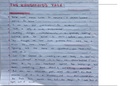
In Shakespeares's most famous play 'Romeo and Juliet', he presents the mean, feud obssessed Tybalt
Capulet. From the first scene, we immediately see his raging grudge towards all in the Montague
household. His interactions with Benvolio demonstrate that he is the antithesis of Benvolio and his
demise leads to a chain of events leading to Romeo and Juliet's death.
In act 1, scene 1, the writer establishes a fighting scene first to present the apparent family feud that
takes place in our play - which Tybalt clearly fuels. 'What, art thou drawn among thee heartless hinds?'
Here, Tybalt threathens to kill Benvolio, Shakespeare does this to convey the long ongoing conflict that is
happening between the households. The use of alliteration 'heartless hinds' suggests that he believes
Benvolio and the servants are cowardly and are of a low social value, telling us that he thinks very highly
of himself as he looks down on them. Shakespeare uses Tybalt's character to demonstrate the aggressive
masculinity of society in the Elizabethan era. This impacts the audience to get the overall impression that
the male characters display some sort of violence in the play.
Shortly after he says this, Benvolio tries to reason to ensure the fight doesn't intensify from its current
position. However, Tybalt provokes saying 'What, drawn and talk of peace? I hate the word, as I hate hell,
all Montagues'. Their attitudes towards violence significantly contrast; Tybalt is arrogant whilst Benvolio
is tranquil and wants to prevent the escalation of the conflict. He compares the Montagues to 'hell' to
illustrate his immense hatred towards the opposers and shows a hungry obssession for the 'ancient
grudge': so hungry that he attempts to aggravate a fight for no reason. Tybalt's motives of violence are
almost always fuelled by his loyalty to the Capulets, striving to defend his household and this is validated
throughout his time in the play. And allthough he is not physically in the play for long, his influence is
extensive and is a reminder of the feud.
Developing to act 1, scene 5, Romeo is spotted in the Capulet ball by Tybalt and he proceeds to tell Lord
Capulet to get rid of him. This request is denied from Capulet and Tybalt exclaims 'this intrusion, now
seeming sweet, will convert to bitterest gall'. The oxymoron shows that Tybalt swears he will take
revenge upon Romeo (foreshadowing to another fight), promising to not let him get away with this
scornful act. Furthermore, Shakespeare uses Lord Capulet in this situation to convey that his attitude
can't equal to Tybalt's desire for vegeance which further exaggerates Tybalt's angry demeanour. In
addition, the line directly precedes the famous shared sonnet of Romeo and Juliet's first meeting - a
bitter reminder that hate is never far away from the two lovers.
His promise to get revenge takes place and it directs him to his death. This demonstrates the grave
repercussions of the feud despite Tybalt being a symbol of the enmity as he upholds the clash between
the households through his constant desire for conflict and violence. Shakespeare strategically controls
him to act as a catalyst for the plot so it results to the protagonists' inevitable deaths.
In Shakespeares's most famous play 'Romeo and Juliet', he presents the mean, feud obssessed Tybalt
Capulet. From the first scene, we immediately see his raging grudge towards all in the Montague
household. His interactions with Benvolio demonstrate that he is the antithesis of Benvolio and his
demise leads to a chain of events leading to Romeo and Juliet's death.
In act 1, scene 1, the writer establishes a fighting scene first to present the apparent family feud that
takes place in our play - which Tybalt clearly fuels. 'What, art thou drawn among thee heartless hinds?'
Here, Tybalt threathens to kill Benvolio, Shakespeare does this to convey the long ongoing conflict that is
happening between the households. The use of alliteration 'heartless hinds' suggests that he believes
Benvolio and the servants are cowardly and are of a low social value, telling us that he thinks very highly
of himself as he looks down on them. Shakespeare uses Tybalt's character to demonstrate the aggressive
masculinity of society in the Elizabethan era. This impacts the audience to get the overall impression that
the male characters display some sort of violence in the play.
Shortly after he says this, Benvolio tries to reason to ensure the fight doesn't intensify from its current
position. However, Tybalt provokes saying 'What, drawn and talk of peace? I hate the word, as I hate hell,
all Montagues'. Their attitudes towards violence significantly contrast; Tybalt is arrogant whilst Benvolio
is tranquil and wants to prevent the escalation of the conflict. He compares the Montagues to 'hell' to
illustrate his immense hatred towards the opposers and shows a hungry obssession for the 'ancient
grudge': so hungry that he attempts to aggravate a fight for no reason. Tybalt's motives of violence are
almost always fuelled by his loyalty to the Capulets, striving to defend his household and this is validated
throughout his time in the play. And allthough he is not physically in the play for long, his influence is
extensive and is a reminder of the feud.
Developing to act 1, scene 5, Romeo is spotted in the Capulet ball by Tybalt and he proceeds to tell Lord
Capulet to get rid of him. This request is denied from Capulet and Tybalt exclaims 'this intrusion, now
seeming sweet, will convert to bitterest gall'. The oxymoron shows that Tybalt swears he will take
revenge upon Romeo (foreshadowing to another fight), promising to not let him get away with this
scornful act. Furthermore, Shakespeare uses Lord Capulet in this situation to convey that his attitude
can't equal to Tybalt's desire for vegeance which further exaggerates Tybalt's angry demeanour. In
addition, the line directly precedes the famous shared sonnet of Romeo and Juliet's first meeting - a
bitter reminder that hate is never far away from the two lovers.
His promise to get revenge takes place and it directs him to his death. This demonstrates the grave
repercussions of the feud despite Tybalt being a symbol of the enmity as he upholds the clash between
the households through his constant desire for conflict and violence. Shakespeare strategically controls
him to act as a catalyst for the plot so it results to the protagonists' inevitable deaths.