Directions questionnaire
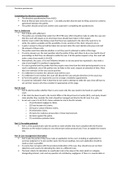
Completing the directions questionnaire
The directions questionnaire (Form N181)
Must be filed at date set by the court – r 26.3(6A) provides that the date for filing cannot be varied by
agreement between the parties.
The parties should consult one another and cooperate in completing the questionnaire.
Part A: Settlement
Part A deals with settlement.
The parties are reminded that under the CPR 1998 every effort should be made to settle the case and
that the court will enquire as to what steps have already been taken in that respect.
Solicitor must confirm (by ticking a box) that they have explained to the client the need to try to
settle, the options available and the possibility of costs sanctions if the client refused to do so.
A party’s answer to this part will be taken into account when the court decides who pays costs and
the amount of those costs.
The parties must then indicate whether or not they want to attempt to settle at this stage.
If a party answers yes, the next question asks the parties if they wish there to be a one-month stay of
proceedings so that they can attempt to settle the case. If all the parties request a stay, the court will
order a stay of one month (r 26.4(2)).
Alternatively, the court, of its own initiative whether or not any party has requested it, may order a
stay of any length if it considers it appropriate.
If a stay is granted and the parties feel they require more time than the initial period granted to try to
reach a settlement, any of the parties may, by letter to the court, request an extension of time. More
than one extension of the stay may be granted.
If a settlement is reached, the claimant must tell the court.
If a settlement is not reached, the court will allocate the case and give directions in the usual way.
In Part A the parties can request the court to arrange a mediation appointment.
If a party has indicated in Part A that they do not want to attempt to settle the case, they will have to
set out their reasons why they consider it inappropriate at this stage.
Part B: Court
Part B asks the parties whether there is any reason why the case needs to be heard at a particular
court.
If the claim has been issued in the Central Office of the Royal Courts of Justice (RCJ), each party should
state whether they consider the claim should be managed and tried at the RCJ and, if so, why.
As set out in para 2.6 of PD 29, claims suitable for trial in the RCJ include:
o (1) professional negligence claims,
o (2) Fatal Accident Act claims,
o (3) fraud or undue influence claims,
o (4) defamation claims,
o (5) claims for malicious prosecution or false imprisonment,
o (6) claims against the police,
o (7) contentious probate claims.
Part C: Pre-action protocols
Part C of the questionnaire asks the parties to state whether they have complied with the Practice
Direction on Pre-Action Conduct or any relevant pre-action protocol and, if not, to explain the reasons
why.
Part D: Case management information
Part D asks the parties if they have made an application to the court, including an application for
summary judgment or to join another party into the proceedings. Any such application should be
made as soon as possible.
If a party does not agree with the provisional allocation of the case, they should now set out their
objections and reasons for allocating the claim to a different track.
The basic criteria for allocation to a particular track is the value of the claim which is in dispute,
disregarding interest, costs and any question of contributory negligence. If there is a counterclaim or
Completing the directions questionnaire
The directions questionnaire (Form N181)
Must be filed at date set by the court – r 26.3(6A) provides that the date for filing cannot be varied by
agreement between the parties.
The parties should consult one another and cooperate in completing the questionnaire.
Part A: Settlement
Part A deals with settlement.
The parties are reminded that under the CPR 1998 every effort should be made to settle the case and
that the court will enquire as to what steps have already been taken in that respect.
Solicitor must confirm (by ticking a box) that they have explained to the client the need to try to
settle, the options available and the possibility of costs sanctions if the client refused to do so.
A party’s answer to this part will be taken into account when the court decides who pays costs and
the amount of those costs.
The parties must then indicate whether or not they want to attempt to settle at this stage.
If a party answers yes, the next question asks the parties if they wish there to be a one-month stay of
proceedings so that they can attempt to settle the case. If all the parties request a stay, the court will
order a stay of one month (r 26.4(2)).
Alternatively, the court, of its own initiative whether or not any party has requested it, may order a
stay of any length if it considers it appropriate.
If a stay is granted and the parties feel they require more time than the initial period granted to try to
reach a settlement, any of the parties may, by letter to the court, request an extension of time. More
than one extension of the stay may be granted.
If a settlement is reached, the claimant must tell the court.
If a settlement is not reached, the court will allocate the case and give directions in the usual way.
In Part A the parties can request the court to arrange a mediation appointment.
If a party has indicated in Part A that they do not want to attempt to settle the case, they will have to
set out their reasons why they consider it inappropriate at this stage.
Part B: Court
Part B asks the parties whether there is any reason why the case needs to be heard at a particular
court.
If the claim has been issued in the Central Office of the Royal Courts of Justice (RCJ), each party should
state whether they consider the claim should be managed and tried at the RCJ and, if so, why.
As set out in para 2.6 of PD 29, claims suitable for trial in the RCJ include:
o (1) professional negligence claims,
o (2) Fatal Accident Act claims,
o (3) fraud or undue influence claims,
o (4) defamation claims,
o (5) claims for malicious prosecution or false imprisonment,
o (6) claims against the police,
o (7) contentious probate claims.
Part C: Pre-action protocols
Part C of the questionnaire asks the parties to state whether they have complied with the Practice
Direction on Pre-Action Conduct or any relevant pre-action protocol and, if not, to explain the reasons
why.
Part D: Case management information
Part D asks the parties if they have made an application to the court, including an application for
summary judgment or to join another party into the proceedings. Any such application should be
made as soon as possible.
If a party does not agree with the provisional allocation of the case, they should now set out their
objections and reasons for allocating the claim to a different track.
The basic criteria for allocation to a particular track is the value of the claim which is in dispute,
disregarding interest, costs and any question of contributory negligence. If there is a counterclaim or