Alternative options before litigation:
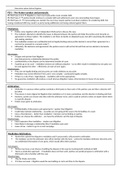
PD’s – Pre-Action conduct and protocols:
PD-PACP para 3 & 8 litigation is a last resort and parties must consider ADR.
PD-PACP para 9 parties should continue to consider ADR and settlements even once proceedings have begun.
PD-PACP para 11 if proceedings are started, the court may require parties to produce evidence of considering ADR. Not
having considered ADR may result in a party having additional costs being ordered against them.
Mediation:
Parties come together with an independent third party to discuss the case.
The mediator attempts to identify the issues in dispute between the parties and helps the parties work towards an
agreement on those matters. The mediator is not there to decide on disputed issues, but aid in examining the problem
and seeking solutions.
The mediation sessions are confidential and not legally binding unless parties decide to record their agreement in a
contract (or proceed to a consent order?)
Ultimately, the decisions and agreements the parties come to will not be full and final and can decide to terminate
mediation.
Advantages:
cheaper and quicker than litigation
may help preserve a relationship between the parties
confidentiality as the dispute can be determined outside of court
if parties go on to court – mediation sessions are without prejudice – so no offers made in mediation by one party can
be used against the other – effectively can start all over again.
Disadvantage:
They are not legally binding and any party can easily withdraw at any point.
Mediation may not be effective if the case is very complex – particularly legally complex.
If there is a rule of law / legal dispute – mediation will not be appropriate.
No guarantee mediation will produce a result whereas litigation makes a final decision in favour of one party.
Arbitration:
Arbitration is a process where parties nominate a third party to hear each of the parties case and then a decision will
be taken.
The process is more aligned to litigation than mediation as it is more contentious and the decision is binding and final.
However, parties can choose who they wish the arbitrator to be, and it could be useful to select an expert where there
is a specific dispute.
Parties must agree to arbitration
Advantages:
Confidentiality of discussions and agreements + quicker than litigation
Could help maintain relationship – as parties are not going all the way to the formalities of a court.
Gives a final decision – better than mediation + decision can be binding on parties.
Parties can choose the arbitrator – can have the arbitrator suit the type of dispute.
Disadvantage:
More expensive than mediation – maybe even litigation
More likely to damage a relationship than if mediation was used.
Issues of law – better to go to a court and judge
Mediation-Arbitration:
Parties first submit the dispute to mediation and if unsuccessful, will proceed to arbitration.
The mediator can be the arbitrator who will be familiar with the facts – unless the mediator/arbitrator becomes privy
to confidential information of one party, which would affect their position.
Advantages:
Parties may have a real chance of settling the dispute in this way by involving both methods of ADR
Seems a productive approach – if mediation does not then work, parties can quickly progress to arbitration with a
third party who is familiar with the case.
Disadvantage:
May be timely and costly
If it does not work – litigation would be next adding on costs and time to the dispute.
PD’s – Pre-Action conduct and protocols:
PD-PACP para 3 & 8 litigation is a last resort and parties must consider ADR.
PD-PACP para 9 parties should continue to consider ADR and settlements even once proceedings have begun.
PD-PACP para 11 if proceedings are started, the court may require parties to produce evidence of considering ADR. Not
having considered ADR may result in a party having additional costs being ordered against them.
Mediation:
Parties come together with an independent third party to discuss the case.
The mediator attempts to identify the issues in dispute between the parties and helps the parties work towards an
agreement on those matters. The mediator is not there to decide on disputed issues, but aid in examining the problem
and seeking solutions.
The mediation sessions are confidential and not legally binding unless parties decide to record their agreement in a
contract (or proceed to a consent order?)
Ultimately, the decisions and agreements the parties come to will not be full and final and can decide to terminate
mediation.
Advantages:
cheaper and quicker than litigation
may help preserve a relationship between the parties
confidentiality as the dispute can be determined outside of court
if parties go on to court – mediation sessions are without prejudice – so no offers made in mediation by one party can
be used against the other – effectively can start all over again.
Disadvantage:
They are not legally binding and any party can easily withdraw at any point.
Mediation may not be effective if the case is very complex – particularly legally complex.
If there is a rule of law / legal dispute – mediation will not be appropriate.
No guarantee mediation will produce a result whereas litigation makes a final decision in favour of one party.
Arbitration:
Arbitration is a process where parties nominate a third party to hear each of the parties case and then a decision will
be taken.
The process is more aligned to litigation than mediation as it is more contentious and the decision is binding and final.
However, parties can choose who they wish the arbitrator to be, and it could be useful to select an expert where there
is a specific dispute.
Parties must agree to arbitration
Advantages:
Confidentiality of discussions and agreements + quicker than litigation
Could help maintain relationship – as parties are not going all the way to the formalities of a court.
Gives a final decision – better than mediation + decision can be binding on parties.
Parties can choose the arbitrator – can have the arbitrator suit the type of dispute.
Disadvantage:
More expensive than mediation – maybe even litigation
More likely to damage a relationship than if mediation was used.
Issues of law – better to go to a court and judge
Mediation-Arbitration:
Parties first submit the dispute to mediation and if unsuccessful, will proceed to arbitration.
The mediator can be the arbitrator who will be familiar with the facts – unless the mediator/arbitrator becomes privy
to confidential information of one party, which would affect their position.
Advantages:
Parties may have a real chance of settling the dispute in this way by involving both methods of ADR
Seems a productive approach – if mediation does not then work, parties can quickly progress to arbitration with a
third party who is familiar with the case.
Disadvantage:
May be timely and costly
If it does not work – litigation would be next adding on costs and time to the dispute.