Name: T.J. York
CORNELL NOTES
Class: Public Law II Topic: Chapter I & II (J. Activism or Dialogue)
SHEET Date: 01.17.16
Period
QUESTIONS NOTES
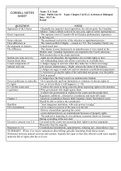
Opponents of the Charter - Originally her majesty's loyal opposition, the reform party, the Canadian
Alliance. Today's debate is driven by neo-cons, right of center representatives
Kents Arguement - The supreme court of Canada will not threaten parliamentary supremacy
In the long run
Some criticism - The mentioned exclusivity of the selection or appoitment process
Time difference in - The American Bill of Rights – created in 1791. The Canadian Charter was
Development of charters Created much later ….
The difference - The charter is more democractic in naturebecause it was created in the
Modern state. Canadian legislatures can respond to the Court's decisions
With second relies to the courts decisions
Section one (why not J.A.) - rights are not abosolute, the legislature can override rights or laws
Section thirty three - not withstanding clause also allows a province to overridde laws
4 main components of 1.) Judges engage in activism when they make law in their own image
Judicial Activism Left: stresses indeterminacy / Right: stresses the intent of the framers
2.) Judges are eager to make law and not minimize constitutional judgements
3.) Activism is giving the rights of the individual and groups over the public
Good in general
4.) Judges have the final word in an undemocratic fashion
Forces politicians to subscribe - Or to specifically spell out limitations or violation of citizens rights in
To rights Law, so its less likely it will happen (s.)
S. 1 for the courts and - it allows the courts to bring concerns about respecting rights to the attention
Legislature Of the government who might ignore them.
- it allows the government to explain to the courts and the people their
Regulatory ambitions , alternatives considered, and trade-offs made
Chapter 2 -American constitution framers didn't stipulate clearly that federal courts
Should be able to enforce the constitution
Hamilton - “least dangerous institution, with only powers to judge”
First Amendment - Gives contest to powers of the state over the fed
- History of presidents ignoring the courts
- courts declared slavery as constitutional becacuse of property rights
- The judicial as imposing its own arbitrary economic ideals on Ameruca
During overruling of the new deal
Excessive concern over J.A. Can result in the courts not exercising their rights to protect unpopular
Minorities from the majority
Responses to J.A. Constitutional amendments, appointments, reducing juri,, disocedience, legi.
SUMMARY: Write 4 or more sentences describing specific learning from these notes.
Dichotomy between judicial activism and restraint. Separate but equal so that state officials could resist equality
under the bill of rights after the civil war.
CORNELL NOTES
Class: Public Law II Topic: Chapter I & II (J. Activism or Dialogue)
SHEET Date: 01.17.16
Period
QUESTIONS NOTES
Opponents of the Charter - Originally her majesty's loyal opposition, the reform party, the Canadian
Alliance. Today's debate is driven by neo-cons, right of center representatives
Kents Arguement - The supreme court of Canada will not threaten parliamentary supremacy
In the long run
Some criticism - The mentioned exclusivity of the selection or appoitment process
Time difference in - The American Bill of Rights – created in 1791. The Canadian Charter was
Development of charters Created much later ….
The difference - The charter is more democractic in naturebecause it was created in the
Modern state. Canadian legislatures can respond to the Court's decisions
With second relies to the courts decisions
Section one (why not J.A.) - rights are not abosolute, the legislature can override rights or laws
Section thirty three - not withstanding clause also allows a province to overridde laws
4 main components of 1.) Judges engage in activism when they make law in their own image
Judicial Activism Left: stresses indeterminacy / Right: stresses the intent of the framers
2.) Judges are eager to make law and not minimize constitutional judgements
3.) Activism is giving the rights of the individual and groups over the public
Good in general
4.) Judges have the final word in an undemocratic fashion
Forces politicians to subscribe - Or to specifically spell out limitations or violation of citizens rights in
To rights Law, so its less likely it will happen (s.)
S. 1 for the courts and - it allows the courts to bring concerns about respecting rights to the attention
Legislature Of the government who might ignore them.
- it allows the government to explain to the courts and the people their
Regulatory ambitions , alternatives considered, and trade-offs made
Chapter 2 -American constitution framers didn't stipulate clearly that federal courts
Should be able to enforce the constitution
Hamilton - “least dangerous institution, with only powers to judge”
First Amendment - Gives contest to powers of the state over the fed
- History of presidents ignoring the courts
- courts declared slavery as constitutional becacuse of property rights
- The judicial as imposing its own arbitrary economic ideals on Ameruca
During overruling of the new deal
Excessive concern over J.A. Can result in the courts not exercising their rights to protect unpopular
Minorities from the majority
Responses to J.A. Constitutional amendments, appointments, reducing juri,, disocedience, legi.
SUMMARY: Write 4 or more sentences describing specific learning from these notes.
Dichotomy between judicial activism and restraint. Separate but equal so that state officials could resist equality
under the bill of rights after the civil war.