LITERATURE BRAND MANAGEMENT 2023
Taught by: Peeter Verlegh
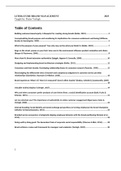
Table of Contents
Building customer-based equity: A blueprint for creating strong brands (Keller, 2001).........................................2
Conceptualizing brand purpose and considering its implications for consumer eudaimonic well-being (Williams,
Escalas & Morningstar, 2022).............................................................................................................................. 5
What is the purpose of your purpose? Your why may not be what you think it is (Keller, 2022)...........................7
Dogs on the street, pumas on your feet: How cues in the environment influence product evaluation and choice
(Berger & Fitzsimons, 2008)................................................................................................................................. 8
More than fit: Brand extension authenticity (Spiggle, Nguyen & Caracella, 2008)...............................................10
Designing and implementing brand architecture strategies (Keller, 2015)..........................................................12
Consumers and their brands: Developing relationship theory in consumer research (Fournier, 1998).................15
Disentangling the differential roles of warmth and competence judgments in customer-service provider
relationships (Güntürkün, Haumann & Mikolon, 2020)......................................................................................16
Brand experience: What is it? How is it measured? Does it affect loyalty? (Brakus, Schmitt & Zarantonello, 2009)
......................................................................................................................................................................... 18
Valuable virality (Akpinar & Berger, 2017)......................................................................................................... 19
Why and when consumers prefer products of user-driven firms: a social identification account (Dahl, Fuchs &
Schreier, 2015).................................................................................................................................................. 21
Let me entertain you? The importance of authenticity in online customer engagement (Eigenraam, Eelen &
Verlegh, 2020)................................................................................................................................................... 22
Internal branding: Social identity and social exchange perspectives on turning employees into brand champions
(Löhndor & Diamantopoulos, 2014)................................................................................................................... 24
Branded service encounters: strategically aligning employee behavior with the brand positioning (Sirianni et al.,
2013)................................................................................................................................................................ 26
Doing well by doing good: The benevolent halo of corporate social responsibility (Chernev & Blair, 2015).........28
Brand activism: review and framework for managers and academics (Verlegh, 2023)........................................30
1
,Building customer-based equity: A blueprint for creating strong brands
(Keller, 2001)
This paper creates a Customer-Based Brand Equity model and provides a perspective on what
brand equity is and how it should best be built, measured and managed.
Building a strong brand involves 4 steps:
1) Establishing brand identity – establishing breadth and depth of brand awareness.
Who are you?
2) Creating brand meaning – strong, favorable, and unique brand associations.
What are you?
3) Eliciting possible, accessible brand responses.
What about you? What do I think or feel about you?
4) Forging brand relationships with customers that are characterized by intense, active
loyalty. What about you and me? What kind of association and how much of a
connection would I like to have with you?
There are 6 brand-building blocks to accompany the 4 steps: brand salience, brand performance,
brand imagery, brand judgments, brand feelings, and brand resonance.
Brand resonance: customers express a high degree of loyalty to the brand.
Creating significant brand equity
1) Brand identity
Brand salience: customer awareness of the brand (To what extent is the brand top-of-mind?) It
involves linking the brand name, logo, symbol, etc. Make sure the customers understand the
product/service category in which the brand competes.
- Influences the formation and strength of brand associations that make up the brand image
and gives the brand meaning.
2
, - Brand awareness is important during possible purchase or consumption opportunities.
Influences the likelihood that the brand will be a member of the consideration set (brands
that receive serious consideration for purchase).
- With low involvement customers may make choices based on brand salience alone.
Depth: how easily the brand can be recalled or recognized.
Breadth: range of purchase and consumption options which come to mind.
2) Brand meaning
Establishing a brand image – what the brand is characterized by and should stand for in the
minds of customers (performance & imagery).
Brand performance: customers’ experience with the product must at least or surpass their
expectations. The product is at the heart of brand equity. How the product/service meet
customers’ functional needs.
There are 5 attributes that underlie:
- Primary characteristics and secondary features
- Product reliability, durability, and serviceability
- Service effectiveness, efficiency, and empathy
- Style and design
- Price
Brand imagery: how people think about a brand abstractly rather than what they think the brand
actually does.
There are 4 intangibles that can be linked to a brand:
- Type of person/organization who uses the brand.
- Conditions under which the brand could/should be purchased and used (e.g., type of
channel, specific store, and ease of purchase).
- Brands may take on personality traits and values similar to those of people (e.g.,
sincerity, excitement, competence, sophistication, and ruggedness).
- Brands can also take on association with their past or noteworthy events in the brand
history.
To conclude, there are 3 important dimensions for brand meaning:
- Strength – how strongly is the brand identified with a brand association?
- Favorability – how important or valuable is the brand association to customers?
- Uniqueness – how distinctively is the brand identified with the brand association?
A brand should have this, in this order.
3) Brand responses
How customers respond to the brand, its marketing activity and other sources of information –
what customers think/feel about the brand.
Brand judgement: customers’ personal opinions and evaluations of the brand. How customers
put together all the different performance and imagery associations for the brand to form
different kinds of opinions.
4 important types:
3
, - Brand quality
- Brand credibility – perceived expertise, trustworthiness, and likability.
- Brand consideration
- Brand superiority – unique brand
“head”
Brand feelings: customers’ emotional responses and reactions of the brand.
6 important types:
- Warmth – soothing feelings
- Fun
- Excitement – energized feelings
- Security
- Social approval
- Self-respect
“heart”
4) Brand relationships
Intensity: strength of the attitudinal attachment and sense of community.
Activity: how frequently the consumer buys and uses the brand.
Brand resonance: nature of relationship between customer and brand and the extent to which
customers feel that they are “in synch” with the brand.
4 categories:
- Behavioral loyalty – repeat purchase, amount
- Altitudinal attachment – personal attachment to the brand
- Sense of community – identification with a brand community
- Active engagement – invest time, money, or other resources
4
Taught by: Peeter Verlegh
Table of Contents
Building customer-based equity: A blueprint for creating strong brands (Keller, 2001).........................................2
Conceptualizing brand purpose and considering its implications for consumer eudaimonic well-being (Williams,
Escalas & Morningstar, 2022).............................................................................................................................. 5
What is the purpose of your purpose? Your why may not be what you think it is (Keller, 2022)...........................7
Dogs on the street, pumas on your feet: How cues in the environment influence product evaluation and choice
(Berger & Fitzsimons, 2008)................................................................................................................................. 8
More than fit: Brand extension authenticity (Spiggle, Nguyen & Caracella, 2008)...............................................10
Designing and implementing brand architecture strategies (Keller, 2015)..........................................................12
Consumers and their brands: Developing relationship theory in consumer research (Fournier, 1998).................15
Disentangling the differential roles of warmth and competence judgments in customer-service provider
relationships (Güntürkün, Haumann & Mikolon, 2020)......................................................................................16
Brand experience: What is it? How is it measured? Does it affect loyalty? (Brakus, Schmitt & Zarantonello, 2009)
......................................................................................................................................................................... 18
Valuable virality (Akpinar & Berger, 2017)......................................................................................................... 19
Why and when consumers prefer products of user-driven firms: a social identification account (Dahl, Fuchs &
Schreier, 2015).................................................................................................................................................. 21
Let me entertain you? The importance of authenticity in online customer engagement (Eigenraam, Eelen &
Verlegh, 2020)................................................................................................................................................... 22
Internal branding: Social identity and social exchange perspectives on turning employees into brand champions
(Löhndor & Diamantopoulos, 2014)................................................................................................................... 24
Branded service encounters: strategically aligning employee behavior with the brand positioning (Sirianni et al.,
2013)................................................................................................................................................................ 26
Doing well by doing good: The benevolent halo of corporate social responsibility (Chernev & Blair, 2015).........28
Brand activism: review and framework for managers and academics (Verlegh, 2023)........................................30
1
,Building customer-based equity: A blueprint for creating strong brands
(Keller, 2001)
This paper creates a Customer-Based Brand Equity model and provides a perspective on what
brand equity is and how it should best be built, measured and managed.
Building a strong brand involves 4 steps:
1) Establishing brand identity – establishing breadth and depth of brand awareness.
Who are you?
2) Creating brand meaning – strong, favorable, and unique brand associations.
What are you?
3) Eliciting possible, accessible brand responses.
What about you? What do I think or feel about you?
4) Forging brand relationships with customers that are characterized by intense, active
loyalty. What about you and me? What kind of association and how much of a
connection would I like to have with you?
There are 6 brand-building blocks to accompany the 4 steps: brand salience, brand performance,
brand imagery, brand judgments, brand feelings, and brand resonance.
Brand resonance: customers express a high degree of loyalty to the brand.
Creating significant brand equity
1) Brand identity
Brand salience: customer awareness of the brand (To what extent is the brand top-of-mind?) It
involves linking the brand name, logo, symbol, etc. Make sure the customers understand the
product/service category in which the brand competes.
- Influences the formation and strength of brand associations that make up the brand image
and gives the brand meaning.
2
, - Brand awareness is important during possible purchase or consumption opportunities.
Influences the likelihood that the brand will be a member of the consideration set (brands
that receive serious consideration for purchase).
- With low involvement customers may make choices based on brand salience alone.
Depth: how easily the brand can be recalled or recognized.
Breadth: range of purchase and consumption options which come to mind.
2) Brand meaning
Establishing a brand image – what the brand is characterized by and should stand for in the
minds of customers (performance & imagery).
Brand performance: customers’ experience with the product must at least or surpass their
expectations. The product is at the heart of brand equity. How the product/service meet
customers’ functional needs.
There are 5 attributes that underlie:
- Primary characteristics and secondary features
- Product reliability, durability, and serviceability
- Service effectiveness, efficiency, and empathy
- Style and design
- Price
Brand imagery: how people think about a brand abstractly rather than what they think the brand
actually does.
There are 4 intangibles that can be linked to a brand:
- Type of person/organization who uses the brand.
- Conditions under which the brand could/should be purchased and used (e.g., type of
channel, specific store, and ease of purchase).
- Brands may take on personality traits and values similar to those of people (e.g.,
sincerity, excitement, competence, sophistication, and ruggedness).
- Brands can also take on association with their past or noteworthy events in the brand
history.
To conclude, there are 3 important dimensions for brand meaning:
- Strength – how strongly is the brand identified with a brand association?
- Favorability – how important or valuable is the brand association to customers?
- Uniqueness – how distinctively is the brand identified with the brand association?
A brand should have this, in this order.
3) Brand responses
How customers respond to the brand, its marketing activity and other sources of information –
what customers think/feel about the brand.
Brand judgement: customers’ personal opinions and evaluations of the brand. How customers
put together all the different performance and imagery associations for the brand to form
different kinds of opinions.
4 important types:
3
, - Brand quality
- Brand credibility – perceived expertise, trustworthiness, and likability.
- Brand consideration
- Brand superiority – unique brand
“head”
Brand feelings: customers’ emotional responses and reactions of the brand.
6 important types:
- Warmth – soothing feelings
- Fun
- Excitement – energized feelings
- Security
- Social approval
- Self-respect
“heart”
4) Brand relationships
Intensity: strength of the attitudinal attachment and sense of community.
Activity: how frequently the consumer buys and uses the brand.
Brand resonance: nature of relationship between customer and brand and the extent to which
customers feel that they are “in synch” with the brand.
4 categories:
- Behavioral loyalty – repeat purchase, amount
- Altitudinal attachment – personal attachment to the brand
- Sense of community – identification with a brand community
- Active engagement – invest time, money, or other resources
4