

NHM 201 Module 1 with complete solutions
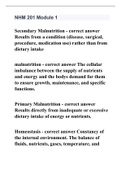
Secondary Malnutrition Results from a condition (disease, surgical, procedure, medication use) rather than from dietary intake malnutrition The cellular imbalance between the supply of nutrients and energy and the bodys demand for them to ensure growth, maintenance, and specific functions. Primary Malnutrition Results directly from inadequate or excessive dietary intake of energy or nutrients. Homeostasis Constancy of the internal environment. The balance of fluids, nutrients, gases, temperature, and other conditions needed to ensure ongoing, proper functioning of cells and , therefore, all parts of the body Chronic Disease Sloe developing, long lasting diseases that are not contagious (heart disease, cancer, diabetes) They can be treated but not always cured. Oxidative Stress condition that occurs when cells are exposed to more oxidizing molecules (such as free radicals) than to antioxidant molecules that neutralize them. Over time, this causes damage to lipids, DNA, cells, and tissues. It increases the risk of heart disease, type 2 diabetes, cancer, and other diseases. Alzheimers Disease A brain disease that represents the most common form of dementia. It is characterized by memory loss for recent events that expands to more distant memories over the years. It eventually produces profound intellectual decline characterized by dementia and personal helplessness. Hypertension High blood pressure. It is defined in adults as blood pressure exerted inside blood vessel walls that typically exceeds 140/90 mmHg (millimeters of mercury). Stroke An event that occurs when a blood vessel in the brain ruptures or becomes blocked. It is often associated with "hardening of the arteries" in the brain. Also called cerebral vascular accident. chronic inflammation Low-grade inflammation lasting weeks to years. Inflammation is the first response of the body's immune system to infectious agents, toxins, or irritants. It triggers the release of biologically active substances that promote oxidation and other reactions to counteract the infection, toxin, or irritant. It also Damages lipids, cells, and tissues. Nutrition Monitoring Assessment of dietary or nutrition status at intermittent times with the aim of detecting changes in the dietary or nutritional status of a population. Anthropometry The science of measuring the human body and its parts. 00:00 01:39 nutrition surveillance The continuous assessment of nutritional status for the purpose of detecting changes in trends or distributions in order to initiate corrective measures. Nutrigenomics The study of diet and nutrient related functions and interactions of genes and their effects on health and disease.
Información del documento
- Subido en
- 21 de febrero de 2023
- Número de páginas
- 38
- Escrito en
- 2022/2023
- Tipo
- Examen
- Contiene
- Preguntas y respuestas

