Attachment
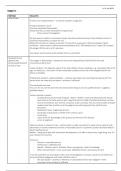
,Caregiver-infant interaction
What is attachment:
- A two-way emotional relationship in which people depend on each other for their sense o
security
- A strong and reciprocal relationship between two people e.g. caregiver and infant
- A long enduring, emotionally meaningful tie to a particular individual
Maccoby (1980) attachment behaviours
Seeking proximity – wanting to be near each other
Distress if separated – both the infant and caregiver feel distress when separated
Pleasure when reunited – both the infant and caregiver are joyful to be reunited with each
other
General orientation – when the infant is generally always aware of the caregiver and makes
frequent contact
, Meltzoff and Moore (1977)
Controlled observation of four different stimuli (mouth opening, termination of mouth opening, tong
protrusion and termination of tongue protrusion) done by the parent, observed infant from 2 weeks
Judged by independent observers, high intra-observer and inter-observer reliability
New-born babies have an alert phase. From birth, babies and their mothers spend a lot of time in int
and pleasurable interaction. Babies have periodic ‘alert phases’ and signal they are ready for interacti
which mothers respond to about 2/3 of the time.
Interactional synchrony (mirroring): carrying out the same action simultaneously. When the mothers
infants actions and emotions mirror each others. It is important for development of attachment, high
synchrony = higher quality of attachment. Isabella et al (1989) observed 20 mothers and infants and
assessed the degree of synchrony and the quality of mother-infant attachment. High levels of synchr
were associated with a between quality of mother-infant attachment
Reciprocity: one person elicits a response from the other. From around three months reciprocal
interactions tends to be increasingly frequent, when each person responds to the other and elicits a
response from them. Brazleton et al (1975) described this as a ‘dance’. This happens when the baby
active. Babies take an active role and both mother and child can initiate interactions and they take tu
in doing so
,Caregiver-infant interaction
What is attachment:
- A two-way emotional relationship in which people depend on each other for their sense o
security
- A strong and reciprocal relationship between two people e.g. caregiver and infant
- A long enduring, emotionally meaningful tie to a particular individual
Maccoby (1980) attachment behaviours
Seeking proximity – wanting to be near each other
Distress if separated – both the infant and caregiver feel distress when separated
Pleasure when reunited – both the infant and caregiver are joyful to be reunited with each
other
General orientation – when the infant is generally always aware of the caregiver and makes
frequent contact
, Meltzoff and Moore (1977)
Controlled observation of four different stimuli (mouth opening, termination of mouth opening, tong
protrusion and termination of tongue protrusion) done by the parent, observed infant from 2 weeks
Judged by independent observers, high intra-observer and inter-observer reliability
New-born babies have an alert phase. From birth, babies and their mothers spend a lot of time in int
and pleasurable interaction. Babies have periodic ‘alert phases’ and signal they are ready for interacti
which mothers respond to about 2/3 of the time.
Interactional synchrony (mirroring): carrying out the same action simultaneously. When the mothers
infants actions and emotions mirror each others. It is important for development of attachment, high
synchrony = higher quality of attachment. Isabella et al (1989) observed 20 mothers and infants and
assessed the degree of synchrony and the quality of mother-infant attachment. High levels of synchr
were associated with a between quality of mother-infant attachment
Reciprocity: one person elicits a response from the other. From around three months reciprocal
interactions tends to be increasingly frequent, when each person responds to the other and elicits a
response from them. Brazleton et al (1975) described this as a ‘dance’. This happens when the baby
active. Babies take an active role and both mother and child can initiate interactions and they take tu
in doing so