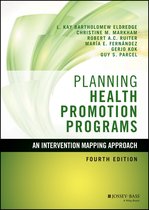
Summary book Planning Health Promotion
Programs, an Intervention Mapping Approach
Chapter 1, 2, 3, 4, 5, 6, 7, 8
L Kay Bartholomew Eldredge Christine M. Markham Gerjo
Kok Maria E. Fernandez Robert A. C. Ruiter Christine M.
Markham Guy S. Parcel
,Content
Chapter 1 OVERVIEW OF INTERVENTION MAPPING ......................................................................................... 3
Chapter 4 INTERVENTION MAPPING STEP 1 Logic Model of the Problem ....................................................... 10
Chapter 2: BEHAVIOR-ORIENTED THEORIES USED IN HEALTH PROMOTION ................................................... 19
Chapter 3 ENVIRONMENT-ORIENTED THEORIES ............................................................................................. 32
Chapter 5 INTERVENTION MAPPING STEP 2 ................................................................................................... 47
Chapter 6 INTERVENTION MAPPING STEP 3 Program Design ......................................................................... 73
Chapter 7 PROGRAM PRODUCTION ............................................................................................................... 99
Chapter 8 INTERVENTION MAPPING STEP 5 Program Implementation Plan ................................................. 110
,Chapter 1 OVERVIEW OF INTERVENTION MAPPING
The purpose of Intervention Mapping is to provide health promotion program planners with a
framework for effective decision making at each step in intervention planning, implementation, and
evaluation.
Health promotion has been defined as combinations of educational, political, regulatory, and
organizational supports for behavior and environmental changes that are conducive to health (Green
& Kreuter, 2005), and health education is a subset of health promotion applications that are
primarily based on education.
Perspectives
Intervention Mapping is a planning approach that is based on using theory and evidence as
foundations for taking an ecological approach to assessing and intervening in health problems and
engendering community participation.
Theory and Evidence
Nothing is as useful as a good theory (Hochbaum, Sorenson, & Lorig, 1992). The use of theory is
necessary in evidence-informed health promotion to ensure that we can describe
and address the factors that cause health problems and the methods to achieve change.
In Intervention Mapping we use theory from a problem-driven per- spective.
In practice, problem-driven, applied behavioral or social science may use one theory or multiple
theories, empirical evidence, and new research to assess a problem and to solve or prevent a
problem. In this approach, the main focus is on problem solving, and the criteria for success are
formulated as outcomes related to the problem.
Health promotion planners are likely to bring multiple theoretical and experiential perspectives to a
problem rather than to define a practice or research agenda around a specific theoretical approach.
Ecological Models and Systems Thinking
The social ecological model, an underpinning for Intervention Mapping, has been used extensively in
health promotion and is consonant with and encompassed by systems thinking.
In the social ecological model, health is a function of individuals and of the environments in which
individuals live, including family, social networks, organizations, communities, and societies. A
system is activities, actors, and settings that are affected by or affect a certain problem situation.
Using a systems perspective to
● assess the needs and strengths of the population;
● to understand a health problem and its causes;
● to form a group of stakeholders to plan, conduct, and disseminate an intervention; and
● to select the most effective leverage points to address a health-related problem can increase
the effectiveness of planning.
The social ecological paradigm focuses on the interrelationships between individuals (biological,
psychological, and behavioral characteris- tics) and their environments. These environments include
physical, social, and cultural aspects that exist across the individual’s life domains and social settings.
, A nested structure of environments allows for multiple influences both within levels and across
levels.
We have adopted the approach of D. G. Simons-Morton, B. G. Simons-Morton, Parcel, and Bunker
(1988) of looking at agents (decision makers or role actors) at each ecological level: interpersonal
(e.g., parents), organizational (e.g., managers of school food services), community (e.g., newspaper
editors), or societal (e.g., legislators).
Interventions at the various levels focus on agents (individuals or groups, such as boards or
committees) in positions to exercise control over aspects of the environment.
Participation in Health Promotion Planning
All health promotion program development, implementation, and evaluation should be based on
broad participation of community members
Inclusive community participation helps ensure that program focus reflects concerns for the local
community. Broad participation can bring a greater breadth of skills, knowledge, and expertise to a
project and can improve external validity of interventions and evaluation by recognition of the local
knowledge of community members and practitioners
Planners can benefit greatly by applying principles for facilitating participatory action and
partnerships suggested by Israel and colleagues.
Their principles are to:
● Recognize a partner community as a unit of identity
● Build upon community strengths and resources
● Facilitate collaborative, equitable decision making in which partners negotiate desired roles
in all project phases and attend to social inequalities
● Foster colearning among partners
● Balance knowledge generation with community benefit
● Focus on ecological perspectives, local problems, and multiple deter- minants of health
● Develop systems using an iterative process
● Disseminate information, results, and benefits to all partners
● Develop a commitment and long-term process
Ethical Practice of Health Promotion
→ Some guidelines for ethical health promotion practice.
The emphasis on participation helps ensure that communities have input into judgments about
tolerable levels of intervention and evaluation burden as well as an acceptable balance of burden-to-
risk based on community values.
Intervention Mapping Steps
Each step of Intervention Mapping comprises several tasks
The completion of the tasks included in a step creates a product that is the guide for the subsequent
step. Completion of all steps creates a blueprint for designing, implementing, and evaluating an
intervention based on a foundation of theoretical, empirical, and practical information. Even though
Intervention Mapping describes six steps, the process is iterative rather than completely linear.
Program developers move back and forth between tasks and steps as they gain new information and
perspective.
However, the process is also cumulative; planners base each step on the previous steps, and
inattention to a step can jeopardize the potential effectiveness of the intervention by compromising
the validity of the foundation on which later steps are conducted. Sometimes planners can get
Programs, an Intervention Mapping Approach
Chapter 1, 2, 3, 4, 5, 6, 7, 8
L Kay Bartholomew Eldredge Christine M. Markham Gerjo
Kok Maria E. Fernandez Robert A. C. Ruiter Christine M.
Markham Guy S. Parcel
,Content
Chapter 1 OVERVIEW OF INTERVENTION MAPPING ......................................................................................... 3
Chapter 4 INTERVENTION MAPPING STEP 1 Logic Model of the Problem ....................................................... 10
Chapter 2: BEHAVIOR-ORIENTED THEORIES USED IN HEALTH PROMOTION ................................................... 19
Chapter 3 ENVIRONMENT-ORIENTED THEORIES ............................................................................................. 32
Chapter 5 INTERVENTION MAPPING STEP 2 ................................................................................................... 47
Chapter 6 INTERVENTION MAPPING STEP 3 Program Design ......................................................................... 73
Chapter 7 PROGRAM PRODUCTION ............................................................................................................... 99
Chapter 8 INTERVENTION MAPPING STEP 5 Program Implementation Plan ................................................. 110
,Chapter 1 OVERVIEW OF INTERVENTION MAPPING
The purpose of Intervention Mapping is to provide health promotion program planners with a
framework for effective decision making at each step in intervention planning, implementation, and
evaluation.
Health promotion has been defined as combinations of educational, political, regulatory, and
organizational supports for behavior and environmental changes that are conducive to health (Green
& Kreuter, 2005), and health education is a subset of health promotion applications that are
primarily based on education.
Perspectives
Intervention Mapping is a planning approach that is based on using theory and evidence as
foundations for taking an ecological approach to assessing and intervening in health problems and
engendering community participation.
Theory and Evidence
Nothing is as useful as a good theory (Hochbaum, Sorenson, & Lorig, 1992). The use of theory is
necessary in evidence-informed health promotion to ensure that we can describe
and address the factors that cause health problems and the methods to achieve change.
In Intervention Mapping we use theory from a problem-driven per- spective.
In practice, problem-driven, applied behavioral or social science may use one theory or multiple
theories, empirical evidence, and new research to assess a problem and to solve or prevent a
problem. In this approach, the main focus is on problem solving, and the criteria for success are
formulated as outcomes related to the problem.
Health promotion planners are likely to bring multiple theoretical and experiential perspectives to a
problem rather than to define a practice or research agenda around a specific theoretical approach.
Ecological Models and Systems Thinking
The social ecological model, an underpinning for Intervention Mapping, has been used extensively in
health promotion and is consonant with and encompassed by systems thinking.
In the social ecological model, health is a function of individuals and of the environments in which
individuals live, including family, social networks, organizations, communities, and societies. A
system is activities, actors, and settings that are affected by or affect a certain problem situation.
Using a systems perspective to
● assess the needs and strengths of the population;
● to understand a health problem and its causes;
● to form a group of stakeholders to plan, conduct, and disseminate an intervention; and
● to select the most effective leverage points to address a health-related problem can increase
the effectiveness of planning.
The social ecological paradigm focuses on the interrelationships between individuals (biological,
psychological, and behavioral characteris- tics) and their environments. These environments include
physical, social, and cultural aspects that exist across the individual’s life domains and social settings.
, A nested structure of environments allows for multiple influences both within levels and across
levels.
We have adopted the approach of D. G. Simons-Morton, B. G. Simons-Morton, Parcel, and Bunker
(1988) of looking at agents (decision makers or role actors) at each ecological level: interpersonal
(e.g., parents), organizational (e.g., managers of school food services), community (e.g., newspaper
editors), or societal (e.g., legislators).
Interventions at the various levels focus on agents (individuals or groups, such as boards or
committees) in positions to exercise control over aspects of the environment.
Participation in Health Promotion Planning
All health promotion program development, implementation, and evaluation should be based on
broad participation of community members
Inclusive community participation helps ensure that program focus reflects concerns for the local
community. Broad participation can bring a greater breadth of skills, knowledge, and expertise to a
project and can improve external validity of interventions and evaluation by recognition of the local
knowledge of community members and practitioners
Planners can benefit greatly by applying principles for facilitating participatory action and
partnerships suggested by Israel and colleagues.
Their principles are to:
● Recognize a partner community as a unit of identity
● Build upon community strengths and resources
● Facilitate collaborative, equitable decision making in which partners negotiate desired roles
in all project phases and attend to social inequalities
● Foster colearning among partners
● Balance knowledge generation with community benefit
● Focus on ecological perspectives, local problems, and multiple deter- minants of health
● Develop systems using an iterative process
● Disseminate information, results, and benefits to all partners
● Develop a commitment and long-term process
Ethical Practice of Health Promotion
→ Some guidelines for ethical health promotion practice.
The emphasis on participation helps ensure that communities have input into judgments about
tolerable levels of intervention and evaluation burden as well as an acceptable balance of burden-to-
risk based on community values.
Intervention Mapping Steps
Each step of Intervention Mapping comprises several tasks
The completion of the tasks included in a step creates a product that is the guide for the subsequent
step. Completion of all steps creates a blueprint for designing, implementing, and evaluating an
intervention based on a foundation of theoretical, empirical, and practical information. Even though
Intervention Mapping describes six steps, the process is iterative rather than completely linear.
Program developers move back and forth between tasks and steps as they gain new information and
perspective.
However, the process is also cumulative; planners base each step on the previous steps, and
inattention to a step can jeopardize the potential effectiveness of the intervention by compromising
the validity of the foundation on which later steps are conducted. Sometimes planners can get