© Ane Venter
Chapter 4
Sensory Systems and Perception
1
,© Ane Venter
Psychophysics: Basic Concepts and Issues
1. Thresholds: Looking for limits
2. Signal-detection theory
3. Perception with awareness
4. Sensory adaption
→ Gustav Fecher – German scientist that laid the earliest foundation of important information + research
in the field of psychophysics (1860)
→ Psychophysics = Studies how a physical stimulus within the environment is converted into perceptions
and psychological experiences
→ Wilhelm Wundt – further contributed to the field
○ Questioned the quantity and nature of physical energy needed to stimulate a psychological
experience
Stimulus
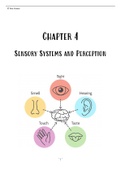
→ Our bodies process stimuli via sensory organs – eyes, ears, mouth, skin, nose
→ Sensory system = organise and interpret sensory input – attach meaning + develop response though 2
separate but interacting stages of sensation and perception
○ Sensation and perception often viewed as one process
Sensation Transduction Perception
→ Sensation: the physiological
process of taking in raw physical energy from stimuli (such as light from the environment) via the
sensory receptors of our different sensory organs
○ Sensory input sent to the brain = processing and interpretation of the stimuli occur
→ Transduction: the conversion of raw physical energy into sensory neurological signals
○ Sub-process that occurs during sensation
○ Neurological signals travel to different parts of the brain via neural pathways
→ Perception: psychological process whereby sensory neurological signals that reach the brain are
selected, organised, and interpreted so that we can make sense and attach meaning to sensation
○ Allows us to acquire and benefit from sensations in the environment
○ Enables us to gain information and respond to stimuli according to our own individual contexts
→ Each process influences the other in terms of effect or impairment
○ Agnosia = results in breakdown between sensation and perception
Inability to identify the form and /or function of people or objects using certain senses
Can occur in any sensory domain
○ Visual agnosia = may be able to sense the stimuli
Impairment with the perception process can interfere with perceiving and recognising an object
2
, © Ane Venter
○ Tactile agnosia: inability to recognise an object by touching it
→ We all perceive stimuli in different ways due to 3 factors:
i. Functionality of our individual sensory systems
ii. Different types of stimuli that occur in our individual environments
iii. Our unique contexts and experiences
○ This explains why people perceive and tolerate sound, light, taste, smell, and touch differently
1. Thresholds: Looing for limits
→ The point at which a stimulus triggers a response (like a light turning itself on)
→ Stimulus intensity: how intense (strong) a stimulus must be in order to be detected
→ Absolute threshold: weakest detectable stimulus
○ Level at which the stimulus intensity is detected for a specific percentage of time (50%)
→ Fechner and contemporaries
○ Studied the absolute threshold
○ Attempted to identify absolute threshold = suggested the concept of an absolute threshold – not
absolute
○ Gradual exposure to stimuli may lower the threshold
○ Individuals don’t experience stimuli at the same intensity
→ Theory of absolute threshold cannot be used as reliable method for stimulating a psychological
experience
→ Theory of “just Noticeable Difference” (JND) = alternative method for triggering a psychological
response
○ Aims to identify the lowest intensity of a stimulus needed to create a noticeable difference between
stimuli
○ Also known as the Difference Threshold
○ More apparent when the strength between stimuli is set at a greater level of intensity
○ Subjective = based on differing perceptions
2. Signal-Detection Theory
→ Fechner’s concept of Absolute threshold = replaced by the Signal Detection Theory
→ Theory acknowledges both absolute threshold and JND theories – emphasises psychological state that
influences the detection of a stimulus
→ More modern concept in psychophysics
→ Used to predict when slightest signal of sensation is experienced
→ Acknowledges sensory process of an individual + strength of a signal in terms of identifying threshold
→ Suggests that possible limitations and influences can affect the identification of a sensation and
detection of a signal = affecting concept of thresholds
→ Theory suggests an individual can be an active decision maker in perceptual judgements and detecting
signals
→ Also explains that detection of stimuli can be influenced by variety of factors:
○ Personal experiences, biases, expectations, degrees of motivation, previous exposure to stimuli,
personal sensitivity, level & ability of alertness, willingness & confidence to respond, and personal
strengths
→ Other stimuli in environment can also affect the detection of signals – being so focussed of one stimuli
that we don’t notice another.
3
Chapter 4
Sensory Systems and Perception
1
,© Ane Venter
Psychophysics: Basic Concepts and Issues
1. Thresholds: Looking for limits
2. Signal-detection theory
3. Perception with awareness
4. Sensory adaption
→ Gustav Fecher – German scientist that laid the earliest foundation of important information + research
in the field of psychophysics (1860)
→ Psychophysics = Studies how a physical stimulus within the environment is converted into perceptions
and psychological experiences
→ Wilhelm Wundt – further contributed to the field
○ Questioned the quantity and nature of physical energy needed to stimulate a psychological
experience
Stimulus
→ Our bodies process stimuli via sensory organs – eyes, ears, mouth, skin, nose
→ Sensory system = organise and interpret sensory input – attach meaning + develop response though 2
separate but interacting stages of sensation and perception
○ Sensation and perception often viewed as one process
Sensation Transduction Perception
→ Sensation: the physiological
process of taking in raw physical energy from stimuli (such as light from the environment) via the
sensory receptors of our different sensory organs
○ Sensory input sent to the brain = processing and interpretation of the stimuli occur
→ Transduction: the conversion of raw physical energy into sensory neurological signals
○ Sub-process that occurs during sensation
○ Neurological signals travel to different parts of the brain via neural pathways
→ Perception: psychological process whereby sensory neurological signals that reach the brain are
selected, organised, and interpreted so that we can make sense and attach meaning to sensation
○ Allows us to acquire and benefit from sensations in the environment
○ Enables us to gain information and respond to stimuli according to our own individual contexts
→ Each process influences the other in terms of effect or impairment
○ Agnosia = results in breakdown between sensation and perception
Inability to identify the form and /or function of people or objects using certain senses
Can occur in any sensory domain
○ Visual agnosia = may be able to sense the stimuli
Impairment with the perception process can interfere with perceiving and recognising an object
2
, © Ane Venter
○ Tactile agnosia: inability to recognise an object by touching it
→ We all perceive stimuli in different ways due to 3 factors:
i. Functionality of our individual sensory systems
ii. Different types of stimuli that occur in our individual environments
iii. Our unique contexts and experiences
○ This explains why people perceive and tolerate sound, light, taste, smell, and touch differently
1. Thresholds: Looing for limits
→ The point at which a stimulus triggers a response (like a light turning itself on)
→ Stimulus intensity: how intense (strong) a stimulus must be in order to be detected
→ Absolute threshold: weakest detectable stimulus
○ Level at which the stimulus intensity is detected for a specific percentage of time (50%)
→ Fechner and contemporaries
○ Studied the absolute threshold
○ Attempted to identify absolute threshold = suggested the concept of an absolute threshold – not
absolute
○ Gradual exposure to stimuli may lower the threshold
○ Individuals don’t experience stimuli at the same intensity
→ Theory of absolute threshold cannot be used as reliable method for stimulating a psychological
experience
→ Theory of “just Noticeable Difference” (JND) = alternative method for triggering a psychological
response
○ Aims to identify the lowest intensity of a stimulus needed to create a noticeable difference between
stimuli
○ Also known as the Difference Threshold
○ More apparent when the strength between stimuli is set at a greater level of intensity
○ Subjective = based on differing perceptions
2. Signal-Detection Theory
→ Fechner’s concept of Absolute threshold = replaced by the Signal Detection Theory
→ Theory acknowledges both absolute threshold and JND theories – emphasises psychological state that
influences the detection of a stimulus
→ More modern concept in psychophysics
→ Used to predict when slightest signal of sensation is experienced
→ Acknowledges sensory process of an individual + strength of a signal in terms of identifying threshold
→ Suggests that possible limitations and influences can affect the identification of a sensation and
detection of a signal = affecting concept of thresholds
→ Theory suggests an individual can be an active decision maker in perceptual judgements and detecting
signals
→ Also explains that detection of stimuli can be influenced by variety of factors:
○ Personal experiences, biases, expectations, degrees of motivation, previous exposure to stimuli,
personal sensitivity, level & ability of alertness, willingness & confidence to respond, and personal
strengths
→ Other stimuli in environment can also affect the detection of signals – being so focussed of one stimuli
that we don’t notice another.
3