Unit 29
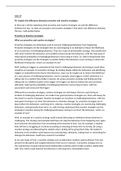
P5- Explain the difference between proactive and reactive strategies
In this task, I will be explaining what proactive and reactive strategies are and the difference
between the two. So what are proactive and reactive strategies? And what’s the difference between
the two, I will explain below.
Proactive & Reactive strategies
What are proactive and reactive strategies?
Proactive strategies are techniques used to prevent challenging behaviour from happening.
Proactive strategies are the strategies that are used ongoing in an attempt to reduce the likelihood
of an occurrence of challenging behaviour. They are a type of preventative strategy, that usually deal
with what’s behind the behaviour and conditions that precede the behaviour, with the main goal of
reducing the probability of challenging behaviour reoccurring in future. So, with it being known that
proactive strategies are the strategies in position before the behaviour occurs aiming to reduce the
likelihood of behaviour, what’s an example of one?
Well, looking at triggers or antecedents that lead to challenging behaviour and trying to avoid them
would be an example of a proactive strategy. By looking deeply within the behaviour and identifying
triggers or antecedents that lead to the behaviour, ways can be sought out to reduce the likelihood
of a reoccurrence of challenging behaviour. Say for example, what triggers a child’s behaviour is a
sitting next to a student they dislike in lessons. By using a proactive strategy and finding out that
sitting next to a disliked student is the trigger, this trigger can then be looked into and corrected,
ultimately reducing the probability of challenging behaviour reoccurring in future, with the
assessment and removal of the trigger.
Differently to proactive strategies, reactive strategies are techniques that are used during an
incident of challenging behaviour. No matter how good proactive strategies are, there will always be
the need for reactive strategies. Reactive strategies are reactions to challenging behaviour, with the
main goal of trying to cut short the behaviour to minimize damage. So, proactive strategies are in
place before the behaviour, used long-term, whereas, reactive strategies are used during challenging
behaviour, used generally short-term. So, with it being understood that reactive strategies are the
strategies in position during the challenging behaviour aiming to cut short the behaviour, what’s an
example of one?
Well, an example of a reactive strategy could include distracting an individual whose behaviour is
challenging. The strategy and example itself does not stop the behaviour from happening ever again,
but it prevents the behaviour from worsening at the moment in time. Say, for example, a student
kicks off due to struggling on a task by screaming or swearing at those who try to help. By using a
reactive strategy and distracting the student who is kicking off by giving them help, the student's
behaviour in the incident could improve by receiving help, ultimately, cutting short or minimizing the
damage the behaviour could have caused if it escalated.
In my case study of Tom, a reactive strategy such as distraction could be used to distract Tom and
prevent his disruptive and naughty behaviour that occurs in lessons. A proactive strategy such as,
the maintenance of good interpersonal relationships could be used to build a positive relationship
with Tom, which could improve his behaviour in the long-term, foreseeable future.
P5- Explain the difference between proactive and reactive strategies
In this task, I will be explaining what proactive and reactive strategies are and the difference
between the two. So what are proactive and reactive strategies? And what’s the difference between
the two, I will explain below.
Proactive & Reactive strategies
What are proactive and reactive strategies?
Proactive strategies are techniques used to prevent challenging behaviour from happening.
Proactive strategies are the strategies that are used ongoing in an attempt to reduce the likelihood
of an occurrence of challenging behaviour. They are a type of preventative strategy, that usually deal
with what’s behind the behaviour and conditions that precede the behaviour, with the main goal of
reducing the probability of challenging behaviour reoccurring in future. So, with it being known that
proactive strategies are the strategies in position before the behaviour occurs aiming to reduce the
likelihood of behaviour, what’s an example of one?
Well, looking at triggers or antecedents that lead to challenging behaviour and trying to avoid them
would be an example of a proactive strategy. By looking deeply within the behaviour and identifying
triggers or antecedents that lead to the behaviour, ways can be sought out to reduce the likelihood
of a reoccurrence of challenging behaviour. Say for example, what triggers a child’s behaviour is a
sitting next to a student they dislike in lessons. By using a proactive strategy and finding out that
sitting next to a disliked student is the trigger, this trigger can then be looked into and corrected,
ultimately reducing the probability of challenging behaviour reoccurring in future, with the
assessment and removal of the trigger.
Differently to proactive strategies, reactive strategies are techniques that are used during an
incident of challenging behaviour. No matter how good proactive strategies are, there will always be
the need for reactive strategies. Reactive strategies are reactions to challenging behaviour, with the
main goal of trying to cut short the behaviour to minimize damage. So, proactive strategies are in
place before the behaviour, used long-term, whereas, reactive strategies are used during challenging
behaviour, used generally short-term. So, with it being understood that reactive strategies are the
strategies in position during the challenging behaviour aiming to cut short the behaviour, what’s an
example of one?
Well, an example of a reactive strategy could include distracting an individual whose behaviour is
challenging. The strategy and example itself does not stop the behaviour from happening ever again,
but it prevents the behaviour from worsening at the moment in time. Say, for example, a student
kicks off due to struggling on a task by screaming or swearing at those who try to help. By using a
reactive strategy and distracting the student who is kicking off by giving them help, the student's
behaviour in the incident could improve by receiving help, ultimately, cutting short or minimizing the
damage the behaviour could have caused if it escalated.
In my case study of Tom, a reactive strategy such as distraction could be used to distract Tom and
prevent his disruptive and naughty behaviour that occurs in lessons. A proactive strategy such as,
the maintenance of good interpersonal relationships could be used to build a positive relationship
with Tom, which could improve his behaviour in the long-term, foreseeable future.