Unit 3 Exam (ch. 7-9)
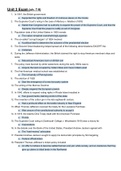
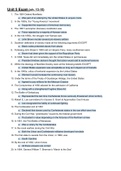
1. In 1841, the British government
a. Supported the rights and freedom of mutinous slaves on the Creole
2. The Supreme Court’s ruling in the case of Marbury v. Madison (1803)
a. Stated that Congress had no authority to expand the power of the Supreme Court, and that the
Supreme Court had the power to nullify an act of Congress
3. Population data of the United States in 1800 reveals
a. The nation remained overwhelmingly agrarian
4. The so-called “corrupt bargain” of 1824 involved
a. A political deal to determine the outcome of the presidential election
5. The Second Great Awakening helped spread all of the following denominations EXCEPT the
a. Unitarians
6. During the Jefferson Administration, the British claimed the right to stop American merchant ships and
seize
a. Naturalized Americans born on British soil
7. The policy most favored by white westerners during the early 1800s was to
a. Acquire the land occupied by Indian tribes and move Indians west
8. The first American medical school was established at
a. The University of Pennsylvania
9. The election of 1828
a. Saw the emergence of a new two-party system
10. The writing of the Monroe Doctrine
a. Deeply angered the European powers
11. In 1840, efforts to expand voting rights in Rhode Island resulted in
a. Two governments claiming control of the state
12. The invention of the cotton gin in the late eighteenth century
a. Had a profound effect on the textile industry in New England
13. When Thomas Jefferson received the treaty for the Louisiana Purchase
a. Was unsure of his constitutional authority to accept it
14. In 1819, the Adams-Onis Treaty dealt with the American Purchase
a. Florida
15. The Supreme Court ruling in Dartmouth College v. Woodward (1819) was a victory for
a. Corporations
16. In the debate over the Bank of the United States, President Andrew Jackson agreed with
a. The “hard-money” advocates
17. President Andrew Jackson sought to apply his democratic principles by first targeting
a. Federal officeholders
18. President Thomas Jefferson’s Indian policy included
a. An offer to Indians to become settled farmers and join white society, and an insistence that they
give up claims to tribal lands in the Northwest
1. In 1841, the British government
a. Supported the rights and freedom of mutinous slaves on the Creole
2. The Supreme Court’s ruling in the case of Marbury v. Madison (1803)
a. Stated that Congress had no authority to expand the power of the Supreme Court, and that the
Supreme Court had the power to nullify an act of Congress
3. Population data of the United States in 1800 reveals
a. The nation remained overwhelmingly agrarian
4. The so-called “corrupt bargain” of 1824 involved
a. A political deal to determine the outcome of the presidential election
5. The Second Great Awakening helped spread all of the following denominations EXCEPT the
a. Unitarians
6. During the Jefferson Administration, the British claimed the right to stop American merchant ships and
seize
a. Naturalized Americans born on British soil
7. The policy most favored by white westerners during the early 1800s was to
a. Acquire the land occupied by Indian tribes and move Indians west
8. The first American medical school was established at
a. The University of Pennsylvania
9. The election of 1828
a. Saw the emergence of a new two-party system
10. The writing of the Monroe Doctrine
a. Deeply angered the European powers
11. In 1840, efforts to expand voting rights in Rhode Island resulted in
a. Two governments claiming control of the state
12. The invention of the cotton gin in the late eighteenth century
a. Had a profound effect on the textile industry in New England
13. When Thomas Jefferson received the treaty for the Louisiana Purchase
a. Was unsure of his constitutional authority to accept it
14. In 1819, the Adams-Onis Treaty dealt with the American Purchase
a. Florida
15. The Supreme Court ruling in Dartmouth College v. Woodward (1819) was a victory for
a. Corporations
16. In the debate over the Bank of the United States, President Andrew Jackson agreed with
a. The “hard-money” advocates
17. President Andrew Jackson sought to apply his democratic principles by first targeting
a. Federal officeholders
18. President Thomas Jefferson’s Indian policy included
a. An offer to Indians to become settled farmers and join white society, and an insistence that they
give up claims to tribal lands in the Northwest