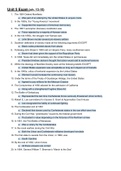
Unit 5 Exam (ch. 13-15)
1. The 1854 Ostend Manifesto
a. Was part of an attempt by the United States to acquire Cuba
2. In the 1850s, the “Young America” movement
a. Supported the expansion of American democracy
3. The 1857 Lecompton (Kansas) constitution was
a. Twice rejected by a majority of Kansas voters
4. In the mid-1850s, the struggle over Kansas saw
a. John Brown murder several pro-slavery settlers
5. Southern defenders of slavery made all the following arguments EXCEPT
a. Black codes protected slaves from abuse
6. Following John Brown’s 1859 raid on Harpers Ferry, many southerners were
a. Brown had been given the support of the Republican Party
7. In 1836, Texas did not immediately join the United States in part because
a. President Andrew Jackson thought that action would add to sectional tensions
8. Within the ideology of Manifest Destiny were all the following beliefs EXCEPT
a. United States expansion was acceptable so long as it stayed out of Canada
9. In the 1840s, critics of territorial expansion by the United States
a. Warned it would increase the controversy over slavery
10. Under the terms of the Treaty of Guadalupe Hidalgo, the United States
a. Agreed to pay millions for the Mexican Cession
11. The Compromise of 1850 allowed for the admission of California
a. Along with a strengthened Fugitive Slave Act
12. The Battle of Gettysburg
a. Represented the last time Confederate forces seriously threatened Union territory
13. Robert E. Lee surrendered to Ulysses S. Grant at Appomattox Court House
a. Lee recognized the futility of continued fighting
14. The Confiscation Act of 1861
a. Declared that slaves used by Confederate states in the war effort were free
15. During the Civil War, “greenbacks” issued by the federal government
a. Fluctuated in value depending on the fortunes of the Northern armies
16. In 1861, the First Battle of Manassas
a. Was a victory for the Confederates
17. In the naval warfare during the Civil War,
a. Both the Union and Confederate militaries developed ironclads
18. The first state to secede from the Union, in 1860, was
a. South Carolina
19. By the end of 1862, Union forces
a. All these answers are correct
20. In 1864, General William T. Sherman’s “March to the Sea”
1. The 1854 Ostend Manifesto
a. Was part of an attempt by the United States to acquire Cuba
2. In the 1850s, the “Young America” movement
a. Supported the expansion of American democracy
3. The 1857 Lecompton (Kansas) constitution was
a. Twice rejected by a majority of Kansas voters
4. In the mid-1850s, the struggle over Kansas saw
a. John Brown murder several pro-slavery settlers
5. Southern defenders of slavery made all the following arguments EXCEPT
a. Black codes protected slaves from abuse
6. Following John Brown’s 1859 raid on Harpers Ferry, many southerners were
a. Brown had been given the support of the Republican Party
7. In 1836, Texas did not immediately join the United States in part because
a. President Andrew Jackson thought that action would add to sectional tensions
8. Within the ideology of Manifest Destiny were all the following beliefs EXCEPT
a. United States expansion was acceptable so long as it stayed out of Canada
9. In the 1840s, critics of territorial expansion by the United States
a. Warned it would increase the controversy over slavery
10. Under the terms of the Treaty of Guadalupe Hidalgo, the United States
a. Agreed to pay millions for the Mexican Cession
11. The Compromise of 1850 allowed for the admission of California
a. Along with a strengthened Fugitive Slave Act
12. The Battle of Gettysburg
a. Represented the last time Confederate forces seriously threatened Union territory
13. Robert E. Lee surrendered to Ulysses S. Grant at Appomattox Court House
a. Lee recognized the futility of continued fighting
14. The Confiscation Act of 1861
a. Declared that slaves used by Confederate states in the war effort were free
15. During the Civil War, “greenbacks” issued by the federal government
a. Fluctuated in value depending on the fortunes of the Northern armies
16. In 1861, the First Battle of Manassas
a. Was a victory for the Confederates
17. In the naval warfare during the Civil War,
a. Both the Union and Confederate militaries developed ironclads
18. The first state to secede from the Union, in 1860, was
a. South Carolina
19. By the end of 1862, Union forces
a. All these answers are correct
20. In 1864, General William T. Sherman’s “March to the Sea”