Unit 3: Infection and Response
Pathogens and disease
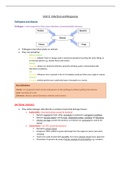
Pathogen = microorganisms that cause infectious (communicable) diseases.
Protists Bacteria
Disease
Viruses Fungi
Pathogens may infect plants or animals
They can spread by:
- Direct contact
Example: athlete’s foot is a fungus and is commonly spread by touching the same things as
an infected person e.g. shower floors and towels.
- Water
Example: cholera is a bacterial infection spread by drinking water contaminated with
diarrhoea of sufferers.
- Air
Example: influenza virus is spread in the air in droplets produced when you cough or sneeze
- Vectors
Example: malaria protist uses a particular type of mosquito as a vector.
Key Definitions
Vector: an organisms that carries and passes on the pathogen without getting the disease
Lysis: bursting of a cell
Zoonosis: disease spread between animals and humans
BACTERIAL DISEASES:
They either damage cells directly or produce toxins that damage tissues.
1. Salmonella = food poisoning caused by bacteria
Bacteria ingested in food, either uncooked or prepared in unhygienic conditions
Bacteria secretes toxins causing fever, abdominal cramps, vomiting and diarrhoea
Chicken and eggs contain the bacteria, so chickens are vaccinated to control the
spread
2. Gonorrhoea = an STD caused by bacteria
Spread by sexual contact
Symptoms: thick, yellow or green discharge from the vagina or penis, pain when
urinating
Used to be easily treated with penicillin, but many resistant strains have appeared
Prevention of spread is by using a barrier method of contraception e.g. condoms
, VIRAL PATHOGENS:
Viruses replicate themselves by invading cells, bursting the cells (lysis) and releasing new
viruses
Reproduce rapidly
1. Measles = a disease caused by a virus
Symptoms: fever and red skin rash
Spread by breathing in droplets from sneezes and coughs
Most people recover but can be fatal if there are complications
Most young children are vaccinated (MMR)
2. HIV (human immunodeficiency virus) causes AIDS:
Spread by sexual contact or exchange of body fluids e.g. can be transmitted in blood
when drug users share needles
At first causes a flu-like illness
If untreated virus enters the lymph nodes and attacks body’s immune cells
Taking antiviral drugs can delay this
Late stage HIV or AIDS means the body’s immune system is damaged and cannot
fight off other infections or cancers.
PROTISTS AND DISEASE:
Protists are eukaryotic, single-celled organisms
1. Malaria = caused by a protist
Uses a particular type of mosquito as a vector
Passed on to a person when they are bitten by the mosquito
Causes severe fever, which reoccurs and can be fatal
Main way to stop spread is to stop people being bitten, e.g. killing mosquitoes, using
mosquito nets.
FUNGAL DISEASES:
Fungal cells are eukaryotic
1. Rose black spot = a fungal disease affecting plants
Spread when spores are carried from plant to plant by water or wind
Purple or black spots develop on the leaves, often turn yellow and drop early
Loss of leaves stunts growth of the plant because photosynthesis is reduced
Treated by using fungicides and removing and destroying affected leaves.
Malaria
Life cycle of plasmodium
Plasmodium Sporozoites travel to liver
develops in via the bloodstream and
mosquitoes’ cause damage to cells.
abdomen. When Sporozoites develop
bitten it travels into merozoites; they
through mosquito’s burst open the red
salivary glands and blood cells causing
enters victim’s fever and sweats.
bloodstream.
If mosquito bites
sufferer in this phase Merozoites asexually
it will pick up the produce to form
parasites. gametocytes.
Pathogens and disease
Pathogen = microorganisms that cause infectious (communicable) diseases.
Protists Bacteria
Disease
Viruses Fungi
Pathogens may infect plants or animals
They can spread by:
- Direct contact
Example: athlete’s foot is a fungus and is commonly spread by touching the same things as
an infected person e.g. shower floors and towels.
- Water
Example: cholera is a bacterial infection spread by drinking water contaminated with
diarrhoea of sufferers.
- Air
Example: influenza virus is spread in the air in droplets produced when you cough or sneeze
- Vectors
Example: malaria protist uses a particular type of mosquito as a vector.
Key Definitions
Vector: an organisms that carries and passes on the pathogen without getting the disease
Lysis: bursting of a cell
Zoonosis: disease spread between animals and humans
BACTERIAL DISEASES:
They either damage cells directly or produce toxins that damage tissues.
1. Salmonella = food poisoning caused by bacteria
Bacteria ingested in food, either uncooked or prepared in unhygienic conditions
Bacteria secretes toxins causing fever, abdominal cramps, vomiting and diarrhoea
Chicken and eggs contain the bacteria, so chickens are vaccinated to control the
spread
2. Gonorrhoea = an STD caused by bacteria
Spread by sexual contact
Symptoms: thick, yellow or green discharge from the vagina or penis, pain when
urinating
Used to be easily treated with penicillin, but many resistant strains have appeared
Prevention of spread is by using a barrier method of contraception e.g. condoms
, VIRAL PATHOGENS:
Viruses replicate themselves by invading cells, bursting the cells (lysis) and releasing new
viruses
Reproduce rapidly
1. Measles = a disease caused by a virus
Symptoms: fever and red skin rash
Spread by breathing in droplets from sneezes and coughs
Most people recover but can be fatal if there are complications
Most young children are vaccinated (MMR)
2. HIV (human immunodeficiency virus) causes AIDS:
Spread by sexual contact or exchange of body fluids e.g. can be transmitted in blood
when drug users share needles
At first causes a flu-like illness
If untreated virus enters the lymph nodes and attacks body’s immune cells
Taking antiviral drugs can delay this
Late stage HIV or AIDS means the body’s immune system is damaged and cannot
fight off other infections or cancers.
PROTISTS AND DISEASE:
Protists are eukaryotic, single-celled organisms
1. Malaria = caused by a protist
Uses a particular type of mosquito as a vector
Passed on to a person when they are bitten by the mosquito
Causes severe fever, which reoccurs and can be fatal
Main way to stop spread is to stop people being bitten, e.g. killing mosquitoes, using
mosquito nets.
FUNGAL DISEASES:
Fungal cells are eukaryotic
1. Rose black spot = a fungal disease affecting plants
Spread when spores are carried from plant to plant by water or wind
Purple or black spots develop on the leaves, often turn yellow and drop early
Loss of leaves stunts growth of the plant because photosynthesis is reduced
Treated by using fungicides and removing and destroying affected leaves.
Malaria
Life cycle of plasmodium
Plasmodium Sporozoites travel to liver
develops in via the bloodstream and
mosquitoes’ cause damage to cells.
abdomen. When Sporozoites develop
bitten it travels into merozoites; they
through mosquito’s burst open the red
salivary glands and blood cells causing
enters victim’s fever and sweats.
bloodstream.
If mosquito bites
sufferer in this phase Merozoites asexually
it will pick up the produce to form
parasites. gametocytes.