Elizabeth: Troubles at Home and Abroad
Religious Matters
The question of religion
Catholicism, Protestantism and Puritanism
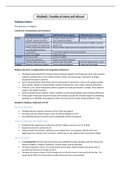
CATHOLICS (old religion) PROTESTANTS (new religion) PURITANS (strict Protestants
Beliefs Pope head of Church, helped by No pope; may be necessary to No popes, cardinals or bishops
cardinals, bishops and priests have archbishops/bishops
Church is intermediary between Personal direct relationship with God via prayer and Bible; only God
God and people; can forgive sins forgives sins
In Mass, bread and wine become Bread and wine simply represent the body/blood of Christ; no miracle
actual bod/blood of Christ
7 sacraments 2 sacraments: Baptism and Holy Communion
Priests are celibate Priests can marry
Practices Services in Latin Services in English
Priests were vestments Priests were simple vestments
Churches highly decorated Churches plain and simple Churches whitewashed, no décor
Support Majority in north/west England Mostly south-east England London and East Anglia
Religious Divisions in England before the Elizabethan Settlement
The Reformation divided the Christian Church between Catholics and Protestants from 1532 onwards.
Catholics remained true to the Catholic Church in Rome, led by the pope, Protestants no longer
recognised the pope’s authority.
Henry VIII declared him Head of the Church and dissolved monasteries; many of his religious beliefs
were Catholic. Edward VI moved further towards Protestantism, Mary Tudor restored Catholicism.
From the 1530s, many Protestants came to England to escape persecution in Europe. They settled in
London, East Anglia and Kent.
North remained largely Catholic: risked a rebellion overthrowing Elizabeth and restoring Catholicism.
Some English Protestants became Puritans who wanted to purify the Christian religion by abolishing
anything not in the Bible, first appeared 1560s and increased in number during Elizabeth’s reign.
Elizabeth’s Religious Settlement of 1559
The Act of Supremacy
Elizabeth became Supreme Governor of the Church of England.
All clergy and royal officials had to swear an oath of allegiance to her.
Re-established break from Rome and an independent Church of England.
The Act of Uniformity (the ‘Middle Way’)
Established the appearance of churches and how religious services were to be held.
Required everyone to attend church.
Compromised Protestantism, pacifying some Catholic laws. For example: Catholic Mass and
pilgrimages were banned, but, ornaments could be put on the replaced altar (communion table).
Other Key Features
An Ecclesiastical (Church) High Commission was established to keep discipline with the Church and
enforce Elizabeth’s religious settlement. Disloyal clergy could be punished.
The Royal Injunctions were a set of instructions to the clergy which included rules about how to
worship God and how to conduct services.
The Book of Common Prayer (1559) introduced a set church service to be used in all churches. The
clergy had to follow the Prayer Book wording during services or be punished.
, The Northern Rebellion
The Northern Rebellion (1569-1570, aka Revolt of the Northern Earls) was a significant turning point.
Why did the Northern Earls rebel?
1) The earls and their followers wanted to restore Catholicism, especially resenting the appointment of
Jams Pilkington, Protestant, as Bishop of Durham in 1561.
2) The earls lost much influence at court under Elizabeth, resenting the ‘new men’ (e.g. William Cecil and
Robert Dudley).
3) Elizabeth’s refusal to name an heir, or marry and have a child, created uncertainty; the earls feared
civil war and loss of power/wealth under a future Protestant monarch.
Significant players
Thomas Percy Earl of Northumberland, major
Catholic northern landowner. Ann Percy Thomas Percy’s wife.
Charles Neville Earl of Westmorland, major
Catholic northern landowner.
Jane Neville wife of Charles
Thomas Howard Duke of Norfolk, senior noble Neville, Duke of Norfolk’s sister.
raised as Protestant, family links to old, northern
Catholic families. Planned to marry Mary Queen
of Scots. Mary Queen of Scots
The Marriage Plan
Mary was to marry Thomas Howard, despose Elizabeth and become queen.
Robert Dudley told Elizabeth of the plan, leading to Norfolk’s arrest and imprisonment in the Tower.
Progress of the Revolt
Northumberland and Westmorland, with their wives’ support, continued with the revolt, taking
control of Durham Cathedral, celebrating Mass (and other northern churches), and began to move
south.
Elizabeth moved Mary to Coventry, to stop her escaping and joining the rebels.
Though the rebels captured Hartlepool, support from Spain never came.
Why did it fail?
Spanish support never came.
Many northern landowners remained loyal to Elizabeth.
Many landowners didn’t want to risk losing their wealth (acquired from dissolution of monasteries) by
backing a failed a revolt.
The revolt’s significance
Mary was not directly involved but showed she couldn’t be trusted – she remained in prison.
The pope excommunicated Elizabeth calling Catholics to despose her, encouraging more plots.
English Catholics couldn’t be trusted so harsh government actions were taken.
- Those involved suffered different fates. Thomas Percy was executed, Charles Neville fled
abroad, Thomas Howard was imprisoned and later pardoned.
Elizabeth’s control over northern England strengthened.
Religious Matters
The question of religion
Catholicism, Protestantism and Puritanism
CATHOLICS (old religion) PROTESTANTS (new religion) PURITANS (strict Protestants
Beliefs Pope head of Church, helped by No pope; may be necessary to No popes, cardinals or bishops
cardinals, bishops and priests have archbishops/bishops
Church is intermediary between Personal direct relationship with God via prayer and Bible; only God
God and people; can forgive sins forgives sins
In Mass, bread and wine become Bread and wine simply represent the body/blood of Christ; no miracle
actual bod/blood of Christ
7 sacraments 2 sacraments: Baptism and Holy Communion
Priests are celibate Priests can marry
Practices Services in Latin Services in English
Priests were vestments Priests were simple vestments
Churches highly decorated Churches plain and simple Churches whitewashed, no décor
Support Majority in north/west England Mostly south-east England London and East Anglia
Religious Divisions in England before the Elizabethan Settlement
The Reformation divided the Christian Church between Catholics and Protestants from 1532 onwards.
Catholics remained true to the Catholic Church in Rome, led by the pope, Protestants no longer
recognised the pope’s authority.
Henry VIII declared him Head of the Church and dissolved monasteries; many of his religious beliefs
were Catholic. Edward VI moved further towards Protestantism, Mary Tudor restored Catholicism.
From the 1530s, many Protestants came to England to escape persecution in Europe. They settled in
London, East Anglia and Kent.
North remained largely Catholic: risked a rebellion overthrowing Elizabeth and restoring Catholicism.
Some English Protestants became Puritans who wanted to purify the Christian religion by abolishing
anything not in the Bible, first appeared 1560s and increased in number during Elizabeth’s reign.
Elizabeth’s Religious Settlement of 1559
The Act of Supremacy
Elizabeth became Supreme Governor of the Church of England.
All clergy and royal officials had to swear an oath of allegiance to her.
Re-established break from Rome and an independent Church of England.
The Act of Uniformity (the ‘Middle Way’)
Established the appearance of churches and how religious services were to be held.
Required everyone to attend church.
Compromised Protestantism, pacifying some Catholic laws. For example: Catholic Mass and
pilgrimages were banned, but, ornaments could be put on the replaced altar (communion table).
Other Key Features
An Ecclesiastical (Church) High Commission was established to keep discipline with the Church and
enforce Elizabeth’s religious settlement. Disloyal clergy could be punished.
The Royal Injunctions were a set of instructions to the clergy which included rules about how to
worship God and how to conduct services.
The Book of Common Prayer (1559) introduced a set church service to be used in all churches. The
clergy had to follow the Prayer Book wording during services or be punished.
, The Northern Rebellion
The Northern Rebellion (1569-1570, aka Revolt of the Northern Earls) was a significant turning point.
Why did the Northern Earls rebel?
1) The earls and their followers wanted to restore Catholicism, especially resenting the appointment of
Jams Pilkington, Protestant, as Bishop of Durham in 1561.
2) The earls lost much influence at court under Elizabeth, resenting the ‘new men’ (e.g. William Cecil and
Robert Dudley).
3) Elizabeth’s refusal to name an heir, or marry and have a child, created uncertainty; the earls feared
civil war and loss of power/wealth under a future Protestant monarch.
Significant players
Thomas Percy Earl of Northumberland, major
Catholic northern landowner. Ann Percy Thomas Percy’s wife.
Charles Neville Earl of Westmorland, major
Catholic northern landowner.
Jane Neville wife of Charles
Thomas Howard Duke of Norfolk, senior noble Neville, Duke of Norfolk’s sister.
raised as Protestant, family links to old, northern
Catholic families. Planned to marry Mary Queen
of Scots. Mary Queen of Scots
The Marriage Plan
Mary was to marry Thomas Howard, despose Elizabeth and become queen.
Robert Dudley told Elizabeth of the plan, leading to Norfolk’s arrest and imprisonment in the Tower.
Progress of the Revolt
Northumberland and Westmorland, with their wives’ support, continued with the revolt, taking
control of Durham Cathedral, celebrating Mass (and other northern churches), and began to move
south.
Elizabeth moved Mary to Coventry, to stop her escaping and joining the rebels.
Though the rebels captured Hartlepool, support from Spain never came.
Why did it fail?
Spanish support never came.
Many northern landowners remained loyal to Elizabeth.
Many landowners didn’t want to risk losing their wealth (acquired from dissolution of monasteries) by
backing a failed a revolt.
The revolt’s significance
Mary was not directly involved but showed she couldn’t be trusted – she remained in prison.
The pope excommunicated Elizabeth calling Catholics to despose her, encouraging more plots.
English Catholics couldn’t be trusted so harsh government actions were taken.
- Those involved suffered different fates. Thomas Percy was executed, Charles Neville fled
abroad, Thomas Howard was imprisoned and later pardoned.
Elizabeth’s control over northern England strengthened.