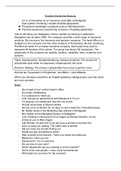
Tutorial 6 Anxiety Disorders – PTSD
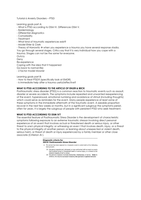
Learning goals part A:
- What is PTSD according to DSM IV. Differences DSM V.
- Epidemiology
- Differential diagnostics
- Comorbidity
- Treatment
- What kind of traumatic experiences exist?
- Model Ehler & Clark
- Theory of Horrowitz when you experience a trauma you have several response stadia.
You go through several stages. Critics say that it is very individual how you cope with a
trauma. Stages can not be the same for everyone.
Outcry
Deny
Re-experience
Coping with the idea that it happened
Go back to normal life)
- 2 factor model Mowrer
Learning goals part B:
- How to treat PTSD? (specifically look at EMDR)
- Is immediate help after a trauma useful/effective?
WHAT IS PTSD ACCORDING TO THE ARTICLE OF EHLER & BECK
Posttraumatic stress disorder (PTSD) is a common reaction to traumatic events such as assault,
disaster or severe accidents. The symptoms include repeated and unwanted reexperiencing
of the event, hyperarousal, emotional numbing and avoidance of stimuli (including thoughts)
which could serve as reminders for the event. Many people experience at least some of
these symptoms in the immediate aftermath of the traumatic event. A sizeable proportion
recover in the next few weeks or months, but in a significant subgroup the symptoms persist,
often for years. It is largely the subgroup of people with persistent PTSD who seek treatment.
WHAT IS PTSD ACCORDING TO DSM IV?
The essential feature of Posttraumatic Stress Disorder is the development of characteristic
symptoms following exposure to an extreme traumatic stressor involving direct personal
experience of an event that involves actual or threatened death or serious injury, or other
threat to one's physical integrity; or witnessing an even t that involves death, injury, or a threat
to the physical integrity of another person; or learning about unexpected or violent death,
serious harm, or threat of death or injury experienced by a family member or other close
associate (Criterion AI ).
Learning goals part A:
- What is PTSD according to DSM IV. Differences DSM V.
- Epidemiology
- Differential diagnostics
- Comorbidity
- Treatment
- What kind of traumatic experiences exist?
- Model Ehler & Clark
- Theory of Horrowitz when you experience a trauma you have several response stadia.
You go through several stages. Critics say that it is very individual how you cope with a
trauma. Stages can not be the same for everyone.
Outcry
Deny
Re-experience
Coping with the idea that it happened
Go back to normal life)
- 2 factor model Mowrer
Learning goals part B:
- How to treat PTSD? (specifically look at EMDR)
- Is immediate help after a trauma useful/effective?
WHAT IS PTSD ACCORDING TO THE ARTICLE OF EHLER & BECK
Posttraumatic stress disorder (PTSD) is a common reaction to traumatic events such as assault,
disaster or severe accidents. The symptoms include repeated and unwanted reexperiencing
of the event, hyperarousal, emotional numbing and avoidance of stimuli (including thoughts)
which could serve as reminders for the event. Many people experience at least some of
these symptoms in the immediate aftermath of the traumatic event. A sizeable proportion
recover in the next few weeks or months, but in a significant subgroup the symptoms persist,
often for years. It is largely the subgroup of people with persistent PTSD who seek treatment.
WHAT IS PTSD ACCORDING TO DSM IV?
The essential feature of Posttraumatic Stress Disorder is the development of characteristic
symptoms following exposure to an extreme traumatic stressor involving direct personal
experience of an event that involves actual or threatened death or serious injury, or other
threat to one's physical integrity; or witnessing an even t that involves death, injury, or a threat
to the physical integrity of another person; or learning about unexpected or violent death,
serious harm, or threat of death or injury experienced by a family member or other close
associate (Criterion AI ).