

Class notes Anatomy and Physiology
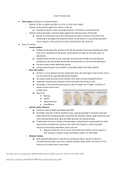
Three types of collisions in a typical impact: ○ Collision of the car against another car, tree, or some other object ○ Collision of the paent against the interior of the car ■ Example of injuries: lower extremity fractures, rib fractures, and had trauma ○ Collision of the passenger’s internal organs against the solid structures of the body ■ Results in compression injury (or bruising) to the anterior poron of the brain and stretching (or tearing) of the posterior poron of the brain (i.e coup-contrecoup brain injury; rupture of the aorta due to heart slamming into the sternum) ● Types of crashes: ○ Frontal crashes: ■ Airbags can decrease the severity of the the deceleraon injuries by allowing seat belts to be more compliant and by gently cushioning the occupant as the body slows, or decelerates ■ Supplemental restraint such as seat belts can also prevent body from ejecng into window but also cause lower extremies and the pelvis to crash into the dashboard ■ Can also cause unseen abdominal injuries ■ Lumbar spine fractures are possible in especially children and older paents ○ Rear end crashes: ■ Known to cause whiplash injuries, parcularly when the passenger’s head and/or neck is not restrained by an appropriated placed headrest ■ On impact, body and toros move forward, with head and neck being le behind ■ Headrests help decrease extension of the head and neck during a crash ■ Passengers in the backseat wearing only a lap belt might have a higher incidence of injuries to the thoracic and lumbar spine ■ Types are: ● Resng ● Impact ● Hyperextension ● hyperflexion ○ Lateral crashes (T-bone) ■ Common cause of death associated with MVC ■ Passenger may have a lateral whiplash injury, causing passenger’s shoulders and head whip toward the intruding vehicle; may thrust the shoulder, thorax, upper extremity, and most importantly the skull; spine has lile tolerance for lateral bending ■ If substanal intrusion is found in the passenger compartment, suspect paent ot have lateral chest and abdomen injuries on the side of the impact, as well as possible fractures of the lower extremies, pelvis, and ribs ● Organs of abdomen are at risk bc of possible third collision (aorc rupture is 25% common in lateral crashes and lateral crashes are 30% fatal) ○ Rollover Crashes ■ Most unpredictable types of injuries are caused by rollover crashes in which an unrestrained passenger may have sustained mulple strikes within the interior of the vehicle as it is rolled one or more mes
Información del documento
- Subido en
- 19 de enero de 2023
- Número de páginas
- 3
- Escrito en
- 2022/2023
- Tipo
- Notas de lectura
- Profesor(es)
- Prof
- Contiene
- Todas las clases

