CARDIOVASCULAR MEDSURG
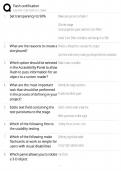
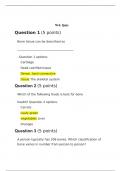
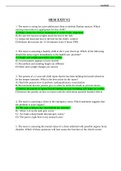
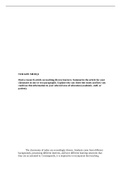
CARDIOVASCULAR MEDSURG Cardiovascular Medsurg When discussing hypertension with your peers, which of the following is a factor related to hypertension? A. Hypovolemia B. Decreased Cardiac output C. Decreased Preload D. Increased afterload D. Increased afterload What factorsinfluence blood pressure? stroke volume, heart rate, and vascular structure and function What regulates blood pressure? Autonomic nervous system: sympathetic, parasympathetic Renin-angiotensine-aldosterone system The results of an adult patient's blood pressure screening on three occasions are: 120/80 mmHg, 130/76 mmHg, and 118/86 mmHg. How will the healthcare provider interpret this information? Prehypertension A patient is diagnosed with primary hypertension. When taking the patient's history, the healthcare provider anticipates the patient will report which of the following? "I have not noticed any significant changes in my health." What are the signs and symptoms of HTN? Hypertension rarely produces symptoms, that's why it is referred to as "silent disease", or "silent killer". Identify management of HTN, including lifestyle changes? Pt needs to be an active participant. Lifestyle changes: Restrict Na Reduce weight No more than 1 drink/day for women; 2 drinks per day men Exercise 3 to 4 times per week for 40 minutes/day Use relaxation techniques Avoid tobacco and caffeine What drug therapy are used to manage hypertension? - Beta-adrenergic blockers - Renin inhibitors - Central alpha agonists - Alpha-adrenergic agonists - Diuretics - Calcium channel blockers - ACE inhibitors - Angiotensin II receptor antagonists - Aldosterone receptor antagonists A patient is prescribed a thiazide diuretic for the treatment of hypertension. When teaching the patient about the medication, which of the following will the healthcare provider include? "Be sure to include a number of foods that are rich in potassium in your diet." What are nursing diagnoses for hypertension? -Risk for injury since pt has increase BP. -Anxiety What are Arteriosclerosis and Atherosclerosis? Arteriosclerosis is the thickening or hardening of the arterial wall due to aging. Atherosclerosis is the formation of plaque within arterial wall. Identify major risk factor for Arteriosclerosis and Atherosclerosis? -Unhealthy blood cholesterol levels: High LDL (bad cholesterol), low HDL (good cholesterol) -too much triglyceride -HTN -Smoking -Insulin resistance -Diabetes -Obesity -Lack of physical activity -Unhealthy diet -Older age -Family history of early heart disease Upgrade to remove ads Only $3.99/month What can increase your familial risk of atherosclerosis Your risk for atherosclerosis increases if your father or brother was diagnosed with heart disease before 55 years of age, or if your mother or sister was diagnosed with heart disease before 65 years of age A client diagnosed with atherosclerosis has been prescribed lovastatin (Mevacor). Which statement by the client indicates a need for further teaching? "I won't need to change my diet because now I'm taking a pill." How to decrease the risk of atherosclerosis? Clients should engage in lifestyle modifications to lower cholesterol. Drug therapy alone is not enough. Follow up with the health care provider; quit smoking; and avoid grapefruit juice, which can interfere with drug efficacy. What is peripheral artery disease (PAD)? caused by atherosclerosis that narrows and blocks arteries, leading to lack of blood flow. What are the signs and symptoms of Peripheral Artery Disease (PAD)? Symptoms can be asymptomatic (no symptoms) or symptomatic. No claudication (Cramping- pain in the leg) Pedal pulse decrease or absent Claudication (muscle pain, cramping, burning) Rest pain (awakens pt at night), occurs at toe, arch, forefoot, heel Ulcers or blackened tissue, Distinctive gangrenous odor Identify treatment and nursing interventions for PAD? Exercise, positioning (Promote circulation Avoid extremity position above level of the heart), promote vasodilation (keep extremities warm), drug therapy, non-surgical, and surgical What is an Aneurysm? localized enlargement (bulge) in a blood vessel What is Aortic Dissection? It is a tear in the inner layer of the large blood vessel (aorta) Compare and contrast signs and symptoms of Aneurysm versus Aortic Dissection? Aneurysm: Commonly asymptomatic, Back pain, SOB, Hoarseness, Difficulty swallowing, pain abdomen, flank, back, bruit may be heard Aortic Dissection: Tearing, ripping, stabbing pain, nausea, vomiting, faintness, and apprehension, elevated BP, Identify medical treatment and nursing interventions? -Monitor aneurysm growth -Maintain normotension -Surgical Repair - open repair; the walls of the aneurysm are replaced with a synthetic graft -Endovascular aneurysm repair (EVAR) - closed repair; a stent graft is inserted into the aneurysm through small incisions in the groin Eliminate pain, reduce blood pressure for Aortic dissection Upgrade to remove ads Only $3.99/month Which of the following groups of symptoms indicates a ruptured abdominal aneurysm? Severe lower back pain, decreased BP, decreased RBC, increased WBC What does EVAR stand for? EndoVascular Aneurism Repair Compare and contrast arterial and venous ulcers? Arterial ulcers: -End and between toes Deep -Ulcer bed is pale with even edges -Little granulation tissue Venous ulcers: -Ankle area -Brown pigmentation -Ulcer bed pink -Superficial, uneven edges -Granulation tissue present Treatment of arterial and venous ulcers? Arterial ulcers: Primary goal is to increase circulation to the area either surgically or medically -Treat underlying cause -Prevent trauma and infection -Patient education, especially foot care Venous ulcers: Long-term wound care Elevate extremity Pt education Prevent infection The nurse is caring for a client with chronic venous stasis ulcers. Which statement by the client indicates a need for further health teaching? "I'll wear compression stockings at night." because it should be worn during the day Identify medical treatment, nursing interventions and prevention strategies for Deep Vein Thrombosis? Anticoagulant therapy -Heparin -Low molecular weight heparin Calf or groin tenderness Sudden onset unilateral leg swelling Induration along blood vessel Warmth, edema Redness may be present Homan's sign - unreliable tool Diagnostic tests Venous duplex ultrasound Doppler flow studies Leg exercises Rest Early ambulation Adequate hydration Graduated compression stockings Intermittent pneumatic compression What is coronary artery disease? Damage or disease in the heart's major vessles Identify risk factors for Coronary Artery Disease? Older age, men 45, women 55, family history, African Americans What patient teaching is given for chronic/stable and unstable angina? Stable: temporary chest pain, relieved by rest and nitroglycerin, relieve ischemia Unstable: requires immediate medical attention Identify risk factors - modifiable versus non-modifiable - angina/myocardial infarction? Modifiable: Elevated serum cholesterol, Cigarette, smoking, Hypertension, Impaired glucose tolerance/DM, Obesity, Excessive alcohol, Limited physical activity, Stress Non-modifiable: Age, Gender, Family history, Ethnic background: Upgrade to remove ads Only $3.99/month Men vs. Women heart attack As with men, women's most common heart attack symptom is chest pain or discomfort. But women are somewhat more likely than men to experience some of the other common symptoms, particularly shortness of breath, nausea/vomiting and back or jaw pain. An older client has a history of coronary artery disease. Which modifiable risk factors will the nurse assess to guide the client's teaching plan? Select all that apply. Tobacco use, high-fat diet, obesity What prioritize of care (i.e., order of interventions) for a patient with angina/MI? Aspirin Nitroglyceride Morphine sulfate oxgyen think MONA Identify rationales for medications used to treat an MI? Beta blockers calcium channel blockers ACE inihibitors What are the pre-procedure considerations, complications, and nursing interventions for a patient who has cardiac catherization? -Determine if there is a coronary blockage -Look at left ventricular function -Measure O2 concentration, saturation, tension, and pressure in various chambers of the heart -Detect shunt -Determine cardiac output and pulmonary blood flow -Check valvular function -Determine need for cardiac surgery Patient needs to tell providers if allergic to anything, especially iodine, shellfish, latex, or rubber products, and medicationslike penicillin, or X-ray dye The nurse assesses a client who had a coronary artery bypass graft yesterday. Which assessment finding will the nurse report to the surgeon immediately? Decreased level of consciousness A patient is being assessed for possible heart failure. Which of these laboratory results will provide support this diagnosis? Increased brain natriuretic peptide (BNP) A client is diagnosed with left-sided heart failure. Which assessment findings will the nurse expect the client to have? Select all that apply? Crackles in the lungs Tachycardia Breathlessness A patient has been admitted to the cardiac unit with a diagnosis of right ventricular failure. Which of the following assessment findings would the healthcare provider expect to observe? Peripheral edema and jugular vein distension What are the clinical manifestations of left-sided heart failure? fatigue, dyspnea or breathlessness, and crackles on auscultation of breath sounds Upgrade to remove ads Only $3.99/month What are the clinical manifestations of right-sided heart failure? Peripheral edema and ascites are associated with right-sided heart failure When obtaining a health history of a patient admitted with a diagnosis of heart failure, which statement made by the patient supports the diagnosis of heart failure? "I get out of breath when I go up a flight of stairs." A patient diagnosed with mild heart failure is prescribed hydrochlorothiazide (Microzide). The healthcare provider should determine the teaching about the medication has been successful if the patient makes which of these statements? "It is important for me to change positions slowly because I might become dizzy." A patient is diagnosed with heart failure and is prescribed digoxin (Lanoxin) and furosemide (Lasix). Before administering the furosemide to the patient, which laboratory result should the healthcare provider to review? Serum potassium Identify nursing priorities when caring for patients who have right-sided heart failure compared to priorities for caring for patient with left-sided failure ... Identify self-management/MAWDS strategies required for patients with HF? Medications, activities, weight, diet, symptoms What is Valvular Heart Disease? Damage or defect in one of the four valves in the heart Stenosis (valve thickening), regurgitation (backflow) Types: Mitral stenosis Mitral regurgitation (insufficiency) Mitral valve prolapse Aortic stenosis Aortic regurgitation (insufficiency) Signs and symptoms of VHD? Stenosis: rumbling, apical diastolic murmor Regurgitation: high pitched holosystolic murmur What Patient teaching is needed for the patient who has had valve replacement? ... Identify nursing interventions for the patient who has pericarditis? Pain management -NSAIDs -Antibiotics for bacterial form -Sit the patient up with a pillow to lean forward on
Escuela, estudio y materia
- Institución
- CARDIOVASCULAR MEDSURG
- Grado
- CARDIOVASCULAR MEDSURG
Información del documento
- Subido en
- 13 de enero de 2023
- Número de páginas
- 12
- Escrito en
- 2022/2023
- Tipo
- Examen
- Contiene
- Preguntas y respuestas
Temas
-
cardiovascular medsurg cardiovascular medsurg when discussing hypertension with your peers
-
which of the following is a factor related to hypertension a hypovolemia b decreased cardiac output c d