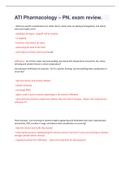
ATI Pharmacology – PN, exam review
- What are specific considerations for adult clients, clients who are taking anticoagulants, and clients who have fragile veins? - avoiding tourniquets, using BP cuff to visualize. - no slapping - hold their hand below the heart. - avoid using the back of the hand - avoid rigorous friction while cleaning site. Infiltration - An IV that is pale, has local swelling, decreased skin temperature around the site, damp dressing and slowed infusion is what complication? Extravasation (infiltration of vesicant) - An IV is painful, burning, red and swelling what complication is occurring? - Stop the infusion and remove catheter - elevate extremity - encourage ROM - apply a cold or warm compress depending on the solution infiltrated. - check with the provider to determine whether they still need IV therapy. - What is the treatment for infiltrated IV? Fluid overload - A pt receiving IV solutions begins appearing with distended neck veins, hypertension, tachycardia, SOB, crackles in lungs, and edema what complication is occurring? - Stop the infusion and notify the provider - follow facility protocol. (withdrawing the vesicant solution from the IV access and infusing an antidote through catheter before removal. - repeated treatment for infiltration. - what is the treatment for extravasation? - What is the treatment for fluid overload? - Slow IV rate or stop. - raise HOB - monitor VS & O2 - Adjust the rate after correcting fluid. - anticipate administering diuretics Phlebitis/thrombophlebitis - A pt with an IV appears edematous, erythema, throbbing, burning, or pain at the site, increased skin temperature, red line, and slowed infusion are s/s of what IV complication? - promptly d/c the infusion and remove the catheter. - elevate extremity - apply a cold compress to minimize flow of blood, then warm to increase circulation. - restart if needed. - obtain a specimen for culture at site. - what treatments are there for phlebitis/thrombophlebitis? - Rotate sites at least every 72 hours according to facility policy. - Monitory IV sites using phlebitis scale - avoid lower extremities - use hand hygiene - use surgical aseptic technique. - What are some ways to prevent thrombophlebitis? Central nervous system stimulation - what type of medication would put a patient at risk for seizures and precautions should be taken. Central nervous system depression - what type of medication would require a patient to do not drive, operate heavy machinery, or participate in other activities can be dangerous. Anticholinergic drugs - what type of medications will require clients to increase fluids for their dry mouth, wear sunglasses for photophobia, maintaining urinary habits, and avoid overheating. Cardiovascular medications - What type of medications would make clients monitor for indications of orthostatic hypotension (lightheadedness, dizziness). - monitoring AST and ALT - n/v - jaundice - dark urine - abdominal discomfort - anorexia Primarily with acetaminophen. - A nurse should do what when giving medications that can create hepatoxicity? Primarily result of antimicrobial agents and NSAIDs. - monitor creatinine and BUN - peak and trough - What should the nurse monitor for drugs that cause nephrotoxicity? Nephrotoxicity - Acyclovir, ahminoglycosides, cyclosporine, NSAIDs, amphotericin B are all medications that can cause what? Tyramine (cheese and processed meat) - Clients taking MAOIs should avoid food with what in it? Chelating agent in milk. Should not take tetracycline within 2 hr of consuming dairy products. - Clients taking tetracycline can interact with what? Benzodiazepines: Sedative Hypnotic Anxiolytics - What kind of car does -pam drive? Diazepam, Lorazempam, Chlordiazepoxide, Clonazepam. Benzodiazepines - What class of medication inhibits effects of gamma-aminobutyric acid (GABA) in the CNS. Short term use due to dependence potential. - CNS depression - anterograde amnesia - toxicity - What are complications when dealing with Benzodiazepines? Benzodiazepines - - administer flumazenil for to counteract sedation and reverse adverse effects. - monitor VS - maintain patent airway -maintain fluids for BP. are nursing actions for what drug class? Paradoxical response to benzodiazepines - - Insomnia - excitation - euphoria - anxiety - rage are s/s of what response? Withdrawal effects to benzodiazepines - - anxiety - insomnia - diaphoresis - tremors - lighteheadedness - delirium - HTN - muscle twitching - seizures are s/s of what response? - sleep apnea - rep depression - glaucoma - what are contraindications for benzodiazepines? 10 to 20 mcg/mL - What is the expected reference range (dosage) for phenytoin? Ascorbic Acid (Vitamin C) - Nausea, abdominal cramps, and diarrhea are potential adverse reactions for what vitamin supplements? Nicotinic Acid (Niacin) - What vitamin supplements would present manifestations such as flushing, dizziness, and nausea as adverse reactions? Allopurinol (Zyloprim) - What medication causes mild GI s/e (n/v, abd pain, diarrhea), metallic taste and drowsiness. In severe cases a fever and/or a rash with hypersensitivity. Clomiphene (Clomid) - What medication is used to promote follicular maturation and is used in treatment of infertility? It would successfully show progressive follicular enlargement, followed by conversion of the follicle to a corpus lute after ovulation occurs. Increases serum LH and FSH levels. Hydrochlorothiazide (HCTZ) - What medication can be used alone or with other antihypertensive agents? It would be used as a first-line choice for treating HTN that is unresponsive to lifestyle changes. Angiotensin-converting enzyme (ACE) inhibitors - What drug class is less effective in clients who are African-American. S/e include: persistent cough, angioedema, and hyperkalemia. an example is captopril Beta-adrenergic blockers - What medication class is widely used for HTN? This can't be described to clients who have heart blocks and should be used cautiously in HF patients as they can lead to bradycardia? an example is metoprolol. Hydralazine - What medication is an arterial dilator that can cause reflex tachycardia and fluid retention? Often used as a third-line medication in HTN treatment.
Escuela, estudio y materia
- Institución
- ATI Pharmacology – PN
- Grado
- ATI Pharmacology – PN
Información del documento
- Subido en
- 27 de diciembre de 2022
- Número de páginas
- 23
- Escrito en
- 2022/2023
- Tipo
- Examen
- Contiene
- Preguntas y respuestas
Temas
-
ati pharmacology – pn
-
exam review

Documento también disponible en un lote