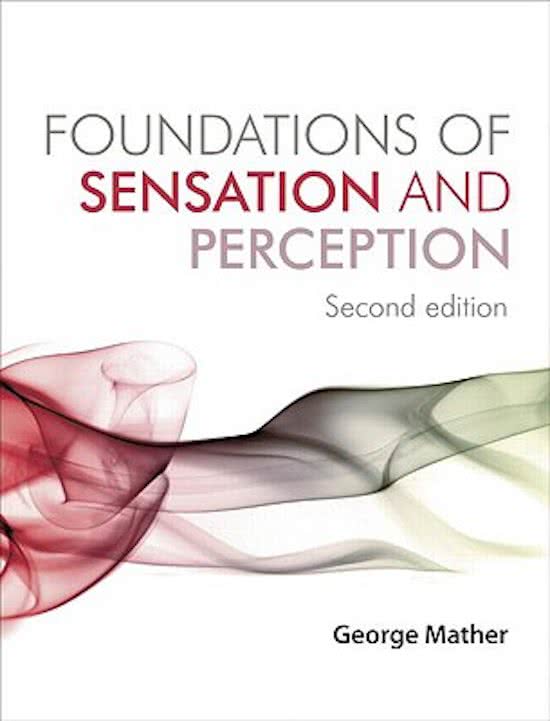
Foundations of Sensation and
Perception
Second edition
George Mather
Summary
Chapter 1 General principles.........................................................................................................4
Introduction..........................................................................................................................................................4
Classification of the senses..................................................................................................................................4
Methods used to study perception.......................................................................................................................4
General principles of sensation and perception...................................................................................................5
Tutorial | psychophysical methods.......................................................................................................................7
Chapter 2 The chemical senses.....................................................................................................9
Introduction..........................................................................................................................................................9
Smell....................................................................................................................................................................9
Taste...................................................................................................................................................................10
Flavor.................................................................................................................................................................11
Evaluation..........................................................................................................................................................11
Tutorial................................................................................................................................................................11
Chapter 3 The body senses.........................................................................................................12
Introduction........................................................................................................................................................12
The somatosensory system...............................................................................................................................12
The vestibular system........................................................................................................................................15
Tutorial................................................................................................................................................................17
Chapter 4 The physics and biology of audition.............................................................................18
Introduction........................................................................................................................................................18
Sound as a physical stimulus.............................................................................................................................18
The psychology of the auditory system.............................................................................................................19
Tutorial................................................................................................................................................................22
Chapter 5 Perception of sound....................................................................................................23
Introduction........................................................................................................................................................23
Loudness perception..........................................................................................................................................23
Pitch perception.................................................................................................................................................23
Auditory localization...........................................................................................................................................24
Speech perception.............................................................................................................................................25
Auditory scene analysis.....................................................................................................................................26
Hearing dysfunction...........................................................................................................................................27
Tutorial................................................................................................................................................................28
Chapter 6 The physics of vision – light and the eye......................................................................29
Introduction........................................................................................................................................................29
What is light?......................................................................................................................................................29
Some important properties of light....................................................................................................................30
1
, The eye...............................................................................................................................................................31
Tutorial................................................................................................................................................................32
Chapter 7 Visual physiology........................................................................................................33
Introduction........................................................................................................................................................33
The retina...........................................................................................................................................................33
The visual pathway............................................................................................................................................36
The visual cortex................................................................................................................................................36
Tutorial................................................................................................................................................................37
Chapter 8 Spatial vision..............................................................................................................38
Introduction........................................................................................................................................................38
Fundamental functions.......................................................................................................................................38
Representation at multiple spatial scales..........................................................................................................40
Uses of spatial filters..........................................................................................................................................40
Tutorials..............................................................................................................................................................41
Chapter 9 Shape and object perception.......................................................................................42
Introduction: the three-stage model..................................................................................................................42
Shape representation.........................................................................................................................................42
Object representation........................................................................................................................................43
Scene perception...............................................................................................................................................44
Tutorials..............................................................................................................................................................44
Chapter 10 Depth perception......................................................................................................45
Introduction........................................................................................................................................................45
The multiplicity of depth cues............................................................................................................................45
Cue combination................................................................................................................................................47
Tutorials..............................................................................................................................................................48
Chapter 11 Visual motion perception...........................................................................................49
Introduction........................................................................................................................................................49
Detecting movement.........................................................................................................................................49
The integration of motion detector responses...................................................................................................50
Multiple processes in motion perception...........................................................................................................51
Tutorials..............................................................................................................................................................52
Chapter 12 Color vision...............................................................................................................53
Introduction........................................................................................................................................................53
Color space.........................................................................................................................................................53
Color mixture......................................................................................................................................................53
Dual-process theory...........................................................................................................................................54
Color interactions...............................................................................................................................................55
Color deficiency..................................................................................................................................................55
Tutorials..............................................................................................................................................................55
Chapter 14 Individual differences in perception...........................................................................56
Age.....................................................................................................................................................................56
Sex......................................................................................................................................................................57
Culture................................................................................................................................................................57
Expertise............................................................................................................................................................58
Idiosyncratic individual differences....................................................................................................................58
Tutorials..............................................................................................................................................................58
2
,Blue = added during lecture
Grey = not compulsory
3
,Chapter 1 General principles
Introduction
Our perception of the world is direct, immediate, and effortless, and there is no
hint of any intervening operations taking place in the brain
Three observations hint at the complexity of the brain processes involved in
perception:
1. A large proportion of the brain’s most highly developed structure, the
cerebral cortex, is devoted entirely to perception
2. Despite the complexity and power of modern computer technology,
computer scientists have not yet succeeded in building general-purpose
systems with the perceptual proficiency of even an infant
3. As a result of brain damage through injury or disease, a small number of
unfortunate individuals suffer deficits in their perceptual capabilities.
Classification of the senses
Classification of the senses
Sense Stimulus Receptor Sensory Cortex
structure
Vision Electromagnetic Photoreceptors Eye Primary visual
energy cortex
Hearing Air pressure waves Mechanorecept Ear Auditory cortex
ors
Touch Tissue distortion Mechanorecept Skin, muscle, Somatosensory
ors, etc. cortex
thermoreceptor
s
Balance Gravity, Mechanorecept Vestibular Temporal cortex
acceleration ors organs
Taste/sm Chemical Chemoreceptor Nose, mouth Primary taste
ell composition s cortex, olfactory
cortex
Methods used to study perception
Lesion experiments
One would surgically remove or destroy a specific area of an animal’s brain
(create lesions), and then observe the consequences for behavior
Sometimes researchers made wrong conclusions (the monkey couldn’t see any
more wasn’t true, the monkey could see it, but could not perform any actions
connected to his vision, Ferrier)
Clinical studies
Research on localization of function in humans has relied largely on clinical
investigation into the consequences of accidental damage or disease to specific
brain areas
Single-unit recordings
Record a single cell using microelectrodes (microelectrode recording)
When the cell is firing it is active
4
, Good for recording what a single cell is for, but usable when looking at the bigger
picture
Rather specialization than uniformity of function
Brain imaging
CT scan: making X-rays from different angles
MRI: scanners detect the magnetic properties of brain molecules, revealed by
passing radio waves through the head in all directions
fMRI: detects minute magnetic changes in hemoglobin induced by variation in
blood oxygen concentration (BOLD)
Psychophysics
Psychophysics is the scientific study of relationships between physical stimuli
and perceptual phenomena
An experiment involves carefully controlled stimuli, often presented by a
computer, and highly constrained responses from adult human observers
Artificial intelligence (AI)
AI researchers attempts to develop formal mathematical rules (computations)
that transform input to the brain into the output
AI research has made a major contribution to our understanding of the nature of
sensory information, and of the kinds of operations likely to be performed by the
brain
General principles of sensation and perception
All of these techniques have been used to study the five major perceptual
systems. A number of general principles have emerged from these studies
Physiological principles
Neural impulses and transduction
Information in the nervous system is conveyed by trains of electrical signals
passed from one cell to another through the system.
A neurotransmitter can be excitatory (increasing the probability that the
receiving neuron will generate an impulse), or inhibitory (decreasing this
probability)
Hierarchical processing
Neural signals generated during transduction are transmitted to several
structures in the brain
The thalamus sends the information to the right spot, from there the information
is being processed first in the primary cortex, second in the secondary cortex,
and finally it is processed in the higher cortex
Selectivity
Each sensory system responds only to a particular range of stimuli. This
selectivity is a universal property of sensory cells. Different cells have different
stimulus preferences, so a stimulus change that results in a reduction in one
cell’s response is likely to result in an increase in another cell’s response.
Each stimulus-selective sensory neuron can be viewed as taking a measurement
or sample of the stimulus at a particular location in its sensory space, to provide
5
Perception
Second edition
George Mather
Summary
Chapter 1 General principles.........................................................................................................4
Introduction..........................................................................................................................................................4
Classification of the senses..................................................................................................................................4
Methods used to study perception.......................................................................................................................4
General principles of sensation and perception...................................................................................................5
Tutorial | psychophysical methods.......................................................................................................................7
Chapter 2 The chemical senses.....................................................................................................9
Introduction..........................................................................................................................................................9
Smell....................................................................................................................................................................9
Taste...................................................................................................................................................................10
Flavor.................................................................................................................................................................11
Evaluation..........................................................................................................................................................11
Tutorial................................................................................................................................................................11
Chapter 3 The body senses.........................................................................................................12
Introduction........................................................................................................................................................12
The somatosensory system...............................................................................................................................12
The vestibular system........................................................................................................................................15
Tutorial................................................................................................................................................................17
Chapter 4 The physics and biology of audition.............................................................................18
Introduction........................................................................................................................................................18
Sound as a physical stimulus.............................................................................................................................18
The psychology of the auditory system.............................................................................................................19
Tutorial................................................................................................................................................................22
Chapter 5 Perception of sound....................................................................................................23
Introduction........................................................................................................................................................23
Loudness perception..........................................................................................................................................23
Pitch perception.................................................................................................................................................23
Auditory localization...........................................................................................................................................24
Speech perception.............................................................................................................................................25
Auditory scene analysis.....................................................................................................................................26
Hearing dysfunction...........................................................................................................................................27
Tutorial................................................................................................................................................................28
Chapter 6 The physics of vision – light and the eye......................................................................29
Introduction........................................................................................................................................................29
What is light?......................................................................................................................................................29
Some important properties of light....................................................................................................................30
1
, The eye...............................................................................................................................................................31
Tutorial................................................................................................................................................................32
Chapter 7 Visual physiology........................................................................................................33
Introduction........................................................................................................................................................33
The retina...........................................................................................................................................................33
The visual pathway............................................................................................................................................36
The visual cortex................................................................................................................................................36
Tutorial................................................................................................................................................................37
Chapter 8 Spatial vision..............................................................................................................38
Introduction........................................................................................................................................................38
Fundamental functions.......................................................................................................................................38
Representation at multiple spatial scales..........................................................................................................40
Uses of spatial filters..........................................................................................................................................40
Tutorials..............................................................................................................................................................41
Chapter 9 Shape and object perception.......................................................................................42
Introduction: the three-stage model..................................................................................................................42
Shape representation.........................................................................................................................................42
Object representation........................................................................................................................................43
Scene perception...............................................................................................................................................44
Tutorials..............................................................................................................................................................44
Chapter 10 Depth perception......................................................................................................45
Introduction........................................................................................................................................................45
The multiplicity of depth cues............................................................................................................................45
Cue combination................................................................................................................................................47
Tutorials..............................................................................................................................................................48
Chapter 11 Visual motion perception...........................................................................................49
Introduction........................................................................................................................................................49
Detecting movement.........................................................................................................................................49
The integration of motion detector responses...................................................................................................50
Multiple processes in motion perception...........................................................................................................51
Tutorials..............................................................................................................................................................52
Chapter 12 Color vision...............................................................................................................53
Introduction........................................................................................................................................................53
Color space.........................................................................................................................................................53
Color mixture......................................................................................................................................................53
Dual-process theory...........................................................................................................................................54
Color interactions...............................................................................................................................................55
Color deficiency..................................................................................................................................................55
Tutorials..............................................................................................................................................................55
Chapter 14 Individual differences in perception...........................................................................56
Age.....................................................................................................................................................................56
Sex......................................................................................................................................................................57
Culture................................................................................................................................................................57
Expertise............................................................................................................................................................58
Idiosyncratic individual differences....................................................................................................................58
Tutorials..............................................................................................................................................................58
2
,Blue = added during lecture
Grey = not compulsory
3
,Chapter 1 General principles
Introduction
Our perception of the world is direct, immediate, and effortless, and there is no
hint of any intervening operations taking place in the brain
Three observations hint at the complexity of the brain processes involved in
perception:
1. A large proportion of the brain’s most highly developed structure, the
cerebral cortex, is devoted entirely to perception
2. Despite the complexity and power of modern computer technology,
computer scientists have not yet succeeded in building general-purpose
systems with the perceptual proficiency of even an infant
3. As a result of brain damage through injury or disease, a small number of
unfortunate individuals suffer deficits in their perceptual capabilities.
Classification of the senses
Classification of the senses
Sense Stimulus Receptor Sensory Cortex
structure
Vision Electromagnetic Photoreceptors Eye Primary visual
energy cortex
Hearing Air pressure waves Mechanorecept Ear Auditory cortex
ors
Touch Tissue distortion Mechanorecept Skin, muscle, Somatosensory
ors, etc. cortex
thermoreceptor
s
Balance Gravity, Mechanorecept Vestibular Temporal cortex
acceleration ors organs
Taste/sm Chemical Chemoreceptor Nose, mouth Primary taste
ell composition s cortex, olfactory
cortex
Methods used to study perception
Lesion experiments
One would surgically remove or destroy a specific area of an animal’s brain
(create lesions), and then observe the consequences for behavior
Sometimes researchers made wrong conclusions (the monkey couldn’t see any
more wasn’t true, the monkey could see it, but could not perform any actions
connected to his vision, Ferrier)
Clinical studies
Research on localization of function in humans has relied largely on clinical
investigation into the consequences of accidental damage or disease to specific
brain areas
Single-unit recordings
Record a single cell using microelectrodes (microelectrode recording)
When the cell is firing it is active
4
, Good for recording what a single cell is for, but usable when looking at the bigger
picture
Rather specialization than uniformity of function
Brain imaging
CT scan: making X-rays from different angles
MRI: scanners detect the magnetic properties of brain molecules, revealed by
passing radio waves through the head in all directions
fMRI: detects minute magnetic changes in hemoglobin induced by variation in
blood oxygen concentration (BOLD)
Psychophysics
Psychophysics is the scientific study of relationships between physical stimuli
and perceptual phenomena
An experiment involves carefully controlled stimuli, often presented by a
computer, and highly constrained responses from adult human observers
Artificial intelligence (AI)
AI researchers attempts to develop formal mathematical rules (computations)
that transform input to the brain into the output
AI research has made a major contribution to our understanding of the nature of
sensory information, and of the kinds of operations likely to be performed by the
brain
General principles of sensation and perception
All of these techniques have been used to study the five major perceptual
systems. A number of general principles have emerged from these studies
Physiological principles
Neural impulses and transduction
Information in the nervous system is conveyed by trains of electrical signals
passed from one cell to another through the system.
A neurotransmitter can be excitatory (increasing the probability that the
receiving neuron will generate an impulse), or inhibitory (decreasing this
probability)
Hierarchical processing
Neural signals generated during transduction are transmitted to several
structures in the brain
The thalamus sends the information to the right spot, from there the information
is being processed first in the primary cortex, second in the secondary cortex,
and finally it is processed in the higher cortex
Selectivity
Each sensory system responds only to a particular range of stimuli. This
selectivity is a universal property of sensory cells. Different cells have different
stimulus preferences, so a stimulus change that results in a reduction in one
cell’s response is likely to result in an increase in another cell’s response.
Each stimulus-selective sensory neuron can be viewed as taking a measurement
or sample of the stimulus at a particular location in its sensory space, to provide
5