100% de satisfacción garantizada Inmediatamente disponible después del pago Tanto en línea como en PDF No estas atado a nada 4,6 TrustPilot
logo-home
Examen

NUR2063

Puntuación
-
Vendido
-
Páginas
6
Grado
A+
Subido en
11-12-2022
Escrito en
2022/2023

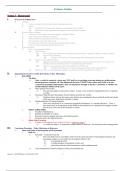
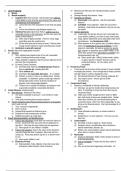
NUR2063 Essentials of Pathophysiology – Exam #2 Review Sheet 2022 UPDATE Rasmussen College Covers Modules 4, 5, and 6 – Chapters 7, 8, 9, 10 1. What is gastritis? What are the causes? a. Gastritis is inflammation of the lining of the stomach b. Caused by ingesting irritating substances such as alcohol, smoking, NSAIDS, bacteria/viruses 2. What is GERD? What are causes to this condition? What are complications of GERD if left untreated? a. Gastroesophageal Reflux Disease is inflammation of esophagus due to reflux of acidic material b. EtOH, smoking, fatty foods, increased abdominal pressure, hiatal hernia, pregnancy c. Barrett’s esophagus,ulcers, esophageal strictures, pulmonary symptoms 3. Review signs and symptoms of peptic ulcer disease. What is the role of H. pylori in this condition? a. PUD symptoms: epigastric pain, hematemesis, dark tarry stools, ab pain before/after a meal b. H.Pylori thrives in acidic conditions, slows the rate of healing ulcers and promotes ulcer formation in the duodenum and stomach. 4. What is pseudomembranous colitis? What contributes to this condition? What are ways that it can be treated? a. Pseudomembranous colitis is acute inflammation and necrosis of the large intestine b. clostridium difficile- caused by a broad spectrum of antibiotic use for a long time c. treated by vancomycin or metronidazole, fecal transplant, colectomy 5. Review signs and symptoms of appendicitis. How do we assess for this condition? a. Appendicitis symptoms: severe RLQ pain and tenderness, McBurney’s Point tenderness, N/V/D, fever 6. Review causes of bowel obstructions. Know the difference between functional bowel obstructions versus mechanical obstructions. Know examples of each type a. Bowel Obstruction caused by previous surgeries w/ adhesions/scarring, congenital abnormalities, accumulation of fluid, gas, water, electrolytes, or metastatic carcinoma b. mechanical obstruction- physical barrier (adhesions, tumors, hernia, impacted feces, volvulus, intussusception c. functional obstruction- movement problems (paralytic ileus due to problems w/ peristalsis due to anticholinergics, opioids, anesthesia, low fiber diets) 7. Review signs and symptoms of liver disease. What is another term for end-stage liver disease? a. Liver disease symptoms: jaundice, low albumin, vitamin D, and K, decrease clotting factors, ascites, hepatic encephalopathy and confusion due to too much ammonia, hepatitis, b. Cirrhosis is end stages liver disease. 8. Review signs and symptoms of gallstones. Review the three phases that contribute to gallstone formation a. Gallstones symptoms- RUQ pain, after eating fatty foods b. supersaturation of bile w/ cholesterol causing precipitation of cholesterol; nucleation of bile crystals; hypomotility - stasis of bile which allows stone growth 9. Review signs and symptoms of pancreatitis. What are some causes to this condition? a. Pancreatitis symptoms: constant boring pain in LUQ and epigastric pain that radiates to the back, N/V, low grade fever b. caused by EtOH, medications, trauma 10. What are the function of the kidneys? How do we assess for renal disorders? a. Kidneys excrete waste from fluid and eliminate waste, regulate blood pH, ion concentrations, and blood volume b. Disorders are assessed by UA (blood urea nitrogen levels, creatinine) GFR 11. What is polycystic kidney disease? What causes this condition? a. polycystic kidney disease -fluid filled cyst in kidneys b. congenital condition ; recessive and dominant forms 12. Review the following terms: nephrons, hematuria, proteinuria, nephrolithiasis, pyelonephritis, cystitis 13. Review signs and symptoms of postinfectious acute glomerulonephritis. What typically triggers this disorder? What age group is predominantly affected by this condition? a. postinfectious acute glomerulonephritis symptoms: coffee colored urine, decreased output, edema, proteinuria b. beta hemolytic streptococcus which causes throat infections and impetigo c. affects children in developing countries 14. Review signs and symptoms of acute kidney injury (AKI). Review causes of AKI including prerenal, intrinsic/intrarenal, and postrenal. Know examples of each causes to each type of injury. a. acute kidney injury (AKI) symptoms- retention of nitrogen waste products, disruptions in fluid, electrolyte, and acid-base balances, increased serum creatinine, decreased GFR b. Prerenal causes- affect renal perfusion (Hypovolemia, hypotension, renal artery obstruction, heart failure) c. Postrenal causes- disruption in urine flow distal to kidney (renal stones, tumors, prostatic hypertrophy, d. intrarenal causes-dysfunction of nephron and kidney itself (damaged renal tubes which can lead to acute tubular necrosis, reduced blood supply, renal inflammation, toxic injury like chemotherapy, prolonged post renal failure, 15. Review the stages of AKI presentation. What happens if AKI does not resolve? a. Prodromal (Asymptomatic) - subtle BUN/Creatinine changes, normal to decreased output b. Oliguric- GFR will decrease, hypervolemia, BUN/Creatinine will be high, dialysis may be needed c. Postoliguric (diuretic)- increased urine production, risk of dehydration or electrolyte imbalance d. Recovery- BUN and creatinine go back to normal e. If AKI does not resolve, results in CKD or failure 16. Review the causes of chronic kidney disease and the various complications of chronic kidney disease a. Causes of CKD- renal injury, hypertension, diabetes, recurrent pyelonephritis, b. complications of CKD: cardiovascular disease, uremic syndrome, metabolic acidosis and hyperkalemia, electrolyte imbalances, anemia, depression 17. Review the different types of incontinence including: urge, stress, overflow incontinence, and reflex incontinence a. urge incontinence- sudden need to void b. stress incontinence- increase in intraabdominal pressure (sneezing, laughing, picking up heavy objects, pregnancy) c. functional incontinence- cant get to toilet in time d. overflow incontinence- bladder to too full e. reflex incontinence- disruption in nerve communication that controls micturition. results from CVA, parkinsons, spinal cord injury 18. What is cystitis? What is some important patient teaching to prevent cystitis? What can happen if cystitis does not resolve? a. wipe front to back , avoid retaining urine, urinate before and after intercourse b. caused by E. coli, chemical irritants, c. can lead to pyelonephritis if untreated 19. Review clinical manifestations for conditions of the male genitourinary tract such as: BPH, hydrocele, testicular torsion a. BPH- urinary retention, urinary hesitancy, decreased stream, UTIs, b. Hydrocele- swelling of scrotum c. Testicular Torsion- pain in testicles (emergency) 20. Review clinical manifestations for conditions of the female genitourinary tract such as: endometriosis, uterine prolapse, pelvic inflammatory disease a. Endometriosis symptoms- dysuria, pain with intercourse, menorrhagia, pain in lower abdomen & vagina b. uterine prolapse: vaginal discomfort, difficulty urinating, ulceration of cervix, difficulty sitting or walking c. PID- lower abd pain/tenderness, pelvic pain, cervical and adnexal tenderness, purulent discharge, fever 21. Review which organisms/viruses contribute to the following conditions: pelvic inflammatory disease, cervical cancer, UTIs, herpes, syphilis a. PID- Neisseria gonorrhea or Clamydia trachomatis b. Cerical Cancer- certain sypes of HPV and HSV 2 c. Herpes- Herpes simplex virus 2 (HSV2) d. Syphilis- Treponema Pallidum e. UTI- E. Coli 22. Review the stages of syphilis. What organ systems are most affected by the disorder in the later stages? a. incubation- 10- 90 days b. primary- formation of chancer c. secondary- low grade fever, sore throat, headache, malaise, mucosal and cutaneous rash, lymphadenopathy d. latency- no symptoms, may last for 40 yrs, may develop mucocutaneous lesions e. tertiary (late) - cardiovascular and CNS damage leading to blindness or paresis 23. Review disorders during pregnancy such as: pregnancy induced hypertension, hyperemesis gravidarum. a. PIH (pregnancy induced hypertension) weight gain edema, rapid rise in arterial BP, decreased GFR, decreased urine, severe cases can lead to seizure, coma b. hyperemesis gravidarum- electrolyte imbalances, dehydration, can result in hepatic and renal damage 24. What is the concern with chlamydial infection during labor/delivery? a. ophthalmia neonatorum- eye infection that can lead to blindness 25. Review endocrine disorders of the pituitary gland including: gigantism, dwarfism, acromegaly, diabetes insipidus, SIADH a. gigantism- occurs in childhood, accelerated growth velocity before skeletal epiphyses closes. Can lead to cardiomegaly and heart failure b. Acromegaly- occurs in adults, accelerated growth velocity after epiphysis has closed c. Diabetes insipidus- lack of ADH production, kidneys are not able to retain water which leads to profuse amounts of diluted urine causing dehydration, hyperkalemia, and hypernatremia. d. SIADH- too much ADH production, retention of water which leads to oliguria, low serum osmolality, weight gain 26. What is ADH? What electrolyte is most affected by disorders of ADH production? a. ADH- antidiuretic hormone, prevents dehydration, regulates thirst, causes kidneys to reabsorb water b. sodium is affected most 27. Review the differences between hypothyroidism and hyperthyroidism. What labs can be drawn to determine if an individual is suffering from a thyroid disorder? a. hypothyroidism- irritation of thyroid gland, caused by Hashimotos. i. cold intolerance, enlarged thyroid, bradycardia, weight gain, irregular menses, b. hyperthyroidism - heat intolerance, diaphoresis, weight loss, exophthalmos, insomnia, restlessness, palpitations, 28. What is parathyroid hormone (PTH)? Which electrolyte is primarily affected by PTH disorders? a. Parathyroid hormone- causes calcium levels to increase by activating osteoclast in the bones to release calcium. Increases calcium absorption in intestines, and decreases calcium excretion in urine. 29. Review signs and symptoms of Cushing’s syndrome versus Addison’s disease, what happens with cortisol (corticosteroid) levels in each disorder? a. Cushing’s syndrome- caused by excessive glucocorticoids due to pituitary/adrenal tumor. i. hyperglycemia, hypertension, edema, swollen moon face, buffalo hump, b. Addison’s disease- caused by adrenocortical insufficiency (decreased cortisol) i. hypoglycemia, hypotension, bronzing of skin, reduced cardiac output, polyuria, loss of salt. 30. Review the difference between Type 1 diabetes versus type II diabetes a. Type 1 DM- beta cells in pancreas are destroyed does not produce insulin , begins in childhood b. Type 2 DM- cells no longer respond to insulin , decrease of insulin receptors on target cells 31. What are signs and symptoms of hyperglycemia versus hypoglycemia. What are the three Ps? a. hypoglycemia- unresponsive, sleepy, sweating, pallor, polyphagia, lack of coordination b. hyperglycemia- polyuria, dry mouth, polydipsia, blurred vision, headache, weakness 32. What is diabetic ketoacidosis? Why does it occur? a. Due to lack on insulin, cell cannot uptake glucose, so the liver begins lipolysis, free fatty acids (ketones) released in the blood, causing ketoacidosis

Mostrar más Leer menos
Institución
Grado

Vista previa del contenido

NUR2063 Essentials of Pathophysiology –
Exam #2 Review Sheet 2022 UPDATE
Rasmussen College
Covers Modules 4, 5, and 6 – Chapters 7, 8, 9, 10
1.What is gastritis? What are the causes?
a.Gastritis is inflammation of the lining of the stomach
b.Caused by ingesting irritating substances such as alcohol, smoking, NSAIDS, bacteria/viruses
2.What is GERD? What are causes to this condition? What are complications of GERD if left
untreated?
a.Gastroesophageal Reflux Disease is inflammation of esophagus due to reflux of acidic material
b.EtOH, smoking, fatty foods, increased abdominal pressure, hiatal hernia, pregnancy
c.Barrett’s esophagus,ulcers, esophageal strictures, pulmonary symptoms
3.Review signs and symptoms of peptic ulcer disease. What is the role of H. pylori in this condition?
a.PUD symptoms: epigastric pain, hematemesis, dark tarry stools, ab pain before/after a meal
b.H.Pylori thrives in acidic conditions, slows the rate of healing ulcers and promotes ulcer formation in the duodenum and stomach.
4.What is pseudomembranous colitis? What contributes to this condition? What are ways that it can be treated?
a.Pseudomembranous colitis is acute inflammation and necrosis of the large intestine
b.clostridium difficile- caused by a broad spectrum of antibiotic use for a long time
c.treated by vancomycin or metronidazole, fecal transplant, colectomy
5.Review signs and symptoms of appendicitis. How do we assess for this condition?
a.Appendicitis symptoms: severe RLQ pain and tenderness, McBurney’s Point tenderness, N/V/D, fever
6.Review causes of bowel obstructions. Know the difference between functional bowel obstructions versus mechanical obstructions. Know examples of each type
a.Bowel Obstruction caused by previous surgeries w/ adhesions/scarring, congenital abnormalities, accumulation of fluid, gas, water, electrolytes, or metastatic carcinoma
b.mechanical obstruction- physical barrier (adhesions, tumors, hernia, impacted feces, volvulus, intussusception
c.functional obstruction- movement problems (paralytic ileus due to problems w/ peristalsis due to anticholinergics, opioids, anesthesia, low fiber diets)
7.Review signs and symptoms of liver disease. What is another term for end-stage liver disease?
a.Liver disease symptoms: jaundice, low albumin, vitamin D, and K, decrease clotting factors, ascites, hepatic encephalopathy and confusion due to too much ammonia, hepatitis,
b.Cirrhosis is end stages liver disease.
8.Review signs and symptoms of gallstones. Review the three phases that contribute to gallstone formation
a.Gallstones symptoms- RUQ pain, after eating fatty foods
b.supersaturation of bile w/ cholesterol causing precipitation of cholesterol; nucleation of bile crystals; hypomotility - stasis of bile which allows stone growth 9.Review signs and symptoms of pancreatitis. What are some causes to this condition?
a.Pancreatitis symptoms: constant boring pain in LUQ and epigastric pain that radiates to the back, N/V, low grade fever
b.caused by EtOH, medications, trauma
10.What are the function of the kidneys? How do we assess for renal disorders?


Escuela, estudio y materia

Institución
Grado

Información del documento

Subido en
11 de diciembre de 2022
Número de páginas
6
Escrito en
2022/2023
Tipo
Examen
Contiene
Preguntas y respuestas

Temas

$13.99
Accede al documento completo:

100% de satisfacción garantizada
Inmediatamente disponible después del pago
Tanto en línea como en PDF
No estas atado a nada

Conoce al vendedor

Seller avatar
Los indicadores de reputación están sujetos a la cantidad de artículos vendidos por una tarifa y las reseñas que ha recibido por esos documentos. Hay tres niveles: Bronce, Plata y Oro. Cuanto mayor reputación, más podrás confiar en la calidad del trabajo del vendedor.
BESTPUBLISHER01 College Of Nursing And Technology
Seguir Necesitas iniciar sesión para seguir a otros usuarios o asignaturas
Vendido
11
Miembro desde
3 año
Número de seguidores
12
Documentos
978
Última venta
10 meses hace
BESTPUBLISHER01

NURSING, ECONOMICS, MATHEMATICS, BIOLOGY, AND HISTORY MATERIALS BEST TUTORING, HOMEWORK HELP, EXAMS, TESTS, AND STUDY GUIDE MATERIALS WITH GUARANTEED A+ I am a dedicated medical practitioner with diverse knowledge in matters of Nursing and Mathematics. I also have a piece of additional knowledge in Mathematics based courses (finance and economics).

3.0

1 reseñas

5
0
4
0
3
1
2
0
1
0

Documentos populares

Recientemente visto por ti

Por qué los estudiantes eligen Stuvia

Creado por compañeros estudiantes, verificado por reseñas

Calidad en la que puedes confiar: escrito por estudiantes que aprobaron y evaluado por otros que han usado estos resúmenes.

¿No estás satisfecho? Elige otro documento

¡No te preocupes! Puedes elegir directamente otro documento que se ajuste mejor a lo que buscas.

Paga como quieras, empieza a estudiar al instante

Sin suscripción, sin compromisos. Paga como estés acostumbrado con tarjeta de crédito y descarga tu documento PDF inmediatamente.

Student with book image

“Comprado, descargado y aprobado. Así de fácil puede ser.”

Alisha Student

Preguntas frecuentes