Info modules
Module A
Types of sources:
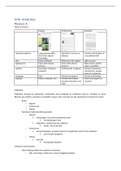
Popular Professional Scholarly
Intended audience Large general public, Specialist in an area or Scholars and students in
don’t have special industry an academic field
knowledge
Ads Many unrelated Relevant to the subject Little to none
Appearance Fancy with colours, Fancy with colours, Plain serious, graphs
pictures pictures charts and tables
Authors Journalists, freelance, Professionals, unsigned Scholars (academics,
unsigned researchers), usually
work at a university
Language Easy Field terms (jargon) Formal terminology
Purpose Inform, entertain, sell Provide information, Inform and report on
promote education and research
skills
Publishing
Publishers manage the production, distribution and marketing for traditional sources. Available at stores,
libraries, gas stations. Literature is available in paper, but e-journals are also uprising for economical reasons.
- Books
o Popular
o Professional
o Scholar
- Periodicals (daily/monthly/quarterly)
o Popular
Newspapers: local and international news
The Washington Post
Magazines: varied focus per magazine
Forbes, The Economist
o Professional
Journal/magazine: provide content for people that work in the profession
Law Practice Magazine
o Scholar
Journals
Psychological Bulletin
Scholarly communication
- Share findings within the academic community
o Talk, presenting, conferences, tweet, blogging/websites
, o Publishing articles
Requirements for scholar source
- Author: written by academics, experts in field of study. Listed with credentials at the start.
- Language: Advanced specialised language, intended for other scholars.
- Citation: refer to sources to support arguments
o Allows verification/follow-up
o Find connections between papers
o Use APA at TiU
Scholarly source: Journals
- Theoretical articles:
o Present new or alternative ways of thinking
o Challenge current theory
o Make new theory
- Research articles (empirical articles)
o Reports of new research, highly valued article type.
o Include description on how research was done, meaning of results
- Review articles
o Summarise current knowledge for a quick overview
- Case studies
o Report on individual case, report on occurrence of event in a field. Not for generalising.
- Book reviews
o Short articles with insight and opinion about scholarly books.
Structure of a scholarly article:
1. Article title
2. Abstract
3. Introduction/literature review
4. Article text/body
a. Research: methods and results
5. Discussion
6. Conclusion
7. References
Peer review:
- Refereeing: a process where an article is assessed by other experts in the field before publication. It
might take months or years before an article is peer reviewed.
o Book reviews published in scholarly journals are typically NOT peer reviewed.
Types of scholarly (e)books
- Monographs
o Single specialised subject, usually single author but multiple possible
o Dissertations (proefschriften): special work: an extended scholarly work written to obtain a
PhD.
- Edited
o Collection of articles, usually written by different authors. One or more editors edit it for
length and layout.
- Conference proceedings
o Collection of papers presented at a conference, published in book form or online.
- Textbooks
, o Topically organised books provide an essential knowledge about a subject, written for easy
reading.
Reference works
- Dictionaries
- Encyclopaedias
o General
o Subject focus
- Handbooks: summarisation of what is known about a subject
Scholarly books vs scholarly articles
Scholarly books Scholarly articles
Focus Broad: overview of many topics, Narrow: detailed, not historical
historical
Quality control Checked by editors Peer review process
Currency Less current due to time spent More recent, relatively quickly
writing written and published
Length Long: 200-300 pages Shorter: 10-30 pages
Grey literature:
- Literature published by organisations whose primary activity is not publishing.
- Not traditionally publish, compared to white literature which is.
- Parties that produce grey literature:
o Universities
o Government departments or agencies
o Research institutes and research groups
o Non-profit organizations
o Committees
o Businesses and industries
- Content includes:
o Working papers
o Reports (annual/research)
o Podcasts
o Theses
o Databases
- Wikipedia
Credibility of sources:
- Popular+/-
o Lot of variation from entertainment to well respected magazines
- Professional +
o Usually considered “quite good”
- Scholarly ++
o By far the most credible due to high standards.
- Grey literature -
o Bad due to the lack of quality control compared to white literature, but may be useful
CRAAP test
- Criteria to determine credibility and usefulness
- Currency:
, o When was it posted
o Has information been revised
o Are the links functional
- Relevance
o Does the information help your research
o Intended audience
- Authority
o Who is the author (background/credentials)
o Contact information
o Website about page
- Accuracy
o Origin of the source
o Peer review
o Grammar/writing errors
- Purpose
o Purpose of the source
o Fact/opinion/agenda
o Bias
Example sources:
Popular Professional Scholarly
Traditionally published: Newspapers/magazines Professional journals Scholarly journals
Periodicals
Traditionally published: Books Professional books Scholarly books
Books
Non-traditionally News sites Profession specific Working papers
published (or: grey websites
literature sources)
Module B
Sections of the web
- Surface web: everything that and be found using a search engine like Google
- Deep web: content that can’t be indexed by search engines
o Password-protected sites
o Paywall (newspapers/databases)
o Account login required
o CAPTCHA required
- Dark web
o Can’t be accessed with regular web browsers. Mainly used for criminal activity.
- Open Access: movement aiming to free online access to scholarly information. Authors can make their
articles open access by publicising their articles into open accessible databases or free journals.
Google: fast and easy, but difficult to easily distinguish between good and bad information
- Google Books: Search through books using Google search commands
o Might not always have the entire book available
- Google Scholar: Search through scholarly articles and much more via relevance ranking
o When articles have a paywall: use the TiU library or the Interlibrary Loan system
o [Citation] = citation of content that Google Scholar couldn’t find online
- Google Search Tips
o Use quotation marks for exact phrases
o Use advanced searching:
Words/phrases
Module A
Types of sources:
Popular Professional Scholarly
Intended audience Large general public, Specialist in an area or Scholars and students in
don’t have special industry an academic field
knowledge
Ads Many unrelated Relevant to the subject Little to none
Appearance Fancy with colours, Fancy with colours, Plain serious, graphs
pictures pictures charts and tables
Authors Journalists, freelance, Professionals, unsigned Scholars (academics,
unsigned researchers), usually
work at a university
Language Easy Field terms (jargon) Formal terminology
Purpose Inform, entertain, sell Provide information, Inform and report on
promote education and research
skills
Publishing
Publishers manage the production, distribution and marketing for traditional sources. Available at stores,
libraries, gas stations. Literature is available in paper, but e-journals are also uprising for economical reasons.
- Books
o Popular
o Professional
o Scholar
- Periodicals (daily/monthly/quarterly)
o Popular
Newspapers: local and international news
The Washington Post
Magazines: varied focus per magazine
Forbes, The Economist
o Professional
Journal/magazine: provide content for people that work in the profession
Law Practice Magazine
o Scholar
Journals
Psychological Bulletin
Scholarly communication
- Share findings within the academic community
o Talk, presenting, conferences, tweet, blogging/websites
, o Publishing articles
Requirements for scholar source
- Author: written by academics, experts in field of study. Listed with credentials at the start.
- Language: Advanced specialised language, intended for other scholars.
- Citation: refer to sources to support arguments
o Allows verification/follow-up
o Find connections between papers
o Use APA at TiU
Scholarly source: Journals
- Theoretical articles:
o Present new or alternative ways of thinking
o Challenge current theory
o Make new theory
- Research articles (empirical articles)
o Reports of new research, highly valued article type.
o Include description on how research was done, meaning of results
- Review articles
o Summarise current knowledge for a quick overview
- Case studies
o Report on individual case, report on occurrence of event in a field. Not for generalising.
- Book reviews
o Short articles with insight and opinion about scholarly books.
Structure of a scholarly article:
1. Article title
2. Abstract
3. Introduction/literature review
4. Article text/body
a. Research: methods and results
5. Discussion
6. Conclusion
7. References
Peer review:
- Refereeing: a process where an article is assessed by other experts in the field before publication. It
might take months or years before an article is peer reviewed.
o Book reviews published in scholarly journals are typically NOT peer reviewed.
Types of scholarly (e)books
- Monographs
o Single specialised subject, usually single author but multiple possible
o Dissertations (proefschriften): special work: an extended scholarly work written to obtain a
PhD.
- Edited
o Collection of articles, usually written by different authors. One or more editors edit it for
length and layout.
- Conference proceedings
o Collection of papers presented at a conference, published in book form or online.
- Textbooks
, o Topically organised books provide an essential knowledge about a subject, written for easy
reading.
Reference works
- Dictionaries
- Encyclopaedias
o General
o Subject focus
- Handbooks: summarisation of what is known about a subject
Scholarly books vs scholarly articles
Scholarly books Scholarly articles
Focus Broad: overview of many topics, Narrow: detailed, not historical
historical
Quality control Checked by editors Peer review process
Currency Less current due to time spent More recent, relatively quickly
writing written and published
Length Long: 200-300 pages Shorter: 10-30 pages
Grey literature:
- Literature published by organisations whose primary activity is not publishing.
- Not traditionally publish, compared to white literature which is.
- Parties that produce grey literature:
o Universities
o Government departments or agencies
o Research institutes and research groups
o Non-profit organizations
o Committees
o Businesses and industries
- Content includes:
o Working papers
o Reports (annual/research)
o Podcasts
o Theses
o Databases
- Wikipedia
Credibility of sources:
- Popular+/-
o Lot of variation from entertainment to well respected magazines
- Professional +
o Usually considered “quite good”
- Scholarly ++
o By far the most credible due to high standards.
- Grey literature -
o Bad due to the lack of quality control compared to white literature, but may be useful
CRAAP test
- Criteria to determine credibility and usefulness
- Currency:
, o When was it posted
o Has information been revised
o Are the links functional
- Relevance
o Does the information help your research
o Intended audience
- Authority
o Who is the author (background/credentials)
o Contact information
o Website about page
- Accuracy
o Origin of the source
o Peer review
o Grammar/writing errors
- Purpose
o Purpose of the source
o Fact/opinion/agenda
o Bias
Example sources:
Popular Professional Scholarly
Traditionally published: Newspapers/magazines Professional journals Scholarly journals
Periodicals
Traditionally published: Books Professional books Scholarly books
Books
Non-traditionally News sites Profession specific Working papers
published (or: grey websites
literature sources)
Module B
Sections of the web
- Surface web: everything that and be found using a search engine like Google
- Deep web: content that can’t be indexed by search engines
o Password-protected sites
o Paywall (newspapers/databases)
o Account login required
o CAPTCHA required
- Dark web
o Can’t be accessed with regular web browsers. Mainly used for criminal activity.
- Open Access: movement aiming to free online access to scholarly information. Authors can make their
articles open access by publicising their articles into open accessible databases or free journals.
Google: fast and easy, but difficult to easily distinguish between good and bad information
- Google Books: Search through books using Google search commands
o Might not always have the entire book available
- Google Scholar: Search through scholarly articles and much more via relevance ranking
o When articles have a paywall: use the TiU library or the Interlibrary Loan system
o [Citation] = citation of content that Google Scholar couldn’t find online
- Google Search Tips
o Use quotation marks for exact phrases
o Use advanced searching:
Words/phrases