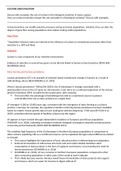
CULTURE AND EVOLUTION
Discuss with examples the role of culture in the biological evolution of Homo sapiens.
How can cultural evolution change the rate and pattern of biological evolution? Discuss with examples.
Cultural practices can modify selective pressures acting on human populations. Similarly, they can alter the
degree of gene flow among populations and random mating within populations.
Gene Flow
*Population Structure notes are relevant to the influence of culture on evolutionary processes other than
selection (i.e. drift and flow).
Selection
Culture is a key component of our selective environment.
Evidence of selection on several key genes can be directly linked to human cultural practices (ROSS AND
RICHERSON 2014).
Dairy farming and lactase persistence
Lactase persistence (LP) is an example of selection-based evolutionary change in humans as a result of
milk-drinking culture (BEJA-PEREIRA et al. 2003).
What is lactase persistence? SWALLOW (2003): the LP phenotype is strongly associated with a
polymorphism close to the LCT gene on chromosome 2 and refers to a continued expression of the lactase-
phlorizin hydrolase (LPH), encoded by the lactase gene, after weaning
This trait offers the advantage of benefitting from milk as a nutritional source in pastoral
communities that rely on dairy products as a staple food
LP emerged ≈5,000 to 10,000 years ago, consistent with the emergence of dairy farming as a cultural
practice; in Europe, for example, the regulatory mutation conferring lactase persistence has been modelled
based on modern human genetic data to have undergone selection beginning ≈7500 years BP (ITAN et al.
2009), coincident with the spread of Neolithic cultures into this region.
LP appears to have evolved through independent mutations in European and African populations
(TISHKOFF et al. 2006), indicating convergent evolution alongside convergent culturally evolved practices
concerning animal husbandry (ROSS AND RICHERSON 2014).
The relatively high frequency of the LP phenotype in Northern European populations in comparison to
other cultures exploiting milk as a nutritional resource can be explained through cultural differences (linked
to climate)
This nuance highlights the importance of local cultural practices in determining local adaptation
External fermentation of milk lactose into lactic acid and carbon dioxide facilitates adult
consumption of dairy products in the form of yoghurts and cheeses, circumventing the need for
lactase persistence (SCHNORR et al. 2016)
SCHNORR et al. (2016): LP very common in Northern European populations compared to other
dairy-consuming populations in other parts of the world at lower latitudes
This is likely because warmer climates would favour fermentation of dairy products into yogurts
and cheeses, which are easier for humans to digest without LP
, Colder temperatures in Northern Europe meant that fermentation did not take place prior to
technological development
This technique is more challenging in colder climates (i.e. northern latitudes), especially prior to
technological advancements in fermentation. As a result, the absence of external methods of
fermentation may have enhanced the selective environment for the rise of LP in northern Europe
(GERBAULT et al. 2011)
Unknowns
Given that the intensity of natural selection for LP has been estimated to be among the strongest in
the human genome (selection coefficient of approximately 0.04-0.05 (BERSAGLIERI et al. 2004)), is it
likely that factors other than the advantage of calorific intake contributed to the selective pressure
for lactase persistence?
Autoimmunity
RINALDI (2017): medicine is a cultural achievement and a selective force that shapes the environment and
thus the way we evolve.
RINALDI (2017): an increase in multiple sclerosis and likely other autoimmune diseases such as type 1
diabetes in Sardinia, Italy, has been linked to the elimination of malaria from the island in the early 1950s
Eradication -> amplifying autoimmune diseases and potentially accelerating evolution
Mechanism: centuries of exposure to P. falciparum shaped the human immune system to
aggressively fight the parasite with a tendency to over-respond to triggering factors even after the
disappearance of the parasites
Coeliac disease and changing cultural pressures
Coeliac disease is an autoimmune disorder caused by gluten intolerance and is associated with
several risk alleles found at high frequencies in Europeans from past positive selection events
(IL12A, IL18RAP, and SH2B3) (QUACH AND QUINTANA-MURCI 2017)
The otherwise deleterious variant SH2B3, for example, was subject to positive selection in the past
because it confers greater protection against infection – particularly important in early agricultural
societies exposed to an amplified risk of infection due to increased population density
SH2B3 is pleiotropic, regulating the structural organization and development of platelets and
endothelial cells, conferring a disadvantage in contemporary societies due to the risk of Coeliac
disease and thus illustrating the trade-off between past selection and current maladaptation
Fire and TB
It has been proposed that the advent of controlled fire use in early humans created the ideal conditions for
the emergence of TB as a transmissible disease (CHISHOLM et al. 2016).
Mechanism: increasing host-susceptibility to mycobacterial infection attributable to biomass smoke-
induced lung damage and the increased opportunities for transmission brought about by the developing
social culture that fire use encouraged (CHISHOLM et al. 2016).
CHISHOLM et al (2016): posit that the ability to manipulate/build/start fires in early humans created the
ideal conditions for the spread of Mycobacterium tuberculosis (TB). Damage to human lungs as a result of
the inhalation of biomass smoke increases host-susceptibility to infection by the TB pathogen. Culture in
this case is part of the selective environment – the use of fire in a domestic setting allowed for the
emergence of TB to a greater virulence than was previously the case.
Discuss with examples the role of culture in the biological evolution of Homo sapiens.
How can cultural evolution change the rate and pattern of biological evolution? Discuss with examples.
Cultural practices can modify selective pressures acting on human populations. Similarly, they can alter the
degree of gene flow among populations and random mating within populations.
Gene Flow
*Population Structure notes are relevant to the influence of culture on evolutionary processes other than
selection (i.e. drift and flow).
Selection
Culture is a key component of our selective environment.
Evidence of selection on several key genes can be directly linked to human cultural practices (ROSS AND
RICHERSON 2014).
Dairy farming and lactase persistence
Lactase persistence (LP) is an example of selection-based evolutionary change in humans as a result of
milk-drinking culture (BEJA-PEREIRA et al. 2003).
What is lactase persistence? SWALLOW (2003): the LP phenotype is strongly associated with a
polymorphism close to the LCT gene on chromosome 2 and refers to a continued expression of the lactase-
phlorizin hydrolase (LPH), encoded by the lactase gene, after weaning
This trait offers the advantage of benefitting from milk as a nutritional source in pastoral
communities that rely on dairy products as a staple food
LP emerged ≈5,000 to 10,000 years ago, consistent with the emergence of dairy farming as a cultural
practice; in Europe, for example, the regulatory mutation conferring lactase persistence has been modelled
based on modern human genetic data to have undergone selection beginning ≈7500 years BP (ITAN et al.
2009), coincident with the spread of Neolithic cultures into this region.
LP appears to have evolved through independent mutations in European and African populations
(TISHKOFF et al. 2006), indicating convergent evolution alongside convergent culturally evolved practices
concerning animal husbandry (ROSS AND RICHERSON 2014).
The relatively high frequency of the LP phenotype in Northern European populations in comparison to
other cultures exploiting milk as a nutritional resource can be explained through cultural differences (linked
to climate)
This nuance highlights the importance of local cultural practices in determining local adaptation
External fermentation of milk lactose into lactic acid and carbon dioxide facilitates adult
consumption of dairy products in the form of yoghurts and cheeses, circumventing the need for
lactase persistence (SCHNORR et al. 2016)
SCHNORR et al. (2016): LP very common in Northern European populations compared to other
dairy-consuming populations in other parts of the world at lower latitudes
This is likely because warmer climates would favour fermentation of dairy products into yogurts
and cheeses, which are easier for humans to digest without LP
, Colder temperatures in Northern Europe meant that fermentation did not take place prior to
technological development
This technique is more challenging in colder climates (i.e. northern latitudes), especially prior to
technological advancements in fermentation. As a result, the absence of external methods of
fermentation may have enhanced the selective environment for the rise of LP in northern Europe
(GERBAULT et al. 2011)
Unknowns
Given that the intensity of natural selection for LP has been estimated to be among the strongest in
the human genome (selection coefficient of approximately 0.04-0.05 (BERSAGLIERI et al. 2004)), is it
likely that factors other than the advantage of calorific intake contributed to the selective pressure
for lactase persistence?
Autoimmunity
RINALDI (2017): medicine is a cultural achievement and a selective force that shapes the environment and
thus the way we evolve.
RINALDI (2017): an increase in multiple sclerosis and likely other autoimmune diseases such as type 1
diabetes in Sardinia, Italy, has been linked to the elimination of malaria from the island in the early 1950s
Eradication -> amplifying autoimmune diseases and potentially accelerating evolution
Mechanism: centuries of exposure to P. falciparum shaped the human immune system to
aggressively fight the parasite with a tendency to over-respond to triggering factors even after the
disappearance of the parasites
Coeliac disease and changing cultural pressures
Coeliac disease is an autoimmune disorder caused by gluten intolerance and is associated with
several risk alleles found at high frequencies in Europeans from past positive selection events
(IL12A, IL18RAP, and SH2B3) (QUACH AND QUINTANA-MURCI 2017)
The otherwise deleterious variant SH2B3, for example, was subject to positive selection in the past
because it confers greater protection against infection – particularly important in early agricultural
societies exposed to an amplified risk of infection due to increased population density
SH2B3 is pleiotropic, regulating the structural organization and development of platelets and
endothelial cells, conferring a disadvantage in contemporary societies due to the risk of Coeliac
disease and thus illustrating the trade-off between past selection and current maladaptation
Fire and TB
It has been proposed that the advent of controlled fire use in early humans created the ideal conditions for
the emergence of TB as a transmissible disease (CHISHOLM et al. 2016).
Mechanism: increasing host-susceptibility to mycobacterial infection attributable to biomass smoke-
induced lung damage and the increased opportunities for transmission brought about by the developing
social culture that fire use encouraged (CHISHOLM et al. 2016).
CHISHOLM et al (2016): posit that the ability to manipulate/build/start fires in early humans created the
ideal conditions for the spread of Mycobacterium tuberculosis (TB). Damage to human lungs as a result of
the inhalation of biomass smoke increases host-susceptibility to infection by the TB pathogen. Culture in
this case is part of the selective environment – the use of fire in a domestic setting allowed for the
emergence of TB to a greater virulence than was previously the case.