HESI Exit Exam
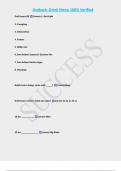
1. A client tells the nurse that he is suffering from insomnia. Which information is most important for the nurse to obtain? A. The client's usual sleeping pattern B. Whether the client smokes C. How much liquid the client consumes before bedtime D. The amount of caffeine that the client consumes during the day Rationale: The first thing to determine is the client's usual sleeping pattern and how it has changed to become what the client describes as insomnia. Options B, C, and D provide additional information after option A is ascertained. 2. A client has been on a mechanical ventilator for several days. What should the nurse use to document and record this client's respirations? A. The respiratory settings on the ventilator B. Only the client's spontaneous respirations C. The ventilator-assisted respirations minus the client's independent breaths D. The ventilator setting for respiratory rate and the client-initiated respirations Rationale: The nurse should count the client's respirations and document both the respiratory rate set by the ventilator and the client's independent respiratory rate. Never rely strictly on option A. Although the client's spontaneous breaths will be shallow and machine-assisted breaths will be deep, it is important to record machine-assisted breaths as well as the client's spontaneous breaths to get an overall respiratory picture of the client. 3. Six hours following thoracic surgery, a client has the following arterial blood gas (ABG) findings: pH, 7.50; PaCO2, 30 mm Hg; HCO3, 25 mEq/L; PaO2, 96 mm Hg. Which intervention should the nurse implement based on these results? A. Increase the oxygen flow rate from 4 to 10 L/min per nasal cannula. B. Assess the client for pain and administer pain medication as prescribed. C. Encourage the client to take short shallow breaths for 5 minutes. D. Prepare to administer sodium bicarbonate IV over 30 minutes. Rationale: These ABGs reveal respiratory alkalosis, and treatment depends on the underlying cause. Because the client is only 6 hours postoperative, he or she should be assessed for pain because treating the pain will correct the underlying problem. A PaO2 of 96 mm Hg does not indicate the need for an increase in oxygen administration. The PaCO2 indicates mild hyperventilation, so option C is not indicated. In addition, it is very difficult to change one's breathing pattern. The use of sodium bicarbonate is indicated for the treatment of metabolic acidosis, not respiratory alkalosis. 4. A 77-year-old female client states that she has never been so large around the waist and that she has frequent periods of constipation. Colon disease has been ruled out with a flexible sigmoidoscopy. Which information should the nurse provide to this client? A. As women age, they often become rounder in the middle because they do not exercise properly. B. Further assessment is indicated because loss of abdominal muscle tone and constipation do not occur with aging. C. With age, more fatty tissue develops in the abdomen and decreased intestinal movement can cause constipation. D. Because there is no evidence of a diseased colon, there is no need to worry about abdominal size. Rationale: With aging, the abdominal muscles weaken as fatty tissue is deposited around the trunk and waist. Slowing peristalsis also affects the emptying of the colon, resulting in constipation. Option A is not the primary reason for the changes in body structure. Option B is not indicated because loss of muscle tone and constipation are age-related changes. Option D dismisses the client's concerns and does not help her understand the changes that she is experiencing.
Escuela, estudio y materia
- Institución
- Chamberlain College Nursing
- Grado
- HESI EXIT
Información del documento
- Subido en
- 27 de noviembre de 2022
- Número de páginas
- 11
- Escrito en
- 2022/2023
- Tipo
- Examen
- Contiene
- Preguntas y respuestas
Temas
-
hesi exit exam