ATI NUTRITION PROCTORED FOCUSED REVIEW
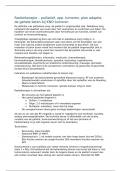
: Focused Review Notes Manifestations of Vitamin A Toxicity • Can cause teratogenic effects on fetuses • Blurred vision • Bone pain or swelling • Hypercalcemia • ICP • Liver damage • Skin peeling, itching • Nausea and vomiting • Abnormal softening of the skull bone (children) and bulging fontanels Planning Care for a Client Who Follows Seventh-Day Adventist Dietary Laws • Vegetarianism o Do not consume animal products of any type INCLUDING eggs and milk products. o Vitamin B12 and Vitamin D supplements may be needed with a pure vegan diet. • Vegan diets are adequate in protein due to intake of nuts and legumes (dried peas and cooked beans). Initiating Continuous Enteral Feeding • This is recommended for critically ill patients because it is associated with small residual volumes, and a lower risk of aspiration and diarrhea. • Residual volumes should be measures q4-6hrs. • Feeding tubes should be flushed with water q4hr to maintain patency and hydration. • If patient’s gastric volume exceeds 500ml, the continuous feeding should be HELD and tolerance reassessed. o In children, residual volumes should be measured and held if the amount is equal to or greater than ¼ the prescribed feeding amount. • Residual should be returned and the amount rechecked in 30min to 1hr. Recommendations for Nutritional Supplement • Add skim milk to powder milk (double strength milk) • Use whole milk instead of water recipes • Add cheese, peanut butter, chopped hard-boiled eggs, yogurt. • Dip meats in eggs or milk and coat with bread crumbs before cooking. • Nuts and dried beans are significant sources of protein great alternatives to dairy allergy or lactose intolerance! Assessing Caloric Intake • Toddlers: 1 to 3 years old o Limit 100% juice 4 to 6oz a day o The 1 to 2-year-old requires whole cow’s milk to provide adequate fat. o Food serving size is 1 tablespoon for each year of age. • Preschoolers: 3 to 6 years old o Preschoolers need 13 to 19 g/day of complete protein. o 1 tablespoon per year of age for size of foods. o May switch to skin or 1% low-fat milk after 2 years. • School-Age Children: 6 to 12 years old o Weight loss program is directed for children 40% overweight. • Adolescence o Energy requirements average 2,000 calorie/day for a 12 to 18-year-old female. o Energy requirements average 2,200 to 2,800 calorie/day for a 12 to 18-year- old male. o Average U.S. adolescent consumes a diet deficient in folate, vitamin A and E, iron, zinc, mag, calcium, and fiber. • Adulthood and older adulthood o Need a balanced diet that consists of 40% to 55% carbs, and 10-20% fat (with no more than 30% fat). o A 24 hr dietary intake is helpful in determining the need for dietary education. - Use whole grains, select orange and dark green leafy vegetables, avoid fruits with added sugar (make half your plate vegetables and fruits), use vegetable oils, 132-362 discretionary calories are permitted per day. MEN CALORIE INTAKE WOMEN CALORIE INTAKE 19 to 30 years old: 2,400 calories 19 to 30 years old: 2,000 calories 31 to 50 years old: 2,200 calories 31 to 50 years old: 1,800 calories 51+ years old: 2,000 calories 51+ years old: 1,600 calories Teaching about High-Fiber Food Sources • Beans • Vegetables • Oats • Whole grains • Cereals • Nuts, seeds • Raw or dried fruits • Barley • Flaxseed • Avocado • Chickpea • Brown Rice • Sweet Potato/Reg. Potato • Quinoa Priority Cholesterol Levels to Report • HDL (good cholesterol) should have levels greater than or equal to 60mg/dl • LDL (bad cholesterol) is less than 130mg/dl. • Optimal cholesterol level is less than 200mg/dl. Prioritizing Care for Intermittent Enteral Feeding • Formula is administered q4-6hr in equal portions of 250 to 400 ml over a 30-60min time frame usually by gravity drop or pump. • Residual volumes should be measured prior to initiating the feeding and held if the amount is greater than the amount stated in the prescription. • Tube should be marked with ink or tape and checked to make sure it has not migrated. • Assess bowel sounds. Dysfunction can indicate a need for alternate forms of nutrition. • Elevate head of bed 30 degrees and for at least 30 to 60 minutes after. ...................................................................................................CONTINUE
Escuela, estudio y materia
- Institución
- Chamberlain College Of Nursing
- Grado
- ATI Nutrition ,
Información del documento
- Subido en
- 23 de noviembre de 2022
- Número de páginas
- 11
- Escrito en
- 2022/2023
- Tipo
- Examen
- Contiene
- Preguntas y respuestas
Temas
-
hypercalcemia
-
bone pain or swelling •
-
blurred vision •
-
• can cause teratogenic effects on fetuses •