, RURAL & URBAN SETTLEMENT
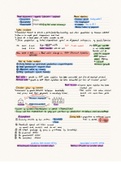
RURAL VS URBAN SETTLEMENT
Size + Population: Rural = smaller population; Urban = larger population
Activity + Function: Rural = 1 function (primary); Urban = multifunctional (secondary, tertiary,
quaterny)
Services: Rural = limited services; Urban = many services (shopping centres, highschools,
hospitals)
Land use: Rural = widely spaced with 1/2 activities; Urban = dense and closely spaced with
residential and industrial areas.
Since technology, rural areas can have more of a urban life.
SITE VS SITUATIONAL FACTORS
Factors that affect SITE of a situation:
Physical factors: availability in resources (water)
Economic factors: availability of minerals (mined)
Trade and transport factors: natural harbour/ over big river
Cultural and social factors: away from pollution, congestion, overpopulation
political factors: apartheid, government giving homes
historical factors: protect from invaders from past
religious factors: mosque church ETC
Factors that affect the SITUATION of a settlement:
Examples: soil, climate, other settlements, river, geology
Location in relation to its surroundings
influences type of activity conducted in the settlement
some places have poor site but good situation example Kimberly
SETTLEMENT CLASSIFICATION
Size and complexity: Rural = isolated farmstead, hamlet, village; Urban = town, city,
conurbation, metropolis, megalopolis
Pattern: Rural = dispersed pattern (houses far from each other/isolated); Urban = nucleated
pattern (settlement houses form dense groupings/closely spaced)
Function: Rural = uni-functional (as development occurs it becomes multi-functional); Urban =
multifunctional (secondary, tertiary, quaterny)
IMPORTANT!
Primary = farming, mining, fishing, forestry
Secondary = manufacturing
Tertiary = services (trade + transport)
Quaterny = research (law + finance)
RURAL VS URBAN SETTLEMENT
Size + Population: Rural = smaller population; Urban = larger population
Activity + Function: Rural = 1 function (primary); Urban = multifunctional (secondary, tertiary,
quaterny)
Services: Rural = limited services; Urban = many services (shopping centres, highschools,
hospitals)
Land use: Rural = widely spaced with 1/2 activities; Urban = dense and closely spaced with
residential and industrial areas.
Since technology, rural areas can have more of a urban life.
SITE VS SITUATIONAL FACTORS
Factors that affect SITE of a situation:
Physical factors: availability in resources (water)
Economic factors: availability of minerals (mined)
Trade and transport factors: natural harbour/ over big river
Cultural and social factors: away from pollution, congestion, overpopulation
political factors: apartheid, government giving homes
historical factors: protect from invaders from past
religious factors: mosque church ETC
Factors that affect the SITUATION of a settlement:
Examples: soil, climate, other settlements, river, geology
Location in relation to its surroundings
influences type of activity conducted in the settlement
some places have poor site but good situation example Kimberly
SETTLEMENT CLASSIFICATION
Size and complexity: Rural = isolated farmstead, hamlet, village; Urban = town, city,
conurbation, metropolis, megalopolis
Pattern: Rural = dispersed pattern (houses far from each other/isolated); Urban = nucleated
pattern (settlement houses form dense groupings/closely spaced)
Function: Rural = uni-functional (as development occurs it becomes multi-functional); Urban =
multifunctional (secondary, tertiary, quaterny)
IMPORTANT!
Primary = farming, mining, fishing, forestry
Secondary = manufacturing
Tertiary = services (trade + transport)
Quaterny = research (law + finance)