Relationships: Factors affecting attraction: Filter theory
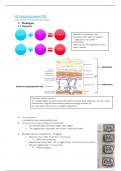
Definition: Devised by Kerchoff and Davis (1962) it explains relationship formation, stating a series
of different factors progressively reduce our range of available romantic partners. There is a large
potential of people we could form a relationship with (Field of availables), though we don’t wish to
date anyone we can, we ‘filter’ down those people to our ‘field of desirables’. Say short term
relationship are 18months and below.
(Filter 1) Social demography: Proximity (Geographical location), social class, level of
education, ethnic group, religious beliefs etc. Much likely to meet someone who is
physically closer, the key benefit is accessibility, because it takes less time, money
etc. to meet someone who lives in the same town/goes to same school. Realistic field
may be smaller than expected because anyone who is ‘too different’ is discounted as
a partner. We are likely to have more in common initially with someone we share
social demography with.
(Filter 2) Similarity in attitudes: Due to the first filter, partners might share specific values or views
due to cultural/social characteristics. It is important in beginning of relationship for partners to agree
or at least understand each other’s basic values and beliefs, for things to successfully progress and
encourage self-disclosure.
(Filter 3) Complementarity: The ability for partners to meet each other’s needs and complement
each other with traits they personally lack. E.g., one partner may wish to nurture, the
other may wish to be nurtured. Kerchoff and Davis found this to be more important
in long term relationships as differences become clearer and opposites begin to
attract. Complementarity is attractive because it gives both partners a collective
feeling of wholesomeness and purpose.
Evaluation of Filter theory +/-
One limitation is that the explanation over generalises the importance of complementarity to all
long-term relationships. It suggests that to be most satisfied in a relationship one may need to be
dominant and one submissive to ultimately complement each other, though evidence by Markey
(2013) found that lesbian couples of equal dominances were most satisfied, they had been together
for a mean time of 4 ½ years. This suggests that similarity of needs more so than complementarity is
associated with long term satisfaction. However, this does not study hetero-sexual couples where
the filter theory differs in that it does not filter to one gender, so perhaps findings would be different
in these couples and perhaps could support complementarity, so further research should be
conducted in this area of filter theory.
Another limitation is that actual similarities matter less in a relationship than whether believe
themselves to be similar. This is supported by a meta-analysis of 313 studies, found actual similarity
only had a small effect on attraction in lab-based interaction, whereas in real life relationships
perceived similarity was a stronger predictor of attraction, this suggests that partners perceive to
have higher similarity as they become more attracted to each other. This criticises filter theory as it
does not take this possibility into account.
Definition: Devised by Kerchoff and Davis (1962) it explains relationship formation, stating a series
of different factors progressively reduce our range of available romantic partners. There is a large
potential of people we could form a relationship with (Field of availables), though we don’t wish to
date anyone we can, we ‘filter’ down those people to our ‘field of desirables’. Say short term
relationship are 18months and below.
(Filter 1) Social demography: Proximity (Geographical location), social class, level of
education, ethnic group, religious beliefs etc. Much likely to meet someone who is
physically closer, the key benefit is accessibility, because it takes less time, money
etc. to meet someone who lives in the same town/goes to same school. Realistic field
may be smaller than expected because anyone who is ‘too different’ is discounted as
a partner. We are likely to have more in common initially with someone we share
social demography with.
(Filter 2) Similarity in attitudes: Due to the first filter, partners might share specific values or views
due to cultural/social characteristics. It is important in beginning of relationship for partners to agree
or at least understand each other’s basic values and beliefs, for things to successfully progress and
encourage self-disclosure.
(Filter 3) Complementarity: The ability for partners to meet each other’s needs and complement
each other with traits they personally lack. E.g., one partner may wish to nurture, the
other may wish to be nurtured. Kerchoff and Davis found this to be more important
in long term relationships as differences become clearer and opposites begin to
attract. Complementarity is attractive because it gives both partners a collective
feeling of wholesomeness and purpose.
Evaluation of Filter theory +/-
One limitation is that the explanation over generalises the importance of complementarity to all
long-term relationships. It suggests that to be most satisfied in a relationship one may need to be
dominant and one submissive to ultimately complement each other, though evidence by Markey
(2013) found that lesbian couples of equal dominances were most satisfied, they had been together
for a mean time of 4 ½ years. This suggests that similarity of needs more so than complementarity is
associated with long term satisfaction. However, this does not study hetero-sexual couples where
the filter theory differs in that it does not filter to one gender, so perhaps findings would be different
in these couples and perhaps could support complementarity, so further research should be
conducted in this area of filter theory.
Another limitation is that actual similarities matter less in a relationship than whether believe
themselves to be similar. This is supported by a meta-analysis of 313 studies, found actual similarity
only had a small effect on attraction in lab-based interaction, whereas in real life relationships
perceived similarity was a stronger predictor of attraction, this suggests that partners perceive to
have higher similarity as they become more attracted to each other. This criticises filter theory as it
does not take this possibility into account.