Exam (elaborations) maternal child
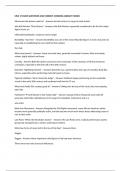
Maternal Child Acute and infectious respiratory illnesses: Croup effects under the age of 5 - bark cough - comfort, treat fever, fluids, corticosteroids and nebulae treatments if needed, humid environments Signs of respiratory distress - dyspnea - rapid breathing Infectious mononucleosis (not on take home test) sore throat, swelling of lymph nodes, rash on trunk, effects young adults, mild analgesics, ampicillin or amoxicillin, throat licensers, corticosteroids for respiratory distress May be up to 3 months before adolescent recovers Otitis Media - room temp fluid, around 5 to 6 years of age under 3 down and back. Prevalent in houses of smoke or large family. Clinical manifestations: middle ear pain and inflammation - acute AOM; fever and otalgia (ear pain) Not always treated with antibiotics, depends on age. NOTHING can go in the ear, wipe out the drainage do not put q-tip Bronchiolitis- most common infection in the first 24 months- RSV most common causative agent. Transmission by direct contact Clinical - supplemental oxygen, bed rest Acute Epiglottitis - life threatening supraglottic obstruction inflammation, sitting in a tripod position, be ready to intubate, do not stick a tongue blade, usually bacterial - treated with antibiotics, and corticosteroids Prophylactic antibiotics for household members and contacts Can be caused by smoke inhalation or crack cocaine, Respiratory emergency - monitor breathing Indications of respiratory failure - dyspnea, tripod position, cool clammy skin, cyanosis, retractions, use of neck muscles, mental status alterations, restlessness, anxiety, tachycardia, stridor, grunting respirations, intercostal retractions - fighting for respirations Cardiopulmonary resuscitation - 1 rescue breath 30:2 - 2 rescue breaths (15:2) CAB; 100 compressions per minute Fluids - in infants extracellular fluid (ECF) makes up one half of total body water - within 1 year, in toddlers ECF compartment accounts for 1/3 of fluid – vomit and diarrhea lose fluids quickly; input must = output – when treating acute diarrhea and dehydration - do not stick IV if can be avoided, try oral hydration first, if severe then IV – Spread gastroenteritis through poor hand hygiene – Severe dehydration common cause of acute renal failure in children – Types of dehydration dictate how to replace fluids (isotonic, hypotonic, hypertonic) – signs of fluid overload - moist lungs, bonding pulse Diarrhea - leading cause of death in children under age 5 years throughout the world – history taking is so important: acute, how long? food? viruses? anyone sick? – Assessment - inspect first Constipation: – Encopresis - constipation with fecal soiling after being toilet stained: be able to openly discuss their issues Hirschsprung Disease (megacolon) – absence of parasympathetic ganglion cells in portion of large intestine, bowel enlargement proximal to defect, length of involved bowel varies from internal sphincter to entire colon – these children can’t poop – may require surgical treatment – postop nursing care based on type of surgery performs – keep operative site clean and dry – monitor for pain – provide skin protection, patient and family education Vomiting: – dehydration – tetany; seizures from severe alkalosis – metabolic alkalosis from loss of hydrogen ions – electrolyte imbalance Signs of dehydration ; sunken eye balls, tenting skin, lethargic, hydrate with oral and then IV if severe, rest after feeding, side lying/low fowlers position, thicken liquids, small volume feedings q2-3 hrs monitor I/O’s GERD – Limit fatty foods, which dealt gastric emptying – avoid foods that decreases LES – Chewing gum because is stimulates production of bicarbonate-containing saliva, which neutralizes acid – Avoid eating or drinking 2 -3 hours before bedtime; avoid over eating Crohn Disease - ulceration of intestinal submucosa accompanied by congestion – electrolyte imbalance – lymph nodes enlarged – blood in feces – eat small frequent meals – low fat diet – hight protein high fiber – children with crohn disease and colitis - how will this effect them emotionally - deal with the embarrassment Cleft lip and cleft palate – cleft lip - difficult feeding; cannot form vacuum with mouth to suck; may be able to breastfeed (breast may fill cleft, making sucking easier) – Repair at 5 - 8 weeks of age (lip) – palate up to 9 - 12 months, no later than 12 - 18 months - before speak is fully developed – Prone to infection, especially otitis media, altered speech, malposition of teeth and maxillary arch; extensive orthodontic and prosthodontics needed; hearing problems caused by recurrent otitis media (eustachian tube connects nasopharynx and middle ear, transports pathogens to ear) Nursing care of children with cleft lip and cleft palate - position the childs arm where they cannot mess with sutures - restrain the arm – pain medication and avoid traumatizing operative site – pain rating scale and medicate appropriately Intussusception Telescoping of a proximal section of intestines into a more distal segment; most common site at ileocecal valve sever pain - kicking and drawing legs up – currant jelly stools - bloody mucus stools – colon is telescoped upon itself - requires surgery Malabsorption syndromes: Celiac Disease – Gluten-sensitive enteropathy; immunologically mediated small intestine – present with muscle waisting, smaller stature, failure to thrive, thin arms and legs – Stool has a very foul smell – Inability to digest gluten. found mostly in wheat, rye, oats, and barley – resulting in failure to thrive – later stage: protein, carbohydrate, mineral, and electrolyte absorption affected; growth failure and muscle wasting – importance of education – full remission with a gluten-free diet Cardiac – prophylactic antibiotic therapy before surgery, before invasive procedures, may be throughout life Signs of heart failure: – trouble breathing – tachycardia, and hypotension progressing to extreme sailor or duskiness – tachypnea, dyspnea, costal retractions – I/Os, weigh them – Heart pump problem - digoxin to make them pump stronger and harder – Prophylactic antibiotic therapy before surgery, before invasive procedures, may be throughout life – HR 110 - 160 – Count apical pulse for 1 min before administration - administer medication if within normal range Heart Failure: Digoxin - potassium supplement to prevent digitalis toxicity and hypokalemia Rest in high - fowler or orthopneic position to reduce cardiac workload, morphine to reduce anxiety, and dyspnea monitory Hgb levels – post surgery do not do valsalva - stool softeners Rheumatic fever – antibiotic therapy to eradicate organism and prevent resurgence - prophylactic therapy before dental work or invasive procedures – may have inflammation of the joints – treat with antibiotics Hematology Anemias - reduction in concentration WIC program Sickle Cell - VOC Vaso-occlusive crisis - HOP pain relief and oxygen and hydrate DIC - Disseminated intravascular coagulation: – low fibrinogen level- prolonged prothrombin and partial thromboplastin times; reduced platelets; positive D-dimer assay – petechiae – low RBC – decreased platelets – Can be caused by preeclampsia, septic shock, burn patients, septicemia ITP - bleeding disorder caused by low platelets Immune thrombocytopenia less than 35,000 excessive bruising petechia covering the body epistaxis bleeding mucosa internal bleeding – can take a year to feel better – no impact sports, no NSAIDs only acetaminophen Blood transfusion therapy - reactions usually occur within the first 30 min Mild 0 - 3 moderate 4 - 6 severe 7 - 10 When giving opioids - respiratory depression, pruritus, can cause constipation Appropriate tools - look over scales: NIPs Oucher and Faces for pediatric – Narcotics” – assess and reassess the patients – rights of medication – witness waisting – now side effects – count respirations for a whole minute on children and newborn Enuresis: bed wetting Defects of the genitourinary – inguinal – Hypospadias - abnormal placement of enthrall opening on understaffed of the penile shaft, usually requires surgical repair – epispadia - urethral canalization failure - before toilet training Urinary tract infections: – clinical manifestations: – Caused by: bubble baths, poor hygiene, sexual abuse - education – Assess - are they irritable, lethargic, frequent urination, bed wetting, incontinence, fever, foul smelling urine, blood in urine , flank pain – pyelonephritis - abdominal pain, flank pain, and extremely high fever - kidney infection – Infant may have hypothermia - poor weight gain – Antipyretics - no aspirin for RYE syndrome (tylenol or motrin) Renal Failure - acute Dehydration #1 reason for acute renal failure Chronic renal failure CRF and lead to End stage renal disease – diet therapy is important – restrict proteins - kidneys have inability to remove waste products Duchenne Muscular Dystrophy – progressive muscular weakness; becomes noticeable at 3 - 7 years of age – waddling, wide-based gait – loss of ability to walk by age 12 – mile to moderate cognitive impairment (IQ - 80) – Cardiomyopathy (also may be seen in female carriers) – Decreased life span; may life to early adulthood – Corticosteroids administration to prolong ambulation, temporarily slow progression of muscular weakness; associated with eight gain – vaccine - flu and pneumonia – provide exercise and muscle strengthening Epilepsy ( seizure disorders) – Elevated fevers, toxic events – tonic clonic seizures – those that have epilepsy – see spots or feeling dizzy – Nothing should be forced in the mouth, because it may cause tongue to occlude the airway, attempts to restrain should be avoided because this may cause injury from muscle contractions; position on side if possible to facilitate drainage of oral secretions Guillain - barre syndrome – iv therapy with IgG Febrile seizures – associated with a febrile illness – acute electrolyte imbalance – most occur between 6 months and 3 years – temps exceeding 102 can illicit a seizure – reduce the fever – control the seizure – administer antipyretics - excluding aspire – initiate seizure precautions, provide rest – monitor why they have the elevated temperature Meningitis – maintain droplet precautions for at least 48 hours (usually no longer contagious 48 hours after state of antibiotic therapy) – rigidity and hyper extension of neck – hick pitch cry in child – usually seen in adolescents – headache and neck rigidity – provide rest – decrease stimuli – patients on isolation – antibiotic therapy – complications = septic shock and circulatory collapse Reye Syndrome – clinical findings - fever - cerebral edema, profound impaired LOC, liver involvement, disordered function, fatty changes – monitor vital signs and LOC – Foster dissemination of information concerning role of aspirin and products containing salicylate in relation to viral disease and development of Reye syndrome Endocrine dysfunction Diabetes mellitus – Classification type 1 lack of insulin production – monitor for leto-acidosis – carbohydrate deficiency - need the insulin to combine with the glucose to get into the cells – type 1 symptoms for hyperglycemia - high and dry sugar high ,cold and clammy need some candy – Dose of regular insulin - when would you reassess their blood sugar 2 - 3 hours Signs and symptoms of hypoglycemia – difficulty with balance, memory, attention or concentration, dizziness or highhandedness and slurred speech as it progresses - if severe seizure, coma, death – early signs: sweating below 65 may exhibit irritability Treatment: 10 - 15 g of simple carb liquids if conscious - follow with starch and protein graham crackers and peanut butters - monitor how many carbs giving – night time blood sugars drop - less insulin at night and have a night time snack 10 - 15 g carb and follow with a snack of a protein before go to bed – Can play sports - but notify coach - before doing a high activity sport get a 15 - 30 high carbohydrate snack Hyperglycemia: – managed by adjustment of insulin or food intake – DKA get to health care agency frequently – adolescent girls often become hyperglycemic around the time of their menses Integumentary dysfunction – cellulitis – – Burns: antibiotics, wraps, warm soaks every 4 hours increase circulation, helps pain and promotes healing Burns: monitor urine output because the output reflects the adequacy of the organ, establish airway and administer oxygen – IV fluid replacement Traumatic injury – leading cause of death in children 1 year – Child abuse may also lead to traumatic injury in children Fractures: Compound fractures (open) Break in skin at time of fracture with or without protrusion of the bone - risk for infection Compartment syndrome _ tissue ischemia - emergency - feeling “fire” in the cast – 5 P’s with cast neuromuscular assessment – pain and point of tenderness – pulsenessness – pallor – paresthesia – paralysis Scoliosis – screening for scoliosis beginning at age 10; diagnosis confirmed by x-ray examination – mild: orthopedic supervision every 4 - 6 months to monitor progression – may need surgery or realignment with rods Juvenile idiopathic arthritis – stiffness, swelling, loss of motion in affected joint – most common in the morning – prevent damage to joints – Treatment: warm moist heat to decrease inflammation, relieve pain, NSAIDs, ibuprofen, naproxen sodium, corticosteroids, encourage physical therapy and exercise – Swimming for exercise – Promise fictional alignment Child abuse: – physical signs of neglect Shaken baby syndrome: – injuries caused by vigorously shaking of infants shoulders or upper extremities while being held; can cause fatal intracranial trauma/bleeding without external signs of abuse – clinical findings – retinal hemorrhages – seizures; coma – bruising – skull fractures – tense or bulging fontanel – respiratory irregularities without stridor or adventitious breath sounds, apnea – Nursing care: depends on type of injuries sustained; usually involve CNS, fractures of skull and long bones, trauma – Munchausen syndrome by proxy – factitious disorder by proxy; caregiver usually mother deliberately exaggerates or fabricate histories and symptoms or induces symptoms, very difficult form of abuse to diagnose Poisoning: – ingestion of/exposure to toxic substance; ingestion of excessive amount of nontoxic substances Tanner stages Tanner stages describe the stages of pubertal growth and are numbered from stage 1: immature to stage 5 mature **** KNOW FOR HESI Vaccination schedule Test specific: Diabetes insidious is a disorder posterior pituitary Prevent STDs by abstinence Whooping cough — Pertussis TDap - treat everyone in the family Lymes disease - long pants, tuck them in
Escuela, estudio y materia
- Institución
- Maternal child
- Grado
- Maternal child
Información del documento
- Subido en
- 22 de octubre de 2022
- Número de páginas
- 9
- Escrito en
- 2022/2023
- Tipo
- Examen
- Contiene
- Preguntas y respuestas
Temas
-
treat fever
-
fluids
-
humid environ
-
maternal child acute and infectious respiratory illnesses croup effects under the age of 5 bark cough comfort
-
corticosteroids and nebulae treatments if needed