

Cardinal Newman College
Name: Teacher:
Mass Transport PPQs 2020-2021
Mass transport in animals questions:
Q1.(a) The table shows three statements about some biological molecules. Complete the table with a tick in each
box if the statement is true for haemoglobin, cellulose or starch.
Statement Haemoglobin Cellulose Starch
Has a quaternary structure
Formed by condensation reactions
Contains nitrogen
(3)
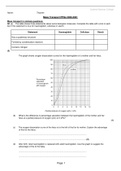
The graph shows oxygen dissociation curves for the haemoglobin of a mother and her fetus.
Partial pressure of oxygen (pO2) / kPa
(b) What is the difference in percentage saturation between the haemoglobin of the mother and her
fetus at a partial pressure of oxygen (pO2) of 4 kPa?
(1)
(c) The oxygen dissociation curve of the fetus is to the left of that for its mother. Explain the advantage
of this for the fetus.
........................................................................................................................
........................................................................................................................(2)
(d) After birth, fetal haemoglobin is replaced with adult haemoglobin. Use the graph to suggest the
advantage of this to the baby.
........................................................................................................................
........................................................................................................................
Page 1
, Cardinal Newman College
........................................................................................................................(2)
(e) Hereditary persistence of fetal haemoglobin (HPFH) is a condition in which production of fetal
haemoglobin continues into adulthood. Adult haemoglobin is also produced.
People with HPFH do not usually show symptoms. Suggest why.
........................................................................................................................
........................................................................................................................ (1)
Q2. Lugworms live in mud where the partial pressure of oxygen is low. The graph shows oxygen dissociation
curves for a lugworm and for a human.
(a) Explain the advantage to the lugworm of having haemoglobin with a dissociation curve in the
position shown.
......................................................................................................................
......................................................................................................................
...................................................................................................................... (2)
(b) In humans, substances move out of the capillaries to form tissue fluid. Describe how this tissue
fluid is returned to the circulatory system.
......................................................................................................................
......................................................................................................................
.......................................................................................................................(3)
Q3.(a) What is the function of the coronary arteries?
........................................................................................................................
........................................................................................................................(2)
(b) Figure 1 shows some of the large blood vessels in a mammal.
Page 2
, Cardinal Newman College
Figure 1
(i) Which of the blood vessels A to H is the vena cava?
(1)
(ii) Which of the blood vessels A to H is the renal artery?
(1)
(c) Figure 2 shows how the blood pressure changes as blood travels from the aorta to the capillaries.
Figure 2
The rise and fall in blood pressure in the aorta is greater than in the small arteries. Suggest why.
........................................................................................................................
........................................................................................................................
........................................................................................................................
........................................................................................................................(3)
Q4.The mean internal diameter and the mean speed of blood flow for different human blood vessels are shown
below in the table.
Page 3
Name: Teacher:
Mass Transport PPQs 2020-2021
Mass transport in animals questions:
Q1.(a) The table shows three statements about some biological molecules. Complete the table with a tick in each
box if the statement is true for haemoglobin, cellulose or starch.
Statement Haemoglobin Cellulose Starch
Has a quaternary structure
Formed by condensation reactions
Contains nitrogen
(3)
The graph shows oxygen dissociation curves for the haemoglobin of a mother and her fetus.
Partial pressure of oxygen (pO2) / kPa
(b) What is the difference in percentage saturation between the haemoglobin of the mother and her
fetus at a partial pressure of oxygen (pO2) of 4 kPa?
(1)
(c) The oxygen dissociation curve of the fetus is to the left of that for its mother. Explain the advantage
of this for the fetus.
........................................................................................................................
........................................................................................................................(2)
(d) After birth, fetal haemoglobin is replaced with adult haemoglobin. Use the graph to suggest the
advantage of this to the baby.
........................................................................................................................
........................................................................................................................
Page 1
, Cardinal Newman College
........................................................................................................................(2)
(e) Hereditary persistence of fetal haemoglobin (HPFH) is a condition in which production of fetal
haemoglobin continues into adulthood. Adult haemoglobin is also produced.
People with HPFH do not usually show symptoms. Suggest why.
........................................................................................................................
........................................................................................................................ (1)
Q2. Lugworms live in mud where the partial pressure of oxygen is low. The graph shows oxygen dissociation
curves for a lugworm and for a human.
(a) Explain the advantage to the lugworm of having haemoglobin with a dissociation curve in the
position shown.
......................................................................................................................
......................................................................................................................
...................................................................................................................... (2)
(b) In humans, substances move out of the capillaries to form tissue fluid. Describe how this tissue
fluid is returned to the circulatory system.
......................................................................................................................
......................................................................................................................
.......................................................................................................................(3)
Q3.(a) What is the function of the coronary arteries?
........................................................................................................................
........................................................................................................................(2)
(b) Figure 1 shows some of the large blood vessels in a mammal.
Page 2
, Cardinal Newman College
Figure 1
(i) Which of the blood vessels A to H is the vena cava?
(1)
(ii) Which of the blood vessels A to H is the renal artery?
(1)
(c) Figure 2 shows how the blood pressure changes as blood travels from the aorta to the capillaries.
Figure 2
The rise and fall in blood pressure in the aorta is greater than in the small arteries. Suggest why.
........................................................................................................................
........................................................................................................................
........................................................................................................................
........................................................................................................................(3)
Q4.The mean internal diameter and the mean speed of blood flow for different human blood vessels are shown
below in the table.
Page 3

