The Nature of the Provisional Government and Petrograd Soviet
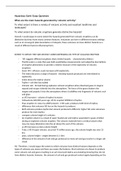
To what extent was their dual power between the PG and the PS?
To what extent are the PG’s weaknesses to blame for the October Revolution?
Nature of PG Nature of PS
Elections CA elections 9 months after expected: - Elected by Petrograd’s factory
workers and soldiers in the Petrograd
- A commission of lawyers appointed by the PG
garrison = more legitimate than the
were indecisive on the minimum age to vote
PG = more support for them.
- The PG gave responsibility of administration such
- Representatives did not serve fixed
as compiling qualified voters to the zemstva = not
terms and could be recalled by
democratically elected so arguments over whether
electors at any time
they should be involved in elections.
- Political instability because
- WW1 and military crisis = PG failed to solve it =
leaders constantly changing
delayed until military success
- Always representative of the
- SR’s delayed elections until after harvest
people = most support at any
- Chosen by the Duma initially not elected = not time
legitimate which led to problems in long term
- Hold representatives
- PG felt land reform was a matter for accountable - unlike the PG that
democratically elected government so did not was illegitimate
introduce change = discontent from peasants
and support for Lenin’s land policy.
- Policies decided by an Executive
Committee not the meeting of 3000
- People not having a direct
impact
- PS remains in control - not a
mob rule which would be
inefficient.
, Nature of PG Nature of PS
Political - 12- man ministry - One representative for each solider
Make Up battalion and one representative for
- Chief Minister (figurehead) = Prince Lvov
1000 workers = representative of all
- Landowner and from a noble family - shows sections of the proletariat
that the PG was not representative of the
- Representatives were paid the same
lower classes or the Bolsheviks
amount as ordinary workers =
- Wanted a constitutional monarchy not a equality = communist idea.
republic so accepted Nicholas II’s nomination
- Garrison was over represented in the
of his uncle as Tsar- against PS ideas of mob
PS - 2/3 were soldiers rep but there
rule
were fewer soldiers in Petrograd than
- Well respected politicians - the leaders of the workers.
PS stepped down from power because they
- Only 800 of the 5000 members in
knew they did not have political experience.
March represented the workers.
- Well known due to work on Zemstvo Union
- Opposed PG accepting Grand Duke
which undertook war relief work
Mikhail as Tsar because did not wat
- Not significant anyway because just a constitutional monarchy.
figurehead - Milyukov was driving force
- Foreign Minister = Pavel Milyukov
- Executive Committee comprised of:
- Kadet leader - Kadets were one of the more
- Mensheviks and SR’s = that well
conservative parties present - different
represented the workers and
ideology to the Bolsheviks.
soldiers.
- 11 members = middle class liberals. Therefore were
- Influential figure was Irakli
made up of the most conservative of the time
Tsereteli (Menshevik)
(compared to SR’s, Bolsheviks and Mensheviks)
- 5 Kadets (including Milyukov)
- 3 Octobrists (including Guchkov)
- 2 non-party
- 1 non middle class liberal = Alexander Kersenky
- Kersenky was also the vice-chairman of the
PS - Therfeore was the only minister in both
PS and PG
- Beneficial for the PG = less tension and less
political instability
- However, the PS opposed him working with
the PG = he may have alienated them further.
, Nature of PG Nature of PS
Power - Order Number One (1st March) - PG were only - Initially it was a temporary body with
obeyed if they did not conflict with the PS. limited power - waiting for the CA
Therefore the had to adhere to the PS’s demands elections to determine a permanent
democratic system
- No authority of the Petrograd garrison = Order
Number One issued by the PS - Order Number One + control of the
army
- No control of rural areas - peasant land seizures
and violence (in June 1917 there were 700 - Loyalty of the railway and postal
complaints of illegal attacks on landowners) workers. Therefore could control
Petrograd’s links with the outside
- No disciplined police force - Tsarist force was
world = significant because railway
taken over by locally organised militias
and postal workers have a direct
- Zemstva had no credibility because it was not impact on communications of the PG
democratically elected + dominated by upper class
- Support from army garrison =
- HOWEVER, Zemstva di become elected body in 180,000 troops in the city and
spring 1917 (see below) 150,000 in outlying districts.
Therefore the PG relied on the PS to
suppress opposition
- Widespread control = by October
there were 1500 Soviet’s
- June 1917 = creation of All-Russian
Congress of Workers’ and Soldiers’
Deputies = represented each soviet =
collaboration and control on a large
scale
- Became involved in foreign policy =
significant powers usually reserved
for main power. Shows the extent of
their encroachment and
responsibilities.
To what extent was their dual power between the PG and the PS?
To what extent are the PG’s weaknesses to blame for the October Revolution?
Nature of PG Nature of PS
Elections CA elections 9 months after expected: - Elected by Petrograd’s factory
workers and soldiers in the Petrograd
- A commission of lawyers appointed by the PG
garrison = more legitimate than the
were indecisive on the minimum age to vote
PG = more support for them.
- The PG gave responsibility of administration such
- Representatives did not serve fixed
as compiling qualified voters to the zemstva = not
terms and could be recalled by
democratically elected so arguments over whether
electors at any time
they should be involved in elections.
- Political instability because
- WW1 and military crisis = PG failed to solve it =
leaders constantly changing
delayed until military success
- Always representative of the
- SR’s delayed elections until after harvest
people = most support at any
- Chosen by the Duma initially not elected = not time
legitimate which led to problems in long term
- Hold representatives
- PG felt land reform was a matter for accountable - unlike the PG that
democratically elected government so did not was illegitimate
introduce change = discontent from peasants
and support for Lenin’s land policy.
- Policies decided by an Executive
Committee not the meeting of 3000
- People not having a direct
impact
- PS remains in control - not a
mob rule which would be
inefficient.
, Nature of PG Nature of PS
Political - 12- man ministry - One representative for each solider
Make Up battalion and one representative for
- Chief Minister (figurehead) = Prince Lvov
1000 workers = representative of all
- Landowner and from a noble family - shows sections of the proletariat
that the PG was not representative of the
- Representatives were paid the same
lower classes or the Bolsheviks
amount as ordinary workers =
- Wanted a constitutional monarchy not a equality = communist idea.
republic so accepted Nicholas II’s nomination
- Garrison was over represented in the
of his uncle as Tsar- against PS ideas of mob
PS - 2/3 were soldiers rep but there
rule
were fewer soldiers in Petrograd than
- Well respected politicians - the leaders of the workers.
PS stepped down from power because they
- Only 800 of the 5000 members in
knew they did not have political experience.
March represented the workers.
- Well known due to work on Zemstvo Union
- Opposed PG accepting Grand Duke
which undertook war relief work
Mikhail as Tsar because did not wat
- Not significant anyway because just a constitutional monarchy.
figurehead - Milyukov was driving force
- Foreign Minister = Pavel Milyukov
- Executive Committee comprised of:
- Kadet leader - Kadets were one of the more
- Mensheviks and SR’s = that well
conservative parties present - different
represented the workers and
ideology to the Bolsheviks.
soldiers.
- 11 members = middle class liberals. Therefore were
- Influential figure was Irakli
made up of the most conservative of the time
Tsereteli (Menshevik)
(compared to SR’s, Bolsheviks and Mensheviks)
- 5 Kadets (including Milyukov)
- 3 Octobrists (including Guchkov)
- 2 non-party
- 1 non middle class liberal = Alexander Kersenky
- Kersenky was also the vice-chairman of the
PS - Therfeore was the only minister in both
PS and PG
- Beneficial for the PG = less tension and less
political instability
- However, the PS opposed him working with
the PG = he may have alienated them further.
, Nature of PG Nature of PS
Power - Order Number One (1st March) - PG were only - Initially it was a temporary body with
obeyed if they did not conflict with the PS. limited power - waiting for the CA
Therefore the had to adhere to the PS’s demands elections to determine a permanent
democratic system
- No authority of the Petrograd garrison = Order
Number One issued by the PS - Order Number One + control of the
army
- No control of rural areas - peasant land seizures
and violence (in June 1917 there were 700 - Loyalty of the railway and postal
complaints of illegal attacks on landowners) workers. Therefore could control
Petrograd’s links with the outside
- No disciplined police force - Tsarist force was
world = significant because railway
taken over by locally organised militias
and postal workers have a direct
- Zemstva had no credibility because it was not impact on communications of the PG
democratically elected + dominated by upper class
- Support from army garrison =
- HOWEVER, Zemstva di become elected body in 180,000 troops in the city and
spring 1917 (see below) 150,000 in outlying districts.
Therefore the PG relied on the PS to
suppress opposition
- Widespread control = by October
there were 1500 Soviet’s
- June 1917 = creation of All-Russian
Congress of Workers’ and Soldiers’
Deputies = represented each soviet =
collaboration and control on a large
scale
- Became involved in foreign policy =
significant powers usually reserved
for main power. Shows the extent of
their encroachment and
responsibilities.