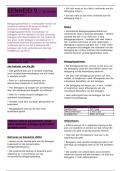
The nature of autocratic rule
Key Questions
- Preconditions of Revolution in Russia: what caused revolution?
- Was the regime autocratic?
(How it led to revolution + contributed to discontent)
Alexander III’s ‘Great Reforms’ - Abolition of Serfdom and land
settlement in 1861
Use this as evaluation for the role of Nicholas II - not all his fault because the
previous reforms were reactionary - led to discontent he was not responsible for.
- Evidence:
- Serfs were made to pay for the land they had cultivated for decades - harsh
repayment and long term payment (49yrs)
- 80% of inhabitants in Russian Empire were peasants - Nicholas was left to deal
with disillusionment with Tsarism from the majority of the population.
- Peasant Land Banks 1880s - did not solve land hunger that was created
- Grandfather’s Assassination in 1881 by People’s Will terrorist organisation - caused
Nicholas to crack down on opposition.
- Russification initially implemented by Alexander III - Nicholas continued it
- Pale of Settlement first introduced by Alexander III
- Consequences:
- Redemption payments to blame for worsening conditions in countryside =
landowners targeted by peasant radicals
- Significant for Nicholas II because the land settlement persisted into his reign
- continued discontent of the peasantry
- Pale of Settlement = backlash from those that oppose antisemitism
,Industrialisation = urban discontent
= the emergence of an urban working class in poor living and working conditions
- Evidence:
- only 2% of population in 1890s - not significant in mobilising opposition to Tsarism
- HOWEVER concentred in major cities - significant impact because close to
government and administration - their protests have greater impact than rural
peasantry.
- Poor economic growth - Russia needed to be a Great Superpower.
- ‘The great industrial spurt of the 1890s’ - total industrial output doubled 1894-1914
- Sergei Witte was responsible for industrialisation -became Finance Minister in 1893
= responsible for low wages and long working hours
- Poor industry was highlighted by the economic impacts of the Russo-Japanese
War in 1905. = deepened working class discontent
- Marchers on Bloody Sunday were mostly industrial workers - petition focused on
working conditions and legislating trade unions
- Half a million workers on strike for Bloody Sunday.creation of the St Petersburg
Soviet
- Evidence of it not being significant:
- The working class that made up support for SR’s and SDs was numerically small =
only 2% of population in 1890s therefore had limited impact on creating revolution
- Consequences:
- Poor working and living conditions for workers causes them to strike - army
called to deal with strikes 300 times in 1901, 500 times in 1902.
- Witte’s economic policies led to harsh treatment - strikes over low pay, long
hours, and factory discipline
- League of liberation demand an 8hour day for workers (rather than 17 hour)
, Population Explosion = rural discontent
- Rise in size of population = land hunger = peasant discontent
- Link to Alexander II’s reforms - peasants did not have financial means to acquire extra
land
- Nicholas II taxed peasants for produce
- Significant - peasants made up 80% of population = widespread lack of support
for regime.
- Not significant - peasants lived scattered across the country - limited networks to
create a radical group and oppose the Tsar together.
Nationalism = geographically widespread discontent
- multi-national state who were hostile to Russian rule
- Lack of central authority and control = Tsar deemed as politically weak
- Divided country - no unity
- 78 Provinces - could not govern all of them
- Most land uninhabitable = lots of different people concentrated in one area
ALL LED TO A CRISIS OF MODERNISATION DURING TSAR Nicholas II RULE.
Key Questions
- Preconditions of Revolution in Russia: what caused revolution?
- Was the regime autocratic?
(How it led to revolution + contributed to discontent)
Alexander III’s ‘Great Reforms’ - Abolition of Serfdom and land
settlement in 1861
Use this as evaluation for the role of Nicholas II - not all his fault because the
previous reforms were reactionary - led to discontent he was not responsible for.
- Evidence:
- Serfs were made to pay for the land they had cultivated for decades - harsh
repayment and long term payment (49yrs)
- 80% of inhabitants in Russian Empire were peasants - Nicholas was left to deal
with disillusionment with Tsarism from the majority of the population.
- Peasant Land Banks 1880s - did not solve land hunger that was created
- Grandfather’s Assassination in 1881 by People’s Will terrorist organisation - caused
Nicholas to crack down on opposition.
- Russification initially implemented by Alexander III - Nicholas continued it
- Pale of Settlement first introduced by Alexander III
- Consequences:
- Redemption payments to blame for worsening conditions in countryside =
landowners targeted by peasant radicals
- Significant for Nicholas II because the land settlement persisted into his reign
- continued discontent of the peasantry
- Pale of Settlement = backlash from those that oppose antisemitism
,Industrialisation = urban discontent
= the emergence of an urban working class in poor living and working conditions
- Evidence:
- only 2% of population in 1890s - not significant in mobilising opposition to Tsarism
- HOWEVER concentred in major cities - significant impact because close to
government and administration - their protests have greater impact than rural
peasantry.
- Poor economic growth - Russia needed to be a Great Superpower.
- ‘The great industrial spurt of the 1890s’ - total industrial output doubled 1894-1914
- Sergei Witte was responsible for industrialisation -became Finance Minister in 1893
= responsible for low wages and long working hours
- Poor industry was highlighted by the economic impacts of the Russo-Japanese
War in 1905. = deepened working class discontent
- Marchers on Bloody Sunday were mostly industrial workers - petition focused on
working conditions and legislating trade unions
- Half a million workers on strike for Bloody Sunday.creation of the St Petersburg
Soviet
- Evidence of it not being significant:
- The working class that made up support for SR’s and SDs was numerically small =
only 2% of population in 1890s therefore had limited impact on creating revolution
- Consequences:
- Poor working and living conditions for workers causes them to strike - army
called to deal with strikes 300 times in 1901, 500 times in 1902.
- Witte’s economic policies led to harsh treatment - strikes over low pay, long
hours, and factory discipline
- League of liberation demand an 8hour day for workers (rather than 17 hour)
, Population Explosion = rural discontent
- Rise in size of population = land hunger = peasant discontent
- Link to Alexander II’s reforms - peasants did not have financial means to acquire extra
land
- Nicholas II taxed peasants for produce
- Significant - peasants made up 80% of population = widespread lack of support
for regime.
- Not significant - peasants lived scattered across the country - limited networks to
create a radical group and oppose the Tsar together.
Nationalism = geographically widespread discontent
- multi-national state who were hostile to Russian rule
- Lack of central authority and control = Tsar deemed as politically weak
- Divided country - no unity
- 78 Provinces - could not govern all of them
- Most land uninhabitable = lots of different people concentrated in one area
ALL LED TO A CRISIS OF MODERNISATION DURING TSAR Nicholas II RULE.