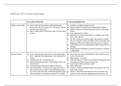
Women are
equal and
have many - Education - women
freedoms
- Women took over the needed to read religious
roles of the men that teachings to teach
left to fight children (Puritans
- Wealthier women believed religion was
with large estates - centred around family
managed estates not church)
- Not widespread - - Attitudes - widespread
only wealthy women belief that women were
- Not long term - too educated and
freedoms ended dangerous
when fighting did - Still only for home life - only just over 1%
- Not significant - no not for equality - Puritan beliefs took
- Diggers advocated for control over the of population
social/political role were Quakers -
universal suffrage Republic - link to
only role in the
- Levellers never pushed them 1680
household still -
- Controlled by - Puritan women for universal suffrage Toleration Act of - Charles lifted
husbands and - Women did preach in 1650 - easier for restrictions of
gained social and
fathers circles Quakers to expand. women to act in
political roles - -
- expected to run - Behind other European Quakers believed theatres
protesting, petitions,
the household and campaigns Protestant groups that women and - Attitudes - not for
men were equal equal rights though
raise children not - Largely still ignored
and made in God’s
even to advice by parliament just because
their husbands image - restricted Quakers Charles II enjoyed
- wealthy wives - Only 4/17 Quaker so less dissenters theatre
could read/write schools offered - Unable to spread
for household education to girls religious message
record-keeping/ by 1671. that women are
teaching children. - Quakers offered equal
- punished: for most freedom so - Not long term
witchcraft Toleration helped Quaker
(unmarried women’s rights involvement
women), adultery - Quakers - make
(more than men), this more
gossiping significant change
- Attitudes - Bible - Small % of pop.
teachings - women - Marriage Act - 1653
Women
did not have a soul allowed civil
have few marriages BUT not
rights and widespread or
are favoured by many
completely
controlled.
- Adultery 1650
Up to the Civil War The Civil War Puritanism Republic 1662 Quaker Act 1660 Restoration
equal and
have many - Education - women
freedoms
- Women took over the needed to read religious
roles of the men that teachings to teach
left to fight children (Puritans
- Wealthier women believed religion was
with large estates - centred around family
managed estates not church)
- Not widespread - - Attitudes - widespread
only wealthy women belief that women were
- Not long term - too educated and
freedoms ended dangerous
when fighting did - Still only for home life - only just over 1%
- Not significant - no not for equality - Puritan beliefs took
- Diggers advocated for control over the of population
social/political role were Quakers -
universal suffrage Republic - link to
only role in the
- Levellers never pushed them 1680
household still -
- Controlled by - Puritan women for universal suffrage Toleration Act of - Charles lifted
husbands and - Women did preach in 1650 - easier for restrictions of
gained social and
fathers circles Quakers to expand. women to act in
political roles - -
- expected to run - Behind other European Quakers believed theatres
protesting, petitions,
the household and campaigns Protestant groups that women and - Attitudes - not for
men were equal equal rights though
raise children not - Largely still ignored
and made in God’s
even to advice by parliament just because
their husbands image - restricted Quakers Charles II enjoyed
- wealthy wives - Only 4/17 Quaker so less dissenters theatre
could read/write schools offered - Unable to spread
for household education to girls religious message
record-keeping/ by 1671. that women are
teaching children. - Quakers offered equal
- punished: for most freedom so - Not long term
witchcraft Toleration helped Quaker
(unmarried women’s rights involvement
women), adultery - Quakers - make
(more than men), this more
gossiping significant change
- Attitudes - Bible - Small % of pop.
teachings - women - Marriage Act - 1653
Women
did not have a soul allowed civil
have few marriages BUT not
rights and widespread or
are favoured by many
completely
controlled.
- Adultery 1650
Up to the Civil War The Civil War Puritanism Republic 1662 Quaker Act 1660 Restoration