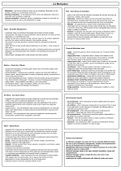
2.4 Motivation
• Motivation - the driving forces for which we do something. Motivation can be Pink - drive theory of motivation
intrinsic, extrinsic or a combination of the two.
• Extrinsic motivation - is the behaviour that is driven by satisfaction external to • rests on the notion that the ultimate motivators are intrinsic and they are
one’s self, such as salary or approval autonomy, mastery, and purpose
• Intrinsic motivation - behaviour driven by satisfaction internal to one’s self. An • Autonomy - freedom to create a work environment that makes an
employee works at a job for the satisfaction it brings individual thrive. Includes when they work, with whom they work, how
they complete the task and choosing tasks that they find rewarding
• Mastery - the opportunity to master a skill. Employees who feel
challenged and can innovate and learn about things they are interested
in are more productive. Setting goals that are manageable and practical.
Taylor - Scientific Management Leads to greater confidence.
• Purpose - employees who see their work as being of benefit to others,
• systematic study of workflows that breaks down tasks into their smaller helping to make the world a better place. People want to work in an
components. This helps to improve efficiency and productivity. Its most common environment that values ethical practises and where there are
application is in assembly-line work opportunities to become happier and healthier and feel part of the
• finding the best way to perform a task, writing it down for the worker, explained process of making a better world
and then the worker would be trained in the scientific process.
• The worker would also be given incentives (extrinsic rewards) if productivity
improved
• Taylor felt that workers would respond positively to one factor - more money for
their work
Financial Motivation tools
• also involved matching skills sets to the task, monitoring performance and giving
feedback, and working closely with workers in the planning and execution of
• salary - a fixed annual sum that is usually paid over 12 equal monthly
their tasks
instalments
• before Taylor, managers didn’t really interact with their workers
• wages (time rate) - a payment made in weekly sums based on the
number of hours one works, disadvantage to the system is oversight
and that there needs to be someone to account for overtime
• wages (piece rate) - means that a worker’s pay is based on the number
of units they make or complete, can be motivating but quality can be
Maslow - Hierarchy of Needs affected of end products
• commission - type of reward system most seen in sales work, a
• stresses the importance of having basic needs met so that other higher order salesperson gets paid a percentage of their total sales
needs can be satisfied • profit related pay - employee receives a percentage of the profits that
• self-actualisation - realising one’s potential, creative and moral self-fulfilment the company makes that year, brings about sense of belonging, but as
• esteem needs - being independent minded, possessing mastery, achievement in employees enjoy share it does not linked to work rate or effectiveness
one’s chosen field of work • performance related pay - means that the worker can receive
• Love and belongingness needs - feeling loved and trusted, giving and receiving additional money (bonuses) for reaching pre-agreed objectives
love, being intimate, feeling part of a group, a sense of belonging and family • employee share ownership scheme - employees are given shares in
• safety needs - having stability and safety in your environment the company as a reward or in some instances they have the
• physiological needs - basic necessities, shelter, food and clothing opportunity to buy shares at a discounted price, means they are
• you can go back and forth between the hierarchy invested in performance of the shares
• fringe payments - rewards are paid to employees in addition to their
salary as a perk
Herzberg - two-factor theory
Non-financial rewards
• suggests that hygiene factors are basic needs that must be met and motivator
needs, if met, give an employee satisfaction in their work
• job enrichment - when employees are given added tasks that require
• he asked 200 accountants and engineers who were satisfied in their work to more skill or training
establish hygiene factors and motivators which puts forward the subjective
• job rotation - when employees change jobs for a period of time to learn
nature of this
a new task within a work process, for example, the different tasks in
• hygiene factors - are characteristics that cause job dissatisfaction, for example, assembly line production work
salary, peer relationships, company policies and administration, physical work
• job enlargement - when tasks are added to an employees job
space, security
description. These tasks are mostly at a similar level.
• motivators - are characteristics that cause job satisfaction, personal growth,
• job empowerment - entails giving employees greater responsibility in
achievement, advancement, recognition, work itself
deciding how to perform their job
• Purpose - when the employee seeks to made a positive contribution
within their work for the greater good
• teamwork - the collaborative effort of a group of employees working
together to achieve completion of a task or goal
Adam - Equity theory
• suggests that employees are satisfied when they perceive that there is equity
between the work they put in (inputs) and the benefits they receive (outputs)
• motivation is not only influences by one’s perception but also how one feels
others in a similar situation are being treated
• compares inputs and outputs as the benefits an employee receives should be
equal to the efforts they put into their work Culture and motivation
• Inputs - duties and responsibilities, hours worked, loyalty, commitments,
flexibility, support of the organisation an effective manager can work out how to motivate different people
the use os job enrichment, enlargement, rotation and empowerment
• Outputs - annual vacation time, bonus, pension, recognition, promotions, salary,
positive work evaluations the use of financial and non-financial rewards
globalisation will have an impact on cultures because it is a force that
• compares one’s situation to another
all nations need to contend with
• businesses need to ensure that their employees perceive that they are treated
with equity, and that employees see that people are compensated fairly based effective manager needs to be open minded, inquisitive, caring and
on comparing responsibilities and rewards (social comparison) complimentary
effective manager needs to weigh the pros and cons of any
• cognitive distortion - when employees who see themselves as being treated
motivational strategy
with inequity alter the input/output mix to reduce their feeling of under
employees are unique individuals with different needs and wants
appreciation or under compensate for the work being done
• subjective nature of what an employee deems as fair
• Motivation - the driving forces for which we do something. Motivation can be Pink - drive theory of motivation
intrinsic, extrinsic or a combination of the two.
• Extrinsic motivation - is the behaviour that is driven by satisfaction external to • rests on the notion that the ultimate motivators are intrinsic and they are
one’s self, such as salary or approval autonomy, mastery, and purpose
• Intrinsic motivation - behaviour driven by satisfaction internal to one’s self. An • Autonomy - freedom to create a work environment that makes an
employee works at a job for the satisfaction it brings individual thrive. Includes when they work, with whom they work, how
they complete the task and choosing tasks that they find rewarding
• Mastery - the opportunity to master a skill. Employees who feel
challenged and can innovate and learn about things they are interested
in are more productive. Setting goals that are manageable and practical.
Taylor - Scientific Management Leads to greater confidence.
• Purpose - employees who see their work as being of benefit to others,
• systematic study of workflows that breaks down tasks into their smaller helping to make the world a better place. People want to work in an
components. This helps to improve efficiency and productivity. Its most common environment that values ethical practises and where there are
application is in assembly-line work opportunities to become happier and healthier and feel part of the
• finding the best way to perform a task, writing it down for the worker, explained process of making a better world
and then the worker would be trained in the scientific process.
• The worker would also be given incentives (extrinsic rewards) if productivity
improved
• Taylor felt that workers would respond positively to one factor - more money for
their work
Financial Motivation tools
• also involved matching skills sets to the task, monitoring performance and giving
feedback, and working closely with workers in the planning and execution of
• salary - a fixed annual sum that is usually paid over 12 equal monthly
their tasks
instalments
• before Taylor, managers didn’t really interact with their workers
• wages (time rate) - a payment made in weekly sums based on the
number of hours one works, disadvantage to the system is oversight
and that there needs to be someone to account for overtime
• wages (piece rate) - means that a worker’s pay is based on the number
of units they make or complete, can be motivating but quality can be
Maslow - Hierarchy of Needs affected of end products
• commission - type of reward system most seen in sales work, a
• stresses the importance of having basic needs met so that other higher order salesperson gets paid a percentage of their total sales
needs can be satisfied • profit related pay - employee receives a percentage of the profits that
• self-actualisation - realising one’s potential, creative and moral self-fulfilment the company makes that year, brings about sense of belonging, but as
• esteem needs - being independent minded, possessing mastery, achievement in employees enjoy share it does not linked to work rate or effectiveness
one’s chosen field of work • performance related pay - means that the worker can receive
• Love and belongingness needs - feeling loved and trusted, giving and receiving additional money (bonuses) for reaching pre-agreed objectives
love, being intimate, feeling part of a group, a sense of belonging and family • employee share ownership scheme - employees are given shares in
• safety needs - having stability and safety in your environment the company as a reward or in some instances they have the
• physiological needs - basic necessities, shelter, food and clothing opportunity to buy shares at a discounted price, means they are
• you can go back and forth between the hierarchy invested in performance of the shares
• fringe payments - rewards are paid to employees in addition to their
salary as a perk
Herzberg - two-factor theory
Non-financial rewards
• suggests that hygiene factors are basic needs that must be met and motivator
needs, if met, give an employee satisfaction in their work
• job enrichment - when employees are given added tasks that require
• he asked 200 accountants and engineers who were satisfied in their work to more skill or training
establish hygiene factors and motivators which puts forward the subjective
• job rotation - when employees change jobs for a period of time to learn
nature of this
a new task within a work process, for example, the different tasks in
• hygiene factors - are characteristics that cause job dissatisfaction, for example, assembly line production work
salary, peer relationships, company policies and administration, physical work
• job enlargement - when tasks are added to an employees job
space, security
description. These tasks are mostly at a similar level.
• motivators - are characteristics that cause job satisfaction, personal growth,
• job empowerment - entails giving employees greater responsibility in
achievement, advancement, recognition, work itself
deciding how to perform their job
• Purpose - when the employee seeks to made a positive contribution
within their work for the greater good
• teamwork - the collaborative effort of a group of employees working
together to achieve completion of a task or goal
Adam - Equity theory
• suggests that employees are satisfied when they perceive that there is equity
between the work they put in (inputs) and the benefits they receive (outputs)
• motivation is not only influences by one’s perception but also how one feels
others in a similar situation are being treated
• compares inputs and outputs as the benefits an employee receives should be
equal to the efforts they put into their work Culture and motivation
• Inputs - duties and responsibilities, hours worked, loyalty, commitments,
flexibility, support of the organisation an effective manager can work out how to motivate different people
the use os job enrichment, enlargement, rotation and empowerment
• Outputs - annual vacation time, bonus, pension, recognition, promotions, salary,
positive work evaluations the use of financial and non-financial rewards
globalisation will have an impact on cultures because it is a force that
• compares one’s situation to another
all nations need to contend with
• businesses need to ensure that their employees perceive that they are treated
with equity, and that employees see that people are compensated fairly based effective manager needs to be open minded, inquisitive, caring and
on comparing responsibilities and rewards (social comparison) complimentary
effective manager needs to weigh the pros and cons of any
• cognitive distortion - when employees who see themselves as being treated
motivational strategy
with inequity alter the input/output mix to reduce their feeling of under
employees are unique individuals with different needs and wants
appreciation or under compensate for the work being done
• subjective nature of what an employee deems as fair