4.4.2 Market Research
Ethical Considerations: • Quantitative
• structured data
• Leading questions • statistical analysis
• there should be no attempt to influence the respondents • objective conclusions
opinion • surveys and experiments
• Voluntary involvement • small amount of information from a large number of
• respondents should know that they are taking part in respondents
research • Qualitative
• Vulnerable groups • unstructured data
• researchers should be careful when conducting research • subjective conclusions
with vulnerable groups, such as children or those tho are • interviews, focus groups and observations
mentally ill • large amount of information from a smaller sample size
• Purpose of use
• information obtained should only be used for its stated
purpose
• Reporting the results
• results of market research must be reported accurately Possible
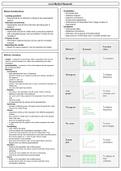
Method Example Uses
Methods of Sampling:
Bar graph To compare.
• sample - a sample is a sub-group within a population that can be
used to conduct research on, rather than researching the entire
population
• generalisability - a measure of how well research results represent
the overall population
• Methods
• Convenience
• least representative form of sampling
Histogram To display
• sample is made up of whatever people are willing to partake in
the research frequency.
• simple to carry out
• little generalisability
• unless a very large sample size is used, convenience sample is of
limited use
• very fast, little planning needed
• Random
Line To show
• everyone in the population has the same chance of being
selected to take part in the research graph changes over
• can work well if many people of the population have the same time.
view
• relatively simple
• no guarantee that the sample will be representative
• Systematic
• process of selecting every nth person from the entire list, could
improve the randomising Pictogram To display
• Cluster frequency.
• researchers break up their population into different geographic
clusters
• each cluster is visited and it is attempted to talk to the people
within that area
• data can be gathered quickly
• no guarantee that the people in the cluster represent the entire
cluster Pie chart To show
• Snowballing percentages.
• chain referral sampling
• involves people with specialised knowledge or skills
• at the end of the interview with the first respondent, they
interviewer will ask the interviewee to recommend another person
they should speak to, in order to gain further insight
• can be useful in niche markets
Scatter To show
• does leave the research open to the respondents’ personal
biases which can reduce generalisability plot correlation.
• Stratified
• break up the population into smaller groups
• people asked within the strata would be selected using random
sampling
• results are most reliable from this form of sampling
• more time consuming than quota sampling
Table To display all
• Quota
• break up the population into smaller groups data
• people asked within the strata would be selected using collected.
convenience sampling
Ethical Considerations: • Quantitative
• structured data
• Leading questions • statistical analysis
• there should be no attempt to influence the respondents • objective conclusions
opinion • surveys and experiments
• Voluntary involvement • small amount of information from a large number of
• respondents should know that they are taking part in respondents
research • Qualitative
• Vulnerable groups • unstructured data
• researchers should be careful when conducting research • subjective conclusions
with vulnerable groups, such as children or those tho are • interviews, focus groups and observations
mentally ill • large amount of information from a smaller sample size
• Purpose of use
• information obtained should only be used for its stated
purpose
• Reporting the results
• results of market research must be reported accurately Possible
Method Example Uses
Methods of Sampling:
Bar graph To compare.
• sample - a sample is a sub-group within a population that can be
used to conduct research on, rather than researching the entire
population
• generalisability - a measure of how well research results represent
the overall population
• Methods
• Convenience
• least representative form of sampling
Histogram To display
• sample is made up of whatever people are willing to partake in
the research frequency.
• simple to carry out
• little generalisability
• unless a very large sample size is used, convenience sample is of
limited use
• very fast, little planning needed
• Random
Line To show
• everyone in the population has the same chance of being
selected to take part in the research graph changes over
• can work well if many people of the population have the same time.
view
• relatively simple
• no guarantee that the sample will be representative
• Systematic
• process of selecting every nth person from the entire list, could
improve the randomising Pictogram To display
• Cluster frequency.
• researchers break up their population into different geographic
clusters
• each cluster is visited and it is attempted to talk to the people
within that area
• data can be gathered quickly
• no guarantee that the people in the cluster represent the entire
cluster Pie chart To show
• Snowballing percentages.
• chain referral sampling
• involves people with specialised knowledge or skills
• at the end of the interview with the first respondent, they
interviewer will ask the interviewee to recommend another person
they should speak to, in order to gain further insight
• can be useful in niche markets
Scatter To show
• does leave the research open to the respondents’ personal
biases which can reduce generalisability plot correlation.
• Stratified
• break up the population into smaller groups
• people asked within the strata would be selected using random
sampling
• results are most reliable from this form of sampling
• more time consuming than quota sampling
Table To display all
• Quota
• break up the population into smaller groups data
• people asked within the strata would be selected using collected.
convenience sampling