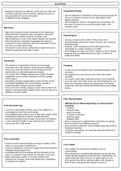
4.5.2 Price
• Setting the right price is difficult, set the price too high and Competitive Pricing
potential customers will be deterred, setting the price too
low and profits will not be maximised • may be adopted in competitive markets because people will
• 9 different pricing strategies not buy a product if the price is too high against other
similar products
• Price charged is similar in comparison to competitors, but
this does not take into account the profit margin of he
company itself
Skimming
• high price of product when introduced to the market and
slowly declines to become more competitive, high price
Psychological
typically used to reflect technical innovation and
fashionableness as seen when Apple releases new phones
• pricing a product with a 0.99 or 0.95 at the end to
• skimming allows companies to generate the maximum psychologically enforce the sense of value in turn receiving
revenue from loyal customers who find it important to have
increased sales
the most up to date technology
• however, most companies use this technique so the
• the decline in price allows companies to target more price- advantage for a single company is eroded
sensitive consumers with older models
• Psychological pricing is not used in relation to luxury goods
because they are deliberately priced high to enforce an
image and status
Penetration
• The objective of penetration pricing is to encourage Predatory
consumers to try the product, this is done by charging a
lower price when the product is first introduced to the • is seen as anti-competitive and is considered illegal in many
market, this is to then stimulate brand loyalty countries
• it is a short-term strategy because once loyalty has been • the objective is to set a price so low that rivals cannot
established, prices will be increased to achieve greater compete
profit margins • as a result, rival’s loose customers and go out of business
• penetration pricing is appropriate to products that will be • once the rivals have been driven out, the remaining firm can
purchased repeatedly, such as shampoos, cereals or enjoy the monopoly position and raise prices, this leaves
magazines (fast-moving consumer goods) consumers with less choices and forces them to pay higher
• the concern with initially charging a lower price is that it will prices
reduce or eliminate profit margins, which could be seen as a
reflection of lower quality
Price Discrimination
• different prices offered depending on various factors
Cost-plus (mark-up) including:
• children
• involves an estimation of all the costs, then adding on a • frequent users
percentage to cover their profit margin • group bookings
• very straightforward method, and is likely that a profit will be • corporate customers
achieved providing the customer accepts the price • premium seats
• the pricing strategy does not take into account competition • flexible tickets
or the customer’’s ability to pay, meaning that customers • allows companies to segment their customers into groups
may be put off by high prices that are willing to pay different amounts
• price-sensitive customers can be offered deep discounts for
booking in advance
• companies like airlines can maximise potential profits from
doing this strategy
Price Leadership
• revolves around communicating an image of quality, which Loss Leader
relies on a successful marketing mix
• exclusive distribution should be sought and the promotional
• only suitable for multi-product retailers such as
message should support this
supermarkets
• companies that are price leaders set the standard for the
• when people buy complementary goods ie goods that are
price of a product in that market, for example, Coca Cola
usually brought together (Christmas dinner ingredients), the
• Major advantage is ability to increase market share, supermarket gain large amounts of sales revenue on all
however, the company must work harder than competitors
other goods they sell by making smaller profit margins or
to maintain the position
even a loss on the good they reduce the price of
• Setting the right price is difficult, set the price too high and Competitive Pricing
potential customers will be deterred, setting the price too
low and profits will not be maximised • may be adopted in competitive markets because people will
• 9 different pricing strategies not buy a product if the price is too high against other
similar products
• Price charged is similar in comparison to competitors, but
this does not take into account the profit margin of he
company itself
Skimming
• high price of product when introduced to the market and
slowly declines to become more competitive, high price
Psychological
typically used to reflect technical innovation and
fashionableness as seen when Apple releases new phones
• pricing a product with a 0.99 or 0.95 at the end to
• skimming allows companies to generate the maximum psychologically enforce the sense of value in turn receiving
revenue from loyal customers who find it important to have
increased sales
the most up to date technology
• however, most companies use this technique so the
• the decline in price allows companies to target more price- advantage for a single company is eroded
sensitive consumers with older models
• Psychological pricing is not used in relation to luxury goods
because they are deliberately priced high to enforce an
image and status
Penetration
• The objective of penetration pricing is to encourage Predatory
consumers to try the product, this is done by charging a
lower price when the product is first introduced to the • is seen as anti-competitive and is considered illegal in many
market, this is to then stimulate brand loyalty countries
• it is a short-term strategy because once loyalty has been • the objective is to set a price so low that rivals cannot
established, prices will be increased to achieve greater compete
profit margins • as a result, rival’s loose customers and go out of business
• penetration pricing is appropriate to products that will be • once the rivals have been driven out, the remaining firm can
purchased repeatedly, such as shampoos, cereals or enjoy the monopoly position and raise prices, this leaves
magazines (fast-moving consumer goods) consumers with less choices and forces them to pay higher
• the concern with initially charging a lower price is that it will prices
reduce or eliminate profit margins, which could be seen as a
reflection of lower quality
Price Discrimination
• different prices offered depending on various factors
Cost-plus (mark-up) including:
• children
• involves an estimation of all the costs, then adding on a • frequent users
percentage to cover their profit margin • group bookings
• very straightforward method, and is likely that a profit will be • corporate customers
achieved providing the customer accepts the price • premium seats
• the pricing strategy does not take into account competition • flexible tickets
or the customer’’s ability to pay, meaning that customers • allows companies to segment their customers into groups
may be put off by high prices that are willing to pay different amounts
• price-sensitive customers can be offered deep discounts for
booking in advance
• companies like airlines can maximise potential profits from
doing this strategy
Price Leadership
• revolves around communicating an image of quality, which Loss Leader
relies on a successful marketing mix
• exclusive distribution should be sought and the promotional
• only suitable for multi-product retailers such as
message should support this
supermarkets
• companies that are price leaders set the standard for the
• when people buy complementary goods ie goods that are
price of a product in that market, for example, Coca Cola
usually brought together (Christmas dinner ingredients), the
• Major advantage is ability to increase market share, supermarket gain large amounts of sales revenue on all
however, the company must work harder than competitors
other goods they sell by making smaller profit margins or
to maintain the position
even a loss on the good they reduce the price of