-Multi-store model of memory
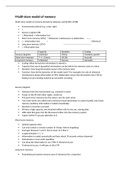
-Multi-store model of memory devised by Atkinson and Shriffin (1968)
Environmental stimuli e.g., taste, sight
|
Sensory register (SR)
| (Attention) > Information lost
Short term memory (STM) ^ Rehearsal- maintenance or elaborative <----
| > Information lost / | Retrieval
Long term memory (LTM) ----------------------------------------
| >Information lost
Capacity Duration Coding
Sensory Register Unlimited 250ms Modality specific
Short term memory 7 +/- 2 items 18-30s Acoustic
Long term memory Unlimited Forever Semantic
Coding- What format the information is stored in
Capacity-How much (quantity) information can be held in the memory store at a time
Duration- How long information stays in the memory store
Function- How do the dynamics of the model work? For example: the role of rehearsal
(maintenance keeps information in STM, Elaborative moves the information into LTM by
linking it to pre-existing material by semantics encoding
-Sensory Register
Stimulus from the environment e.g., someone's name
Passes to the SR with other sights, smells etc
This part of our memory has five stores, one for each sense
Two main stores are called iconic memory (visual information is coded visually) and echoic
memory (auditory information is coded acoustically)
Duration is less than a second
SR have a high capacity, one hundred million cells in one eye, storing data
Little data that goes into the SR passes further into the memory system.
It goes further if you pay attention to it
-Short term memory:
Limited capacity store
Can only contain a certain number of ‘things’ before forgetting
Averages between 5 and 9, but is closer to 5 than 9
Is approximately 7 +/- 2
Information is coded acoustically and lasts about 30 seconds unless rehearsed
Maintenance occurs with repetition
Can keep the information in our STMs if rehearsal occurs
If rehearsal occurs, it will pass to the LTM
-Long term memory:
Potentially permanent memory store if rehearsed for a long time
-Multi-store model of memory devised by Atkinson and Shriffin (1968)
Environmental stimuli e.g., taste, sight
|
Sensory register (SR)
| (Attention) > Information lost
Short term memory (STM) ^ Rehearsal- maintenance or elaborative <----
| > Information lost / | Retrieval
Long term memory (LTM) ----------------------------------------
| >Information lost
Capacity Duration Coding
Sensory Register Unlimited 250ms Modality specific
Short term memory 7 +/- 2 items 18-30s Acoustic
Long term memory Unlimited Forever Semantic
Coding- What format the information is stored in
Capacity-How much (quantity) information can be held in the memory store at a time
Duration- How long information stays in the memory store
Function- How do the dynamics of the model work? For example: the role of rehearsal
(maintenance keeps information in STM, Elaborative moves the information into LTM by
linking it to pre-existing material by semantics encoding
-Sensory Register
Stimulus from the environment e.g., someone's name
Passes to the SR with other sights, smells etc
This part of our memory has five stores, one for each sense
Two main stores are called iconic memory (visual information is coded visually) and echoic
memory (auditory information is coded acoustically)
Duration is less than a second
SR have a high capacity, one hundred million cells in one eye, storing data
Little data that goes into the SR passes further into the memory system.
It goes further if you pay attention to it
-Short term memory:
Limited capacity store
Can only contain a certain number of ‘things’ before forgetting
Averages between 5 and 9, but is closer to 5 than 9
Is approximately 7 +/- 2
Information is coded acoustically and lasts about 30 seconds unless rehearsed
Maintenance occurs with repetition
Can keep the information in our STMs if rehearsal occurs
If rehearsal occurs, it will pass to the LTM
-Long term memory:
Potentially permanent memory store if rehearsed for a long time