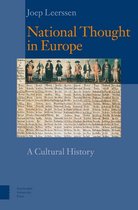
National Thought in Europe
(Book)
1
,Introduction
Nationalism is a political ideology – one of the dominant ones of the last two
centuries. 19th century nationalists fabricated the sense of national identity.
Hobsbawm claims that nationalism was an ideology born of the people
rather than imposed by intellectuals. As such we can ask ourselves; Did the
nation only emerge as a meaningful concept in the 19th century along with
the ideology that named itself after it, or does it, contrariwise, have a long
more standing presence in human affairs?
Joep Leerssen is talking about nationalism as a cultural phenomena.
- the nation is the most natural, organic collective aggregate of humans
and that, as such, the nation’s claim to loyalty overrides all other
allegiances.
- That the state derives its mandate and sovereignty from its
incorporation of a constituent nation, so that civic loyalty to the is a
natural extension of national (cultural, ethnic, linguistic) solidarity.
It is in the 19th century that nationalism emerges as such, as a specific and
recognizable ideology with a specific and recognizable political and cultural
agenda.
They are three poles to describe the word nationalism. First, as a society
(people living together, communicating and sharing the same socioeconomic
and political conditions), another is culture (people sharing the same
language, historical memories and social habits) and the final one is race
(people sharing the same descent and having passed on a shared culture
through a filiation of generations). Nationalism is not about a sense of
belonging together but rather a sense of being distinct from others.
2
,I. Wilderness, Exoticism and the State’s Order: Medieval Views (p25 -35)
a) Introduction: The Wild and the Civilization
The history and pre-history of nationalism consists of changes as well as
continuities, none of which are simple or straightforward. We should avoid
repeating our history and study the claims of historians rather than accepting
them.
In Medieval Europe, the term “nation” was unknown. However, people during this
era were aware of the distinction between languages and regions. A nation is
referred as either a group of people living in the same region or sometimes it is
referred to people sharing the same customs, traditions. There is a tendency to
undervalue other nations (ex: The British spread rumors about the Irish to justify
the invasion). That’s where stereotypes come from.
In pre-modern Europe, people make a distinction between the wild nature and the
civilized culture. People who don’t live in urban areas (cities, villages, castle) were
considered savage and inferior. The noble court was considered as the center of
civility (chivalry, manners, courtly behavior) were enforced. Outside the center of
civility lies the wild countryside. The forests were often the symbol of this
wilderness and savageness (forest means outside in Latin). It was considered as a
place with no rules but only savage nature. Here, the rules that can be found in the
noble court were relaxed and it was also a place used to hunt. In Medieval England
3
, there were two sets of law; one for the court (civilization) the other for the outside
(wilderness). This unknown world outside was also the main subject of fantasy at
the time, and kings often went “outside” to show their heroism. Later on, Native
Africans and American Indians were often considered savage because they lived in
the wild.
b) Exoticism and Propaganda: The English conquest of Ireland:
Propaganda was often used to justify the invasion of a country. For example, Pope
Adrian IV said, “Ireland was too savage to govern itself and that it should be
placed under the rule of the English crown”. The motive that the Pope himself
proposed was to conquer Ireland to expand the boundaries of the church, correct
the sins of the region and implant virtues. Although Ireland was often described as
a land full of sins and savage, it was in fact known as the “island of scholars and
saints”.
From Antiquity to Medieval times, there is a tendency to describe foreign lands in
terms of their strangeness. In strange lands, nature plays strange tricks and we
encounter weird phenomena but also monstrous creatures. Gerald of Wales
emphasizes the Topography of Ireland, and the region should be seen as a different
country (exotic and strange). But this description of a strange land leads also to the
accusation of Ireland’s lack of Christian manners and barbaric customs. The Irish
were accused of sexual looseness and that they would have sex with any available
partners. This description of savagery of the Irish gives the opportunity to the
English to justify their invasion because the Irish are not humans but animals, and
they lack of civism. England will have to restore the natural order.
4
(Book)
1
,Introduction
Nationalism is a political ideology – one of the dominant ones of the last two
centuries. 19th century nationalists fabricated the sense of national identity.
Hobsbawm claims that nationalism was an ideology born of the people
rather than imposed by intellectuals. As such we can ask ourselves; Did the
nation only emerge as a meaningful concept in the 19th century along with
the ideology that named itself after it, or does it, contrariwise, have a long
more standing presence in human affairs?
Joep Leerssen is talking about nationalism as a cultural phenomena.
- the nation is the most natural, organic collective aggregate of humans
and that, as such, the nation’s claim to loyalty overrides all other
allegiances.
- That the state derives its mandate and sovereignty from its
incorporation of a constituent nation, so that civic loyalty to the is a
natural extension of national (cultural, ethnic, linguistic) solidarity.
It is in the 19th century that nationalism emerges as such, as a specific and
recognizable ideology with a specific and recognizable political and cultural
agenda.
They are three poles to describe the word nationalism. First, as a society
(people living together, communicating and sharing the same socioeconomic
and political conditions), another is culture (people sharing the same
language, historical memories and social habits) and the final one is race
(people sharing the same descent and having passed on a shared culture
through a filiation of generations). Nationalism is not about a sense of
belonging together but rather a sense of being distinct from others.
2
,I. Wilderness, Exoticism and the State’s Order: Medieval Views (p25 -35)
a) Introduction: The Wild and the Civilization
The history and pre-history of nationalism consists of changes as well as
continuities, none of which are simple or straightforward. We should avoid
repeating our history and study the claims of historians rather than accepting
them.
In Medieval Europe, the term “nation” was unknown. However, people during this
era were aware of the distinction between languages and regions. A nation is
referred as either a group of people living in the same region or sometimes it is
referred to people sharing the same customs, traditions. There is a tendency to
undervalue other nations (ex: The British spread rumors about the Irish to justify
the invasion). That’s where stereotypes come from.
In pre-modern Europe, people make a distinction between the wild nature and the
civilized culture. People who don’t live in urban areas (cities, villages, castle) were
considered savage and inferior. The noble court was considered as the center of
civility (chivalry, manners, courtly behavior) were enforced. Outside the center of
civility lies the wild countryside. The forests were often the symbol of this
wilderness and savageness (forest means outside in Latin). It was considered as a
place with no rules but only savage nature. Here, the rules that can be found in the
noble court were relaxed and it was also a place used to hunt. In Medieval England
3
, there were two sets of law; one for the court (civilization) the other for the outside
(wilderness). This unknown world outside was also the main subject of fantasy at
the time, and kings often went “outside” to show their heroism. Later on, Native
Africans and American Indians were often considered savage because they lived in
the wild.
b) Exoticism and Propaganda: The English conquest of Ireland:
Propaganda was often used to justify the invasion of a country. For example, Pope
Adrian IV said, “Ireland was too savage to govern itself and that it should be
placed under the rule of the English crown”. The motive that the Pope himself
proposed was to conquer Ireland to expand the boundaries of the church, correct
the sins of the region and implant virtues. Although Ireland was often described as
a land full of sins and savage, it was in fact known as the “island of scholars and
saints”.
From Antiquity to Medieval times, there is a tendency to describe foreign lands in
terms of their strangeness. In strange lands, nature plays strange tricks and we
encounter weird phenomena but also monstrous creatures. Gerald of Wales
emphasizes the Topography of Ireland, and the region should be seen as a different
country (exotic and strange). But this description of a strange land leads also to the
accusation of Ireland’s lack of Christian manners and barbaric customs. The Irish
were accused of sexual looseness and that they would have sex with any available
partners. This description of savagery of the Irish gives the opportunity to the
English to justify their invasion because the Irish are not humans but animals, and
they lack of civism. England will have to restore the natural order.
4