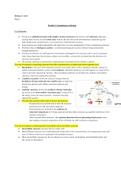
Biology A Level
Year 1
Module 2: Foundations in Biology
2.1.4: Enzymes
● Enzymes are globular proteins with complex tertiary structures that interact with substrate molecules,
causing them to react at much faster rates without the need for harsh environmental conditions eg. very
high temperatures and pressures, or increased rate of detrimental reactions.
● Some enzymes are single polypeptides and some have 2 or more polypeptides, so have a quaternary structure
● Therefore they are biological catalysts - accelerating biological reactions without being permanently
changed themselves
● Enzymes are effective in small quantities and remain unchanged by the reaction, and so can be used again
many times. Reactions that enzymes catalyse are reversible - enzymes do not determine the direction of a
reaction, but its speed
● All enzymes speed up a reaction that would take place extremely slowly without a catalyst!
The role of enzymes in catalysing reactions that affect metabolism at a cellular and whole organism level
● Metabolism is the sum of the chemical reactions occurring within a cell or organism. Enzymes operate in
tightly organised metabolic systems called pathways. Metabolic pathways can only happen as a result of the
control and order imposed by enzymes. These metabolic pathways are divided into catabolic and anabolic
reactions, which are catalysed by enzymes
● Catabolic reactions involve the release of energy from the
breakdown of large molecules into smaller ones eg. digestion
(starch into glucose) and cellular respiration (glucose into
energy).
● Anabolic reactions involve the synthesis of larger molecules
eg. nucleic acids from smaller constituent parts, using ATP as
the energy source for these reactions - chemical reactions
required for growth.
● The idea that enzymes affect both structure and function:
- Enzymes have an essential role in both the structure
and function of cells and whole organisms
- Some enzymes are involved in the synthesis of
structural components of a living organism and thus affect structure eg. peptidyl transferase in the
synthesis of proteins
- Other enzymes affect function - they perform functions that are physiological processes rather
than making structural components of the cells/body eg. ATP synthase in respiration
The role of enzymes in catalysing both intracellular and extracellular reactions
● Intracellular enzymes: enzymes that act within cells
● Many different reactions occur simultaneously inside cells at low concentrations, low temperatures and a pH
near 7.0. These reactions are catalysed by intracellular enzymes
● Many intracellular enzymes are free in solution eg. in the cytosol, nucleoplasm, mitochondrial matrix and
the stroma of chloroplasts
, ● Many intracellular enzymes are fixed in place eg. either side of the cell surface membrane, in the inner
membranes of mitochondria and chloroplasts. Sucrase, an enzyme of the digestive system, is attached to the
cell membranes of cells lining the gut
- Catalase, which is found in plant and animal tissues. Hydrogen peroxide is a toxic product of many
metabolic pathways, as it is a strong oxidising agent. Catalase ensures that it is quickly broken
down into oxygen and water, preventing its accumulation (hydrogen peroxide left uncatalysed
would take months to degrade)
● Extracellular enzymes: enzymes released from cells to break down large nutrient molecules in the process
of digestion. They catalyse reactions outside of the cell that made them. In some organisms eg. fungi, they
work outside the body!
● Some extracellular enzymes work in the environment, others work inside body cavities eg. the lumen of the
gut, through which food travels
● Nutrient molecules are components necessary for survival and growth. These are present in the diet or
environment of the organism
● These nutrient molecules supply raw materials (substrates). There is a constant demand for these substrates
to be supplied to cells because the reactions happening within cells require them to make the products
needed by the organism
● Nutrients are often in the form of polymers eg. proteins, polysaccharides. These are large molecules and
therefore cannot enter cells directly through the plasma membrane, so need to be broken down into smaller
components first. Both single-celled and multicellular organisms rely on extracellular enzymes to make use
of polymers for nutrition
- Single-celled organisms eg. bacteria and yeast release enzymes into their immediate environment
(extracellular enzymes). These enzymes break down larger molecules eg. proteins, and the smaller
molecules produced eg. amino acids, glucose are then absorbed by the cells. Some organisms rely
entirely on extracellular digestion to digest food eg. fungal hyphae
- Many multicellular organisms eat food to gain nutrients. The nutrients are taken into the digestive
system but the large molecules still have to be actually digested so that smaller molecules can be
absorbed into the bloodstream (and then transported around the body to be used as substrates in
cellular reactions). Extracellular enzymes involved in digestion in humans eg. amylase and trypsin
Digestion of starch
1. Amylase is a digestive enzyme produced by the salivary glands and the pancreas. It is released in saliva in
the mouth, and in pancreatic juice in the small intestine. Many digestive enzymes are secreted from the cells
that make them to the gut lumen, where they act on food. Amylase partially breaks down starch polymers
into maltose, a disaccharide
2. Maltase is an enzyme present in the small intestine. It breaks down maltose into glucose, a monosaccharide
3. Glucose is small enough to be absorbed by the cells lining the digestive system and subsequently absorbed
into the bloodstream
Digestion of proteins
- Trypsin is a protease - a type of enzyme that catalyses the digestion of proteins into smaller peptides, which
can then be broken down further into amino acids by other proteases. The amino acids that are produced by
the action of proteases are absorbed by the cells lining the digestive system and then absorbed into
bloodstream
- Trypsin is produced in the pancreas and released with the pancreatic juice into the small intestine, where it
acts on proteins
The mechanism of enzyme action
Year 1
Module 2: Foundations in Biology
2.1.4: Enzymes
● Enzymes are globular proteins with complex tertiary structures that interact with substrate molecules,
causing them to react at much faster rates without the need for harsh environmental conditions eg. very
high temperatures and pressures, or increased rate of detrimental reactions.
● Some enzymes are single polypeptides and some have 2 or more polypeptides, so have a quaternary structure
● Therefore they are biological catalysts - accelerating biological reactions without being permanently
changed themselves
● Enzymes are effective in small quantities and remain unchanged by the reaction, and so can be used again
many times. Reactions that enzymes catalyse are reversible - enzymes do not determine the direction of a
reaction, but its speed
● All enzymes speed up a reaction that would take place extremely slowly without a catalyst!
The role of enzymes in catalysing reactions that affect metabolism at a cellular and whole organism level
● Metabolism is the sum of the chemical reactions occurring within a cell or organism. Enzymes operate in
tightly organised metabolic systems called pathways. Metabolic pathways can only happen as a result of the
control and order imposed by enzymes. These metabolic pathways are divided into catabolic and anabolic
reactions, which are catalysed by enzymes
● Catabolic reactions involve the release of energy from the
breakdown of large molecules into smaller ones eg. digestion
(starch into glucose) and cellular respiration (glucose into
energy).
● Anabolic reactions involve the synthesis of larger molecules
eg. nucleic acids from smaller constituent parts, using ATP as
the energy source for these reactions - chemical reactions
required for growth.
● The idea that enzymes affect both structure and function:
- Enzymes have an essential role in both the structure
and function of cells and whole organisms
- Some enzymes are involved in the synthesis of
structural components of a living organism and thus affect structure eg. peptidyl transferase in the
synthesis of proteins
- Other enzymes affect function - they perform functions that are physiological processes rather
than making structural components of the cells/body eg. ATP synthase in respiration
The role of enzymes in catalysing both intracellular and extracellular reactions
● Intracellular enzymes: enzymes that act within cells
● Many different reactions occur simultaneously inside cells at low concentrations, low temperatures and a pH
near 7.0. These reactions are catalysed by intracellular enzymes
● Many intracellular enzymes are free in solution eg. in the cytosol, nucleoplasm, mitochondrial matrix and
the stroma of chloroplasts
, ● Many intracellular enzymes are fixed in place eg. either side of the cell surface membrane, in the inner
membranes of mitochondria and chloroplasts. Sucrase, an enzyme of the digestive system, is attached to the
cell membranes of cells lining the gut
- Catalase, which is found in plant and animal tissues. Hydrogen peroxide is a toxic product of many
metabolic pathways, as it is a strong oxidising agent. Catalase ensures that it is quickly broken
down into oxygen and water, preventing its accumulation (hydrogen peroxide left uncatalysed
would take months to degrade)
● Extracellular enzymes: enzymes released from cells to break down large nutrient molecules in the process
of digestion. They catalyse reactions outside of the cell that made them. In some organisms eg. fungi, they
work outside the body!
● Some extracellular enzymes work in the environment, others work inside body cavities eg. the lumen of the
gut, through which food travels
● Nutrient molecules are components necessary for survival and growth. These are present in the diet or
environment of the organism
● These nutrient molecules supply raw materials (substrates). There is a constant demand for these substrates
to be supplied to cells because the reactions happening within cells require them to make the products
needed by the organism
● Nutrients are often in the form of polymers eg. proteins, polysaccharides. These are large molecules and
therefore cannot enter cells directly through the plasma membrane, so need to be broken down into smaller
components first. Both single-celled and multicellular organisms rely on extracellular enzymes to make use
of polymers for nutrition
- Single-celled organisms eg. bacteria and yeast release enzymes into their immediate environment
(extracellular enzymes). These enzymes break down larger molecules eg. proteins, and the smaller
molecules produced eg. amino acids, glucose are then absorbed by the cells. Some organisms rely
entirely on extracellular digestion to digest food eg. fungal hyphae
- Many multicellular organisms eat food to gain nutrients. The nutrients are taken into the digestive
system but the large molecules still have to be actually digested so that smaller molecules can be
absorbed into the bloodstream (and then transported around the body to be used as substrates in
cellular reactions). Extracellular enzymes involved in digestion in humans eg. amylase and trypsin
Digestion of starch
1. Amylase is a digestive enzyme produced by the salivary glands and the pancreas. It is released in saliva in
the mouth, and in pancreatic juice in the small intestine. Many digestive enzymes are secreted from the cells
that make them to the gut lumen, where they act on food. Amylase partially breaks down starch polymers
into maltose, a disaccharide
2. Maltase is an enzyme present in the small intestine. It breaks down maltose into glucose, a monosaccharide
3. Glucose is small enough to be absorbed by the cells lining the digestive system and subsequently absorbed
into the bloodstream
Digestion of proteins
- Trypsin is a protease - a type of enzyme that catalyses the digestion of proteins into smaller peptides, which
can then be broken down further into amino acids by other proteases. The amino acids that are produced by
the action of proteases are absorbed by the cells lining the digestive system and then absorbed into
bloodstream
- Trypsin is produced in the pancreas and released with the pancreatic juice into the small intestine, where it
acts on proteins
The mechanism of enzyme action