Medicine Through Time: Fact Sheet
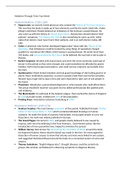
Medieval Medicine: c1250-c1500
Hippocrates: An Ancient Greek physician who created the Theory of The Four Humours.
This was that the body is made up of four elements, just like the earth; black bile, choler,
phlegm and blood. People believed an imbalance in the humours caused disease. He
also came up with the theory of clinical observation, that doctors should observe their
patients’ symptoms. The Hippocratic Oath is also something he came up with, which
states that doctors must never harm their patients, and is an oath doctors today still
take.
Galen: A physician who further developed Hippocrates’ ideas with the Theory of the
Opposites, that imbalances could be treated by using things of oppositely charged
qualities to counteract the effects of the humour causing disease. He wrote more than
350 books, and was promoted by the Church as he believed the soul had a role to play in
disease.
Barber Surgeons: Worked with sharp knives and were the most commonly used type of
doctor in this period as they were cheaper and could sometimes be afforded by poorer
families. Performed surgical procedures, and could remove cataracts successfully from
the eyes.
Apothecaries: Mixed herbal remedies and had good knowledge of the healing powers of
plants. Were moderately expensive, so poorer people made their own herbal remedies.
Women had a huge role to play in this and were expected to take care of sick people in
the home.
Physicians: Would give a personalised diagnosis to richer people who could afford them.
The actual treatment however was given by less skilled professionals like apothecaries
and midwives.
The Black Death: An outbreak of the bubonic plague, that reached the shores of England
in 1348 via trade routes. It killed over 40% of the population.
Printing Press: Invented by Johannes Gutenberg in 1440.
Renaissance Medicine: c1500-c1700
Andreas Vesalius: The most famous anatomist of this period. Published his book ‘On the
Fabric of the Human Body’ in 1543 which contained detailed drawings on human
anatomy. He made the study of anatomy fashionable, encouraged people to carry out
dissections. His work was widely published in Europe.
The Great Plague: Occurred in 1665, and people mostly believed it was caused by
miasma, with very few believing in the Four Humours. Government action, like the
introduction of new quarantine laws, helped to minimise the spread.
William Harvey: Best known for discovering the circulation of blood around the body.
He disproved Galenic theory that the blood was made in the liver. He encouraged the
dissection of human corpses to show that arteries and veins were linked in one system,
and suggested that blood flowed around the body via a connected system of veins and
arteries.
Thomas Sydenham: “English Hippocrates”; thought diseases could be sorted into
groups, like animals, and believed in observing symptoms to diagnose disease.
Medieval Medicine: c1250-c1500
Hippocrates: An Ancient Greek physician who created the Theory of The Four Humours.
This was that the body is made up of four elements, just like the earth; black bile, choler,
phlegm and blood. People believed an imbalance in the humours caused disease. He
also came up with the theory of clinical observation, that doctors should observe their
patients’ symptoms. The Hippocratic Oath is also something he came up with, which
states that doctors must never harm their patients, and is an oath doctors today still
take.
Galen: A physician who further developed Hippocrates’ ideas with the Theory of the
Opposites, that imbalances could be treated by using things of oppositely charged
qualities to counteract the effects of the humour causing disease. He wrote more than
350 books, and was promoted by the Church as he believed the soul had a role to play in
disease.
Barber Surgeons: Worked with sharp knives and were the most commonly used type of
doctor in this period as they were cheaper and could sometimes be afforded by poorer
families. Performed surgical procedures, and could remove cataracts successfully from
the eyes.
Apothecaries: Mixed herbal remedies and had good knowledge of the healing powers of
plants. Were moderately expensive, so poorer people made their own herbal remedies.
Women had a huge role to play in this and were expected to take care of sick people in
the home.
Physicians: Would give a personalised diagnosis to richer people who could afford them.
The actual treatment however was given by less skilled professionals like apothecaries
and midwives.
The Black Death: An outbreak of the bubonic plague, that reached the shores of England
in 1348 via trade routes. It killed over 40% of the population.
Printing Press: Invented by Johannes Gutenberg in 1440.
Renaissance Medicine: c1500-c1700
Andreas Vesalius: The most famous anatomist of this period. Published his book ‘On the
Fabric of the Human Body’ in 1543 which contained detailed drawings on human
anatomy. He made the study of anatomy fashionable, encouraged people to carry out
dissections. His work was widely published in Europe.
The Great Plague: Occurred in 1665, and people mostly believed it was caused by
miasma, with very few believing in the Four Humours. Government action, like the
introduction of new quarantine laws, helped to minimise the spread.
William Harvey: Best known for discovering the circulation of blood around the body.
He disproved Galenic theory that the blood was made in the liver. He encouraged the
dissection of human corpses to show that arteries and veins were linked in one system,
and suggested that blood flowed around the body via a connected system of veins and
arteries.
Thomas Sydenham: “English Hippocrates”; thought diseases could be sorted into
groups, like animals, and believed in observing symptoms to diagnose disease.