P6 waves
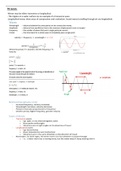
-Waves may be either transverse or longitudinal.
- The ripples on a water surface are an example of a transverse wave.
-Longitudinal waves show areas of compression and rarefaction. Sound waves travelling through air are longitudinal.
, -
Waves can be reflected at the boundary between two different materials.
-Waves can be absorbed or transmitted at the boundary between two different materials
Sound waves
-Sound waves can travel through solids causing vibrations in the solid.
-Within the ear, sound waves cause the ear drum and other parts to vibrate which causes the sensation of sound.
The conversion of sound waves to vibrations of solids works over a limited frequency range. This restricts the limits
of human hearing
-range of normal human hearing is from 20 Hz to 20 kHz.
-Waves may be either transverse or longitudinal.
- The ripples on a water surface are an example of a transverse wave.
-Longitudinal waves show areas of compression and rarefaction. Sound waves travelling through air are longitudinal.
, -
Waves can be reflected at the boundary between two different materials.
-Waves can be absorbed or transmitted at the boundary between two different materials
Sound waves
-Sound waves can travel through solids causing vibrations in the solid.
-Within the ear, sound waves cause the ear drum and other parts to vibrate which causes the sensation of sound.
The conversion of sound waves to vibrations of solids works over a limited frequency range. This restricts the limits
of human hearing
-range of normal human hearing is from 20 Hz to 20 kHz.