‘The Lammas Hireling’
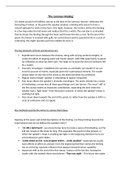
It is based around Irish folklore and set at the time of the Lammas Harvest- celebrates the
harvesting of wheat. In the poem the speaker employs a hireling who seems to have a
natural aptitude for work on the farm. One night, however, the farmer catches the hireling
in a fox-trap under the full moon and realizes that he's a witch. The narrator is so shocked
that he shoots the hireling through the heart and throws him into a river. By the end of the
poem, the farmer is wracked with guilt; he cannot dream and he spends his life in a cycle of
confessing. We might question just how reliable his story is.
The key elements of form and structure are:
Enjambment occurs between the stanzas, along with varying sentence lengths, to
create the effect of ongoing quick and frantic speech, with little opportunity to pause
for reflection on what has been said. This helps to increase the level of confusion felt
by a reader.
Dramatic monologue- establishes the narrator as unreliable- we wonder if we can
trust his account of events, especially given the supernatural element. The reader
almost takes on the role of the priest as the poem becomes his confession.
Regular stanza length- speaker is attempting to appear composed.
Past tense affects the speaker's dramatic monologue. The poem already has a sense
of foreboding, a sense that all these good things can't last forever. The word "still" in
the first stanza makes an important contribution, separating the time when the
speaker had a "light heart" from the poem's present, in which the speaker's heart is
anything but light.
Pace slows down towards the end of the poem, to reflect how the speaker is left in a
cycle of confession and is trapped.
Key methods used by the writer to convey their ideas:
Opening of the poem and initial descriptions of the hireling- are these hinting towards the
supernatural and can we believe the speakers story?
‘I’d still a light heart’- use of past tense here to create a sense of foreboding, as if he
will not remain in this state for long. This separates the past from the present, in
which the speaker’s heart is anything but light. In the beginning therefore he is not
yet burdened or guilt-ridden.
‘Cattle doted on him ‘only dropped heifers… yields doubled’- supernatural usually
have affinity or affect on animals- from the beginning therefore seems the hireling
has an enriching, hypnotic influence that appears beyond human capability.
Important shift at the end of the first stanza. Caesura of the last line, leaving the
reader with the isolated three-word phrase “Then one night”. This forces the reader
It is based around Irish folklore and set at the time of the Lammas Harvest- celebrates the
harvesting of wheat. In the poem the speaker employs a hireling who seems to have a
natural aptitude for work on the farm. One night, however, the farmer catches the hireling
in a fox-trap under the full moon and realizes that he's a witch. The narrator is so shocked
that he shoots the hireling through the heart and throws him into a river. By the end of the
poem, the farmer is wracked with guilt; he cannot dream and he spends his life in a cycle of
confessing. We might question just how reliable his story is.
The key elements of form and structure are:
Enjambment occurs between the stanzas, along with varying sentence lengths, to
create the effect of ongoing quick and frantic speech, with little opportunity to pause
for reflection on what has been said. This helps to increase the level of confusion felt
by a reader.
Dramatic monologue- establishes the narrator as unreliable- we wonder if we can
trust his account of events, especially given the supernatural element. The reader
almost takes on the role of the priest as the poem becomes his confession.
Regular stanza length- speaker is attempting to appear composed.
Past tense affects the speaker's dramatic monologue. The poem already has a sense
of foreboding, a sense that all these good things can't last forever. The word "still" in
the first stanza makes an important contribution, separating the time when the
speaker had a "light heart" from the poem's present, in which the speaker's heart is
anything but light.
Pace slows down towards the end of the poem, to reflect how the speaker is left in a
cycle of confession and is trapped.
Key methods used by the writer to convey their ideas:
Opening of the poem and initial descriptions of the hireling- are these hinting towards the
supernatural and can we believe the speakers story?
‘I’d still a light heart’- use of past tense here to create a sense of foreboding, as if he
will not remain in this state for long. This separates the past from the present, in
which the speaker’s heart is anything but light. In the beginning therefore he is not
yet burdened or guilt-ridden.
‘Cattle doted on him ‘only dropped heifers… yields doubled’- supernatural usually
have affinity or affect on animals- from the beginning therefore seems the hireling
has an enriching, hypnotic influence that appears beyond human capability.
Important shift at the end of the first stanza. Caesura of the last line, leaving the
reader with the isolated three-word phrase “Then one night”. This forces the reader