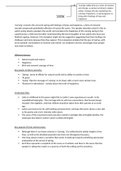
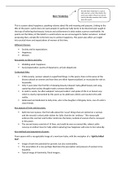
‘Coming’ subtly hints at a sense of newness
and change, as spring is arriving to replace
winter. Perhaps this also symbolises the
coming of happiness, as spring appears to
‘Coming’ bring with it feelings of hope and
happiness.
‘Coming’ connects the arrival of spring with feelings of hope and happiness, a time of renewed
warmth and growth potentially reflective of human life cycles. The speaker describes what it’s like to
watch spring slowly reawaken the world, and compares the happiness of the coming spring to the
superficial joy a child may feel after misinterpreting the forced laughter of two adults who have just
finished arguing. However, this metaphor might also be suggestive suggesting that these feelings are
shallower and more tenuous than they appear. This comparison implies that the joys of spring- with
all its symbolic connotations of renewal and rebirth- are shallower and less meaningful than people
may want to believe.
Different themes:
Natural world and nature
Happiness
Birth and renewal- passage of time
Key poems to link to and why:
‘Spring’- sense of affinity for natural world and its ability to soothe or heal.
‘At grass’
‘Going’- flips the message of ‘coming’ on its head, with a much more sinister tone.
‘Reasons for attendance’- naivety about the truth of happiness.
Contextual links:
Links to childhood in this poem might link to Larkin’s own experiences in youth- in his
unpublished biography: ‘The marriage left me with two connections: that human beings
shouldn’t live together, and that children should be taken from their parents at an early
age.’
Larkin was famous for his self-loathing and pessimism- perhaps this poem shows a new side
to his poetry and a lyric intensity with nature.
The verse of the movement poets was also rooted in nostalgic idea of English identity- the
landscape described in Larkin’s poem is distinctly English.
Key aspects of form and structure:
Although there is no rhyme scheme in ‘Coming,’ it is unified by the similar lengths of the
lines, as well as the blissfully peaceful tone that runs throughout the piece.
One long stanza creates a narrative that seems to build up towards something spectacular-
anticipation of the arrival of spring.
Each line represents a snapshot of the scene as it unfolds, and there is the sense that the
speaker is taking the reader on a journey of both the setting and his emotions.
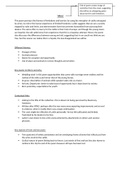
and change, as spring is arriving to replace
winter. Perhaps this also symbolises the
coming of happiness, as spring appears to
‘Coming’ bring with it feelings of hope and
happiness.
‘Coming’ connects the arrival of spring with feelings of hope and happiness, a time of renewed
warmth and growth potentially reflective of human life cycles. The speaker describes what it’s like to
watch spring slowly reawaken the world, and compares the happiness of the coming spring to the
superficial joy a child may feel after misinterpreting the forced laughter of two adults who have just
finished arguing. However, this metaphor might also be suggestive suggesting that these feelings are
shallower and more tenuous than they appear. This comparison implies that the joys of spring- with
all its symbolic connotations of renewal and rebirth- are shallower and less meaningful than people
may want to believe.
Different themes:
Natural world and nature
Happiness
Birth and renewal- passage of time
Key poems to link to and why:
‘Spring’- sense of affinity for natural world and its ability to soothe or heal.
‘At grass’
‘Going’- flips the message of ‘coming’ on its head, with a much more sinister tone.
‘Reasons for attendance’- naivety about the truth of happiness.
Contextual links:
Links to childhood in this poem might link to Larkin’s own experiences in youth- in his
unpublished biography: ‘The marriage left me with two connections: that human beings
shouldn’t live together, and that children should be taken from their parents at an early
age.’
Larkin was famous for his self-loathing and pessimism- perhaps this poem shows a new side
to his poetry and a lyric intensity with nature.
The verse of the movement poets was also rooted in nostalgic idea of English identity- the
landscape described in Larkin’s poem is distinctly English.
Key aspects of form and structure:
Although there is no rhyme scheme in ‘Coming,’ it is unified by the similar lengths of the
lines, as well as the blissfully peaceful tone that runs throughout the piece.
One long stanza creates a narrative that seems to build up towards something spectacular-
anticipation of the arrival of spring.
Each line represents a snapshot of the scene as it unfolds, and there is the sense that the
speaker is taking the reader on a journey of both the setting and his emotions.