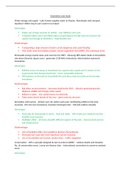
Snowdonia case study
Water storage and supply – Lake Vyrnwy supplies water to Chester, Manchester and Liverpool.
Aqueduct 110km long to carry water to Liverpool
Advantages
Makes use of large amounts of rainfall – over 3000mm each year
U-shaped valleys, tarns and ribbon lakes are good places to build reservoirs (favour the
capture and storage of rainwater) – impermeable rock
Disadvantages
Transporting a large amount of water can be dangerous and cause flooding
Man-made reservoirs displace people, natural vegetation and wildlife. Also submerge farms
Renewable energy (mainly dams and reservoirs for HEP) – Dinorwig HEP station (built on brownfield
site where Dinorwic Quarry was) – generates 1728 MW of electricity. Wind turbines banned in
Snowdonia.
Advantages
Reliable source of energy as Snowdonia has a good water supply and it’s better for the
environment than burning fossil fuels – clean, sustainable methods
HEP stations can be built on brownfield sites and they create local jobs and encourage
investment
Disadvantages
Bad affect on environment – decreases biodiversity (fish) – disturbs spawning grounds,
displaces wildlife and changes water speed
Reliant on water – low rainfall means no electricity
Takes away natursl beauty of the area – giant concrete structure
Recreation and tourism – attracts over 4m visitors each year contributing £400m to the local
economy. 14m live near Snowdonia. Snowdon (honeypot site) – 400,000 walkers annually
Advantages
More jobs for local people in towns – food and shops – 50% of jobs are related to tourism –
benefits local economy
Multiplier effect – all money benefits different aspects of the park – improve local services
and infrastructure
Disadvantages
Lots of footpaths (litter and vandalism) destroys the landscape
Most jobs don’t pay well, have long hours and are seasonal
Lots of air pollution and narrow country lanes – traffic congestion
Conservation – 20% is specially designed by law to protect wildlife – rainbow beetle and Snowdon
lily. 36 conservation areas. 3 areas are Ramsar sites – international conventions to conserve wetland
areas
Advantages
Water storage and supply – Lake Vyrnwy supplies water to Chester, Manchester and Liverpool.
Aqueduct 110km long to carry water to Liverpool
Advantages
Makes use of large amounts of rainfall – over 3000mm each year
U-shaped valleys, tarns and ribbon lakes are good places to build reservoirs (favour the
capture and storage of rainwater) – impermeable rock
Disadvantages
Transporting a large amount of water can be dangerous and cause flooding
Man-made reservoirs displace people, natural vegetation and wildlife. Also submerge farms
Renewable energy (mainly dams and reservoirs for HEP) – Dinorwig HEP station (built on brownfield
site where Dinorwic Quarry was) – generates 1728 MW of electricity. Wind turbines banned in
Snowdonia.
Advantages
Reliable source of energy as Snowdonia has a good water supply and it’s better for the
environment than burning fossil fuels – clean, sustainable methods
HEP stations can be built on brownfield sites and they create local jobs and encourage
investment
Disadvantages
Bad affect on environment – decreases biodiversity (fish) – disturbs spawning grounds,
displaces wildlife and changes water speed
Reliant on water – low rainfall means no electricity
Takes away natursl beauty of the area – giant concrete structure
Recreation and tourism – attracts over 4m visitors each year contributing £400m to the local
economy. 14m live near Snowdonia. Snowdon (honeypot site) – 400,000 walkers annually
Advantages
More jobs for local people in towns – food and shops – 50% of jobs are related to tourism –
benefits local economy
Multiplier effect – all money benefits different aspects of the park – improve local services
and infrastructure
Disadvantages
Lots of footpaths (litter and vandalism) destroys the landscape
Most jobs don’t pay well, have long hours and are seasonal
Lots of air pollution and narrow country lanes – traffic congestion
Conservation – 20% is specially designed by law to protect wildlife – rainbow beetle and Snowdon
lily. 36 conservation areas. 3 areas are Ramsar sites – international conventions to conserve wetland
areas
Advantages